Bethel
(The House of God)Message believers
 Home | Upcoming Meetings |
Books | News/Letters |
Feedback |
Tracts
Home | Upcoming Meetings |
Books | News/Letters |
Feedback |
TractsBethel (The House of God)Message believers |
Home | Upcoming Meetings |
Books | News/Letters |
Feedback |
Tracts |
|
Back
THE MESSAGE OF MALACHI 4:5-6 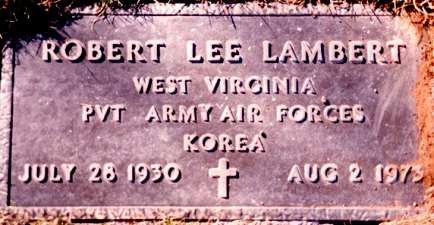
in the United States and in the Caribbean Freeport, Trinidad, West Indies In The Year 2002
MALACHI 4:5-6
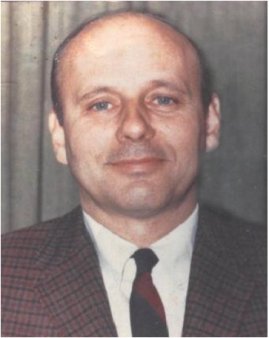
Forasmuch as many have taken it upon themselves to speak of things concerning the life, ministry and martyrdom of Robert Lee Lambert (called Bob or Junior), as prophesied by him in 1959 and confirmed by his preaching until the time of his murder in 1973, many often reviling this man about whom they know little and understand less, it seemed good to us who were eyewitnesses, associates and co-workers with him to set in order the truth concerning this man of God. That he was a revivalist, a minister of the Gospel of Jesus Christ and message of Malachi 4, a pastor and teacher, faithful to each of these offices, and that he was the first martyr for the end time message, seems lost upon those who repeat rumors, half truths and downright lies in an attempt to shore up their own crumbling positions as guides to those who desire to follow the message of Life in the Laodicean age. He has been falsely accused of many things: that he claimed to be Elijah; that he preached that no one has the Holy Ghost; that he did not believe in Divine healing; that he turned against God's prophet, William Branham, and preached his own message; that he claimed to be an eighth church age messenger; that he was the leader of a cult; that he tried to fit himself into a ministry that did not belong to him; that he broke up churches; that he was judged of God for playing a prophet; and that he died by being hit with a piece of wood during a robbery. Even among those who have met or heard him minister, few know very much concerning details about Brother Bob, his early life, how he came to Christ and to the message of William Branham, his visitations of the Spirit, his dedication to upholding the Gospel, his desire to see the Scriptural Promises of God manifested in the lives of believers by the coming of the Headstone Outpouring. There is a sincere desire to know more about the man to whom many looked as a confidant, a friend, a counselor, a hunting or fishing companion, and, certainly not least, a shepherd who loved, respected and preached the message of William Marrion Branham without compromise or doubting. It is with these things in mind that we, his friends, associates, family members, his sheep and fellow ministers both in the United States and abroad, have taken this step to begin to put in order those things which we have seen and heard and those things of which Robert Lambert, himself, testified. We feel that it is very important to portray his honesty, sincerity, dedication to God, humility, compassion and love against a backdrop of steadfastness, an uncompromising stand for the Word and boldness to preach the Truth and to rebuke those found in error. As a worshipper, he was shameless; as a friend, he was loving and faithful; as a seeker of Truth, he was untiring. He was an unusual man, an odd man-a truly honest man is always odd-but he tried to follow the leading of the Holy Spirit as closely as he could. Some of us were eyewitnesses almost from the time of his conversion; others came to know him only during the last few years of his life. All who truly knew him have a story to tell, how they were helped and blessed by this man of God and his own peculiar ministry that was based upon the Scriptures, the teachings of William Branham, God's prophet and final church age messenger, and upon direct revelation to him by the Spirit of God. Testimonies of many of those closest to Brother Lambert have been gathered on audiotape. These form the basis for much of the material presented here. The bulk of information comes from Brother Lambert's own testimonies and frequent personal comments made during many of his recorded sermons. We should mention here one man in particular, Brother George Parylla, who knew, loved and appreciated Brother Lambert almost from the beginning. Having met Brother Lambert in the dead of night during a retreat to wait upon the Lord in a little log cabin in the mountains of Kentucky, Brother Parylla became his associate. After Brother Lambert moved to Connecticut in 1967, Brother Parylla became his Assistant Pastor. Brother Parylla served as Pastor of the assembly from 1979 until he went to be with the Lord in 1992. His testimony is among those used for this work. As with any person who is not born in the limelight of life, most details of Robert Lambert's early life have melted into the obscurity of time. Even after his conversion, the ministry that God gave him took him from place to place so often because of persecutions that it was not always possible to leave behind those mementos of passing that would cause the possessor to realize the significance of his visitation. This was, in part, due to unbelief in the hearts of "professors of Christianity." It was also due in part to an active desire among many not to hear about another Outpouring of the Holy Spirit, a Bride's revival, a "Speak the Word" ministry and other portions of Brother Branham's message that were not to their liking and that may have pinched their conscience or life style too much for them to accept. Still others may have felt their positions of honor threatened by a man who could, with the Word of God, take away the foundation of some of their most cherished beliefs, e.g., "The latter rain has already fallen;" "All is over;" "The Blood is off the mercy seat;" "The Bride now has Perfect Faith and Perfect Love;" "We are only waiting for the rapture." Some, no doubt, felt chastened by a man who was severely critical of the permissive attitude among the ministry concerning unholy living, television, participation in sports, immodest dress and sexual misconduct. We know that there are many others who came into contact with Brother Lambert and who loved him and his ministry but were prevented by circumstances and, in some cases, by unsupportive leadership, from maintaining their Christian relationship with him. It is our hope that, following the publication of this book, many more details concerning his life, in the United States and in the countries that he visited, will be provided by those whose lives were touched by this man. We hope that some will search their archives and discover audio tapes of his early sermons that could be provided to us for inclusion in our library. Brother Lambert's ministry was different from those which were popular on the field in his day: evangelism, emphasis upon signs, wonders and miracles, international recognition by publication of books and magazines. This man of God, yoked with the burden of the Lord, expressed in groanings cryings and sighings in prayers, fastings and studying the Word and message fourteen hours a day in his early years of conversion and, until his martyrdom, staggered not at the Promise of God through unbelief, but was strong in faith giving glory to God. Hidden in the "back part of the desert," his entire ministry was dedicated to those who believed him. He taught them the deeper things of God and prepared them by the Scriptures and the message of William Branham to receive another Outpouring of the Holy Ghost. Thus he highlighted the Token message of Brother Branham. During the second half of his ministry, he accepted few invitations to minister to other message groups, refused to send out his audio messages and refrained from doctrinal discussions with ministers. Because the things that God had revealed to him were misunderstood, some persecuted him and several became international impersonators of some of those deeper truths which the Lord revealed to him concerning:
He clearly outlined those doctrines accompanied by the great supernatural Presence and Power of the Holy Ghost. Ministers as well as lay members and sinners were stunned by God's awesome Presence, and the clarity of the Word. None who opposed his teachings were able to disprove them by the Scriptures or message of Brother Branham. It is impossible to deny the impact that such a unique ministry has upon our lives. This is a story that, we trust, will afford an opportunity to message believers, inquirers, critics and naysayers to discern for themselves the motives and objectives of a man who gave the "last full measure of devotion" for the Gospel of Christ and to conclude whether our pastor was a false anointed one or a true servant of God. We of his little flock already are fully persuaded that Brother Bob was a born revivalist who planted a seed of faith into the hearts of several ministers and believers. He brought them under a Supernatural inspiration and the Presence of Christ, thus preparing them for the promised Bride's revival by another Outpouring of the Power of the Holy Ghost. Even twenty-nine years after Brother Bob's martyrdom, we are reminded of Stephen, the first martyr of the Lord in the New Testament. This, then, is the story of Robert Lee Lambert, the man we affectionately call, "Brother Bob." back to the top
RUNNING FROM THE LORD
Joy reigned in the household of Robert Lambert and Linde, his wife, at the birth of a son whose name was to be Robert Lee Lambert III. Little "Bob" or "Junior," as he was known by his family in West Virginia, was born July 28, 1930, very early in the "Great Depression," in Kenova, a small town (perhaps 4,000 population, today) at the western border of the state near the juncture of the Ohio and Big Sandy Rivers which also mark the Ohio and Kentucky state boundaries. Just across the Ohio River, the town of South Port is equally small and, just across the Big Sandy River in Kentucky, the town of Catlettsburg is even smaller. The Lambert home place was just outside the flood wall of the Big Sandy. Bob was the eldest child of Lyndell Preston Lambert and the only child of Robert Lee Lambert II. Tragedy soon struck the household. In 1933, when Junior was only three years of age, his daddy died leaving his mother, Linde, to raise a small child during some of the hardest economic times America has had to endure. She took a job in the local glass factory to provide income for the necessities of life. However, Linde soon married again becoming Mrs. McDaniel and bearing four more children, two daughters, Drinadell and Marcella, and twin boys, Ron and Don. All the world seemed better until Linde contracted tuberculosis. As her health deteriorated, Junior, now nine years old, had to take on adult responsibilities, not only doing the house work-cleaning, washing, cooking-but also caring for his mother, his sisters and the twin baby brothers who were still in diapers. As he became expert in changing the babies' diapers he began to develop a philosophy and a sense of humor. He made up a little song that said, in part, "I'm the ti-dy di-dy man." Linde's death in 1940 made Junior an orphan at only about ten years old. As Mr. McDaniel was not up to the task of raising the five children, the McDaniel children were divided among close relatives who raised them as best they could and providing such education as they could afford. Junior went to live in a foster home. A shadow fell across the land even as the great depression began to wane. All Europe was involved in a war begun by a madman, Adolph Hitler, and his fellow warmonger, Benito Mussolini! Japan, under the leadership of Emperor Hirohito and Prime Minister Tojo, seemingly had a free reign in China, taking more and more territory and needing yet more to provide raw materials and fuel for its factories. Then, suddenly, without warning or provocation, on December 7, 1941, Japanese warplanes bombed the United States naval fleet at Pearl Harbor, sinking many ships and taking the lives of several thousand sailors and marines. The repercussions of this act changed the lives of every family in America. Many young men-sons, husbands, fathers, brothers, friends-went off to war. Every person was expected to do his or her part to support the massive effort it would require over the coming few years to defeat an oppressive enemy. Many women went to work in the factories making guns, airplanes, tanks, clothing, canned food-anything that would help to bring the war to a successful conclusion. And every boy's thoughts turned to war and what he could personally do to defeat the enemy. After living perhaps two years in a foster home, in 1942 Junior asked to live with his grandparents who, though poor, were scrubbing out a living on a little piece of ground. Robert Lee Lambert, Sr. (called "Lee") and his grandmother, Ella Bellomy Lambert were an odd couple-he was tall and slender; she was short. Lee liked to attend services at the local Baptist church; Ella claimed to have too much work to do at home. There were also two girl cousins living with "Pa" and "Ma" as the grandparents were known to the cousins and to the neighborhood children who often came to play. Betty and Corrine's mother had also died and their father had asked Pa and Ma to take them in. Pa and Ma had raised seven children of their own of whom Junior's father was the youngest having been born in 1912. Now they had a new family to raise, Junior and his cousins. Earning a living was difficult and it fell Junior's lot to care for the chickens, horses and pigs, to plow the fields in preparation for planting corn, cabbage, potatoes, green beans, carrots, tomatoes, pinto beans, squash, cucumbers and even a few watermelons. He learned which trees had the best apples-and kept a few sticks handy to knock them out of the tree. As a minister in later years he often told his congregation that you could always tell where the best apples were by the sticks under the tree. During these times he learned many lessons, not the least of which was that to look back while plowing was to court disaster. A moment of inattention could, and did, bring the reward of a bloody nose, caused by the tip of the plow becoming hooked under a large stone or root, thereby causing the handles to fly upward to be stopped by the first chin or nose they encountered. Incidents like this enriched his sermons later, especially when ministering on a text like that found in Luke 9:62, Life behind the plow for a twelve year old can be very difficult, especially when he knows that just a short distance away is a river teeming with catfish or water that is just the right temperature for swimming or that the trees in the bottom land along the river are full of squirrels whose meat would make a very tasty stew. However, the belt or razor strap hanging on the nail, and first hand knowledge of the pain they could inflict, helped him to focus his attention on the work at hand. Living in an area accustomed to violence from the early days of the Republic, a growing young man would be expected to learn to protect himself, giving as good as he got and tolerating no disrespect to his mother, sister, wife-his womenfolk-or to his good name. Junior learned to use both his fists and his rifle even as an active outdoor life made him tanned, lean and strong. Education suffered as every able-bodied person was expected to work and support the "war effort." Considered very smart and well liked by most of his classmates, nevertheless, Junior did not do well in school. Perhaps to cover up his own sadness and his longing for a real family with his own father and mother, he laughed a lot, telling stories that made others laugh. He began to miss school, leaving home as if going to school but not arriving, spending the day no one knew where. After completing only about seven years of formal education, Junior dropped out of school to assist his grandfather, now seventy-three years old, on the little farm Despite his lack of education, Junior had an active mind. His lack of parental love and guidance during his formative years forced the development of an independent attitude and resourceful spirit. During these years he also began to develop a sense of propriety that was unusual in one so young. In those days, girls were not allowed to wear pants or shorts to school-only dresses. It was very unusual even to see them clothed in what was considered male attire outside of school. On one occasion, a young female cousin, slightly older than he, wanted to wear a pair of his dungaree trousers to a function she was attending and she actually put them on. After a sharp disagreement as to whether she should wear the trousers, his grandmother sided with Junior and made her take the dungarees off. The cousin then told him that, "If I can't wear them, you can't either." She took them and cut a large hole in the front of the trousers. The progress of the war in Europe and in the Pacific held every person's attention. Every home and farm was scoured to find rubber and scrap metal products to turn in to be used in the "War Effort." Even used fat from butter or pork was collected and used in the manufacture of munitions. Adventurous young men longed to join the Army, the Navy, the Marines or the Army Air Corps and they dreamed of the glory they would receive from successful combat. Junior was no exception. However, World War II ended in 1945 when Bob was still too young to offer his services on active duty. Throughout his years as a youth, although his grandparents did their best for him, he longed for a real family with his own father and mother. He loved to see families that enjoyed life together. He liked to see a boy go up to his dad and give him a kiss. In his own family, the business of scratching out a living seemed to leave little time for demonstrations of love and appreciation. He felt that his younger half brothers and sisters loved only themselves. In fact, he said,"Seemed like nobody that was kin to me loved anybody, just loved themselves." There were many churches around Kenova including Methodist, Baptist, Catholic, Pentecostal and others. It seemed to Junior that they were on almost every other corner, vying for space with the fifteen or so gasoline filling stations in town. Though he did occasionally attend services at a local Baptist church where his grandfather attended, the hypocrisy he witnessed caused him to realize the apalling lack of sincerity among the people. Later he said that many, while walking to church, would hold their Bible inside their coat or under a newspaper, showing the Bible and discarding the newspaper only when near the church. The churches held little attraction for him and he, therefore, had little or no religious training. Still, as a youth he had a dream that he was to be a servant of God some day and he gradually became more conscious of the call of God in his life. However, he feared the Lord and tried to run from Him. He felt that he loved the Lord Jesus but did not know how to approach Him. Once, as a youngster, Junior ran away and went with a traveling circus for a short time. When he was but sixteen years old, he and a young friend lied about their ages in order to get into the army, spending a few months in training before discovery and discharge. When legally of age-at age seventeen, probably early 1948-he again joined the United States Army Air Force. During several life threatening situations Junior (Bob) would promise the Lord that he would serve Him but once the situation passed he would return to his old ways. Around 1950 while serving at Eglin Field, an Air Force base near Pensacola, Florida, he went to a local beach to swim with four of his buddies. Apparently caught by hidden currents, his four friends all drowned and he alone survived after crying out to the Lord to save him. Another time (shortly after his discharge from the service) he survived almost certain death when he wrecked a brand new convertible automobile. He was miraculously delivered and walked away. All who saw the car were amazed that anyone could have survived the accident. While still in the service of his country, in 1952 Bob became sick with a debilitating disease called Charcot-Marie-Tooth (CMT), so named for the three doctors who first described it, affecting his back and legs. Genetic in nature, the condition brought about his discharge from the Air Force with a seventy percent disability. Though his upper body remained strong and he continued to exercise as much as he could, the muscles in his legs began to atrophy and his legs eventually became little larger than broom sticks. He later said that, "I couldn't stand on my toes if you paid me a million dollars." This condition was the cause of his receiving a monthly disability check for the remainder of his life. His period of military duty overlapped that of the Korean Conflict (June 25, 1950 until July 27, 1953). However, Bob did not have to serve in active combat. The Lord had a more important job for him, not in destroying souls but in pointing them to Calvary. Around the same time that he became sick, "Pa" Lambert, the one who had taken him in as an orphan, passed away. His Grandmother had previously died in 1948. This added further to his feeling of loneliness and isolation. Returning to his boyhood home in Kenova, with little constructive work that he could do and having a lot of time on his hands, Bob tried his hand at several different occupations. He was a clothing salesman, he worked at a glass factory and he worked at an animal slaughter house. Unsuccessful at any occupation, he began to drink and to run around with his old acquaintances. Still searching for love and companionship, he courted and married (in January 1954) a Kenova girl a few years younger than himself, Shirley Gayle Webb, but even that did not completely satisfy the emptiness in his heart. Their first child, Mark Aaron, was born before the end of 1954 and a daughter, Vickie Ellen, was born the following year. In the process of time Shirley again expected the birth of a child. This time, however, Bob's rapidly worsening disability required medical attention. Even as their third child was about to be born, Bob and Shirley were making preparations to leave Kenova and go to Coral Gables, Florida, a suburb of Miami, where there was an excellent hospital for military veterans. On the first day of January 1959 was born to them, Timothy Lee Lambert. Bob Lambert, 28 years old, in a weakening condition, with a wife and three children, running from God, without denominational background or religious training, knowing little of the Bible, an ungodly sinner, had come to the end of his road. back to the top
WITH THE HOLY GHOST
The consciousness of a "Call" in a man's life often comes with a feeling of great responsibility that compels him to God's service. He becomes a love-slave to God's children like a mother to her suckling child-to protect, love and serve. A born leader will lead men to righteousness or, if rebellious, to unrighteousness. We understand that Moses was a trained warrior, conquering cities for Pharoah, before the Lord called to him out of a Burning Bush in the desert to bring Israel out of Egypt. Even Brother Branham tried to turn from God's leading and be like his friends-to smoke cigarettes and drink moonshine whiskey. He wanted to be "Big bad Bill," a "Tarzan," but God would not allow it. Bob Lambert wanted to be six foot six and be able to whip the meanest man in town. He loved a fist fight and considered it a disgrace to cry. God had some work to do. God often brings his servants through a rugged school of training. Poverty, hardship, affliction, trials, persecution and, even threat of death brought an awareness of the needs of mankind so that he, Robert Lambert, could enter into their suffering and provide succor to those in need. The Bible tells us that even the Lord Jesus was tempted in all points as we are and that, "Though He were a Son, yet learned He obedience by the things which He suffered." (Hebrews 5:8) Although that genuine God-called man ran from the Lord, God, by His chastening rod of adversity and affliction, brought him into submission to His Own Will. At present, we know little of the birth and very early life of Robert Lee Lambert III. However, we do know from his own testimony that he became aware at an early age of a calling from God, a drawing and a desire in his heart that was not satisfied by the things that he did, the places he went or the people with whom he became associated-even his wife. As his condition deteriorated, Bob began to try to find God, but no one, it seemed, could answer the cry of his soul. He went to a Methodist church and to a Baptist church for help but the only answer he got was to join the church. He heard nothing of the Power of God to heal and knew nothing of a "Pentecostal" experience. Yet, there was a "deep calling to the deep" that demanded an answer. Arriving in Miami, Florida the third week of January 1959, Bob Lambert, sick for seven years, unable to work, dying and not ready to die, without a knowledge of the Salvation of Jesus Christ, without money to support his wife and three children, no relatives and with only one friend in town, was taken to the Veterans' Hospital in Coral Gables at the edge of the campus of the University of Miami. Some of the nation's best doctors practiced at the hospital. Upon admission, he was held for evaluation to determine what treatment would be necessary or appropriate. Shirley, leaving the children with a young girl in a home across the street from where they were staying in a strange neighborhood, went to see Bob at the hospital. After visiting for a time with him, Bob told her to call his friend, Eddie, to come see him and to take her back to the house. Eddie, it seems, had spent the day gambling on dog races at a local greyhound dog track and was tired but he said that he would try to come to see Bob the following day. It just about killed Bob that his best friend would deny him help in his hour of need. In despair, weeping and crying, Bob told Shirley that he just wanted to be left alone to die but he wanted Shirley to stay with him. He did not want to leave this world alone.
Bob Lambert later said, Another incident drove him even deeper into despair. A minister made rounds through the wards. When he came to Bob Lambert, he did not ask about the condition of his soul, offered no prayer for his healing, offered no a word of comfort. As Brother Bob related it,
He survived the night and the next day Bob was taken to Ward 15, the paraplegic ward where there were men who had no hope of ever returning to a normal life, men who would die in their beds, men who were shot up, shell shocked, sick with tropical diseases from combat service in the jungles and rice paddies of Korea. He said,
Out of the hospital, Bob and Shirley rented a house from Charlie M____, who was staying in Miami for the winter. He was from New York City. Charlie, a Christian and a Pentecostal, was zealous to witness for the Lord. Since Bob was obviously sick, he needed healing. Conversation with Bob revealed to Charlie that he also needed salvation. This was fertile ground for a zealous Christian to work in. Even before Bob and Shirley moved into the house, Charlie gave Bob a tract and witnessed to him about the saving Power of Jesus Christ. Since Charlie and his wife were about to return to New York, Bob moved his family in with them until they left. Brother Lambert later said of Charlie that,
GOD, JUDGMENT PROPHESIED
The time is April 1959. Robert Lambert, twenty-eight years old, dying, without friends, without money and without hope has moved from Kenova, West Virginia, his childhood home, to Miami, Florida, with Shirley, his wife, and their three children. One, a new-born baby, little Timothy Lee, is only three weeks old at the time of the move. After spending a number of days in the Veterans Hospital in Coral Gables, overwhelmed with the despair he saw in the hospital and convinced of his own impending death, Bob asked to be released to die at home. Taking residence in a home temporarily occupied by a zealous Pentecostal Christian, Charlie M______and his wife, Bob rejected his efforts to convert him to Christ, but, eventually, attended one church service out of respect to Charlie. When Charlie left Miami to return to New York City, his brother, Joe, took over the job of converting Bob. Finally, attending one service with Joe at a local Pentecostal assembly, he called on God and was saved by the cleansing Power of the Blood of Jesus Christ. In ecstasy and in great joy he rushed home to tell his wife. Brother Lambert takes up the story:
Brother Bob went on in his testimony to explain that he wanted to share this experience with his listeners so that they could understand the things he did. He wanted people to understand why he did them and he wanted the support of born again Christian people to pray for him. He genuinely believed the Voice that he heard and that something very unusual was getting ready to happen. Brother Bob continues:
Now, it is evident, from Brother Bob's own testimony, that he had come in contact with a Divine Supernatural Being. The very night he was saved, healings and prophecies followed in the presence of others-believers and unbelievers. That Supernatural Being spoke out to him, and to others, in the first person. He knew that he had met God, that God had called him into a special ministry and that God was to teach him the Word in a short time. This Supernatural Being continued with Brother Lambert wherever he went, home, at church, traveling. This has been verified by many testimonies of people who have felt that Presence while they were with Brother Bob. When he subsequently went out and began to preach, the Presence of God would fill the place where people were gathered. It created many emotional responses among the people ranging from great fear to unexpressible joy, reverence and faith. This Presence bore witness to the Truth that he preached and, on several occasions, made Himself visible to other people, appearing with an open Bible in His hand, mouth open and ready to speak. God's Supernatural Presence reached out to people, both sinners and Saints, as they thought the right thought or spoke the right word in their homes, in their cars, at services and even on the rare occasions when he went overseas. His death did not take that Presence away from those who stayed true to God's Word. It must be remembered that Brother Lambert, at the time of his conversion and these prophecies, had the equivalent of only about seven years of formal education, no knowledge of the ministry of Brother William Marrion Branham and virtually no knowledge of the Bible, having run from God and seldom attending church services as a boy and young man. He was a sinner saved by God's Grace, called to be God's servant and to die for the Gospel of Christ. OF GOD'S WRATH AND JUDGMENTS
Brother Bob Lambert has been contacted by a Divine, Supernatural Being. He has just come through a glorious but fearful conversion to Christ, that included, not only receiving Jesus Christ as his personal Savior but also, the same night, the healing of his friend, Joe M____, and Joe's mother. There was prophecy concerning his own ministry, persecution coming upon the Bride of Christ, the state of the Church and the ministry already on the field, and circumstances of his own death. Bob Lambert knew that he had met God, and that he had been called to a special ministry and that he was to be taught the Word in a short time. Now, desiring fellowship with others of "like precious faith," he began to reach out to try to find others who had experienced a real encounter with the Lord. Brother Lambert continues his story:
This "missionary" group was led by a man who was loose in his morals and deficient in his understanding of what it means to be a missionary of Christ or even a Christian. In later years, members were accused (but not convicted) in several countries of child abuse, child labor and even use of prostitution to attract converts. Upon the death of this "leader" in 1994, the group acknowledged that the man had encouraged his followers to engage in a form of sexual evangelism, which he referred to as "Flirty Fishing." They claim that this practice was discontinued in 1987. Brother Lambert continues:
Now, Brother Bob Lambert was greatly burdened for the world because of the things that God had shown him over many days-judgment coming on the earth, persecution, a short, quick work, martyrdom-and, in particular, he had a burden for Mexico. Because he, no doubt, made the fact known to the "missionaries" with whom he had been meeting, they dropped him off at the nearby home of Andrew ('Andy') and Grace Collins who, it was widely known, supported missionaries going to various overseas locations, providing meals and a place to stay while in Miami and also providing transportation locally. While it is not clear just what these "missionaries" had in mind when they left Bob Lambert at the Collins home, it is clear that the meeting was to prove beneficial to him. As they began to become acquainted and to discuss the desire of this young man to minister in Mexico, they asked him if he had heard of William Branham. Bob replied that he had heard of him and, perhaps, that he had read something about him. The Collins asked if he would like to hear a sermon of Brother Branham's and Brother Bob answered that he would. Brother Lambert sat down to listen to a sermon and became so enthralled by what he heard that he began to weep. He put on a second sermon. He was given lunch. He put on a third sermon. He was provided supper. At about eleven o'clock in the evening, the Collins told him that he could come back again. He said, "Oh, can I?" Early the next day, Brother Bob was back again to spend the day listening to Brother Branham's sermons. After two or three days of this, the Collins loaned him a tape recorder and a stack of tapes that he took to his home. When he would finish a stack of tapes he would come back for more. [During the summer of 1959, this scribe met Robert Lambert, having been taken to his home (no longer in the trailer park but in a concrete block house) by Andy Collins. When Brother Bob opened the door, we saw stacks of tapes and the tape recorder on the floor of the parlor-and little else. Brother Bob had been sitting and making extensive notes from the things he heard, notes that would become an essential part of the foundation of his own sermons in days and years to come. Though, at the time, I understood little of the hour-long discussion of the Scriptures and the ministry of William Branham, I realized that this man, Robert Lambert, was a real man of God.-Ed.] During the summer of 1959, Andy Collins took Brother Lambert to Jeffersonville, Indiana to hear the prophet of God in person. There, he was to have a very surprising experience. But we will let Brother Bob tell it:
It was during this same trip that Brother Lambert visited the home of Sister Ella Branham, Brother William Branham's mother. He wanted to hear from Sister Branham's own lips the story of the Angel, the Pillar of Fire, that came into their little, humble cabin, at the time of Brother Branham's birth. A photograph of the Pillar of Fire had been taken in Houston, Texas in 1950. A copyrighted copy of this photo is in the United States Copyright Office, which is located in the Library of Congress in Washington, D.C. Sister Ella passed away on October 27, 1961 after a short illness. During the latter part of 1959 and into 1960, Brother Bob visited many churches and ministers in various denominations. He observed customs, heard their doctrines and often spoke out in defense of the Gospel of Jesus Christ. In speaking of this, he said:
In 1960, Brother Lambert went to a mountain cabin in Kentucky to pray and fast and wait upon the Lord. The cabin was owned by a follower of the message of Brother Branham, Brother Pat Tyler. Brother Tyler was (as described by Brother Branham) a "converted gangster, an outlaw, a gunman, killer." The cabin was without electricity or running water, snake-infested, full of spiders and other vermin but it was remote-a good place for a man to be quiet and to wait upon the Lord. It was late and very dark when he arrived but he found someone already there, occupying the cabin. Going inside, he called out and was answered by a Brother George Parylla who had already gone to bed in the cabin loft. George Parylla was also a friend of Brother Tyler but had not previously met Brother Lambert. After talking for a short while and since the hour was late, they both went to bed. They could become acquainted in the daylight. Brother Parylla had come to the Lord in December 1957 while living in Brooklyn, New York, fruit of the ministry of Brother Branham in Newark, New Jersey (just across the Hudson River from Brooklyn). Brother George's brother, Ray, had attended a meeting in which Brother Branham preached the sermon, "Sirs, We Would See Jesus," (57-1211). During the prayer for the sick near the close of the service, Brother Branham, under the inspiration of the Holy Spirit, spoke to Brother Ray revealing a physical problem that he had and further telling him that he had a brother at home with a nervous breakdown. Brother Branham then prayed saying, "Father God, give him the desires of his heart. May he go tonight and receive everything that he's asked for…." Brother Ray went home and told Brother George about the meeting and to get up, that the Lord had healed him, and he explained what had happened. When Brother George believed, he got up, received his strength, gave up his sinful ways and began to witness to the Grace of God in his life. Though he lived a sanctified, exemplary life, and continued telling the story of what God had done for him, he felt the need for a deeper experience with the Lord. For more than two years, Brother George had continually waited upon God for a personal Outpouring of the Holy Ghost. When his church friends told him that he had already received it, he became confused and determined to go on a fast, to see no one and to wait upon God for a clear answer to this question. For this reason, he went to his friend's cabin in the hills of Kentucky. Recalling this encounter in 1969, Brother Lambert said:
Brother George Parylla was to become a mainstay, a pillar in the little assembly in Connecticut, eventually becoming, after Brother Bob's death, pastor of the group until the Lord took him home in 1992. But more of that later. Early in 1961, Brother Lambert had an experience that was to bring him to the attention of the Pentecostal world and, in particular, the Full Gospel Businessmen's Fellowship. On Thursday, January 26, 1961, Brother Lambert (with missionary Brother Henry____ and another minister, Brother Jimmy____) was led of the Lord to travel from Miami to Sarasota, Florida, a distance of almost two hundred miles. They went to attend the final three nights of a two-week revival meeting being conducted by Dr. John H. Osteen, a popular Baptist minister from Houston, Texas. Dr. Osteen was in cooperation with Pastor Gerald Derstine, a charismatic Mennonite leader in Sarasota. Pastor Derstine was the Executive Vice-President and Treasurer of an extensive ministry under the name, "The Gospel Crusade, Incorporated." This work included, in addition to ministering to his own congregation, evangelism, publication of "Harvest Time" newsletter, along with Gospel tracts, and conducting religious conventions at a campground maintained for that purpose. Unknown to Brother Lambert, Dr. Osteen, feeling led of the Lord, had told Pastor Derstine that he was returning to Houston. Mr. Derstine said that he had wondered who God would provide for the remaining three nights when the three men from Miami arrived saying that the Lord had told them to come and see him. After talking for some time, the men all went to bed and…. But we will let Brother Bob tell of his experience:
[Editor's Note: Bob Lambert's testimony and Mr. Derstine's comments concerning this visitation are in the tract, "God Spoke," which is reprinted in its entirety at the end of this chapter.]
Within a very few days word came from such widely separated locations as Orlando, Florida, Haiti and Kitchener, Ontario that others had experienced a similar visitation on the same morning, with similar pronouncements of coming judgment. Brother Bob went on and preached the final three nights of the special meetings and returned to Miami. Brother Derstine was so impressed with the Power of God that was present in the prophecies and the ministry of Brother Lambert that he took steps to publicize the event. Articles were published in the April 1961 issue of "Full Gospel Men's Voice," a monthly magazine published by Full Gospel Business Men's Fellowship International (FGBMFI), and in the April/June 1961 issue of "Harvest Time." The story was also published in the tract, "God Spoke," that was given broad distribution. Brother Derstine also used this as the keynote to the message of the February 1961 Regional Convention of the FGBMFI in Washington, D.C. The anointed preaching of Brother Lambert at this meeting made a strong impression upon others. The late Mrs. Caroline Robinson, a woman of considerable piety who was living on Marco Island, Florida, and attended the meetings, made a statement to her sister (mother of this scribe) that Brother Lambert was the most spiritual man that she had ever seen. The publicity and notoriety brought about by these events brought several invitations to preach and someone even offered to buy him an airplane and fly him all over the world to the churches. Of the invitations to preach, not the least important was an invitation to speak at the Miami Beach convention of the FGBMFI to be held at the Americana Hotel in May 1961. Though he ultimately was not given the floor to preach, he witnessed practices and beliefs that illustrated some of the hypocrisy and false belief that were common in the modernist charismatic movement. Attendance at the convention did provide the opportunity to make contact with someone who would invite him to the geographic area where he would finally build a permanent congregation. Following Brother Lambert's experiences in Sarasota in the final days of January, 1961, he, along with Brother Henry and Brother Jimmy, returned to Miami, Florida. During the journey (of some 200 miles) they chanced to pass a movie theater on which the marquee advertised a movie then showing, "The Facts Of Life." Brother Lambert's recent experience, which included visions of coming judgment on America, was so real and the judgments seemed so imminent that he felt compelled to stop and enter the theater. On entering, he went to the front of the theater and began preaching to the people there assembled, telling them that the real facts of life were that judgment was coming upon America, that they were sinners and that they must repent to escape! Of course, the theater management did not take kindly to this interruption of their showing of the movie and quickly and forcefully escorted him outside.
that was published by Harvest Time Publication:
IT'S THE BLOOD OF JESUS CHRIST" (Whom the vision appeared to)
IS ELIJAH
When Brother Robert Lambert received an invitation to preach at the Miami Beach convention of the Full Gospel Business Men International, he was pleased. This would be an opportunity to speak directly to many of the people in the full gospel movement and, especially, some of its leaders. The convention in May 1961, coming on the heels, as it did, of the publication of the accounts of Brother Lambert's January experience in Sarasota, Florida, would be filled with Pentecostal clerics and lay persons alike who had read the accounts of God's pronouncements of judgment upon America and they would want to know how to prepare themselves to avoid the destruction ahead. But, alas, it was not to be. Though he prepared his message and spent much time before the Lord in fasting and prayer, he was not allowed to preach. This is not to say that the event was a waste of time for this man of God. On several occasions God had shown him the condition of the ministry and the modern churches but, still, it came as a shock to see for himself the depths to which professing believers had fallen. Brother Lambert tells the story:
The experience Brother Lambert had with the Lord in 1961 became known throughout the world by way of the Full Gospel Men's "Voice" magazine, the "Harvest Time" newsletter and tracts that were printed under Gerald Derstine's direction. This brought an outpouring of interest in his ministry and a desire among some to exploit the phenomenon of God so powerfully using a man to speak of the coming judgments. One group even wanted to buy him an airplane and fly him all over the world to preach in the churches. However, when he began to preach the Name Jesus Christ, water baptism in His Name, the requirement that every member of the Bride must have a genuine experience of the Baptism of the Holy Ghost, along with other truths of the Gospel, including modest dress and women's place in the church, some of the same people who had been used in the tongues and interpretation turned against him and said that he had lost his ministry and that he had turned into a false prophet! Until the day he went to be with the Lord, Brother Bob pointed the people to the prophet, William Branham, and said that they must listen to that man of God. Still, if you are God's servant, you are always God's servant. The Bible says that "the gifts and calling of God are without repentance." (Romans 11:29) And, of course, every man is responsible to God for the gift that is in him. From the very beginning of his ministry after his conversion, Brother Bob preached the necessity of the true Baptism of the Holy Ghost in the life of the believer and looked for an Outpouring of Power in every meeting. After attending the FGBMFI Americana Hotel Convention during which there were many supposed manifestations of the Spirit, Brother Bob said,
[Editor's note: My wife and I also attended that "full gospel" convention. Public swimming in a state of near undress was one of several manifestations of ungodliness among these "Pentecostal believers." Those present were invited to view the water baptism of a number of "converts" in the hotel's fresh water swimming pool. Candidates for baptism as well as those baptizing were to wear bathing suits. We refused even to view such a corrupted excuse for a holy sacrament of God.] If Brother Lambert's previous visitations and revelations from the Lord had not fully convinced him of the degree of apostasy present in the church world, his experiences at the May 1961 convention did so. However, having a door slammed in one's face does not necessarily mean that there is not another door open somewhere. In fact, there was another door opened for him eventually leading in a direction that he could not have anticipated. As the convention goers began leaving the hotel, the Spirit of the Lord spoke to Brother Lambert and told him to "GO DOWNSTAIRS TO THE LOBBY." He was obedient to the move of the Spirit and immediately went down to the lobby of the building. He takes up the story:
Details are sketchy here, but we can safely assume that this man, to whom Brother Lambert was directed by the Voice of the Lord at the close of the convention, invited him to speak to the local chapter of the Full Gospel Business Men who met over breakfast at the Villa Capri Restaurant in Wallingford, Connecticut. Immediately, Brother Bob began to make preparations to go North. On the way, Brother Bob stopped briefly in New York City with a group of Branham message believers where he obtained a copy of the sermon, "The Bruised Serpent." [Now entitled "Revelation Chapter Five #1," 61-0611M-Ed.] In Connecticut, he was able to preach on two occasions, once at a house meeting in Canterbury, in eastern Connecticut, and once at the Villa Capri restaurant. The devil never gives up trying to entrap God's servants and he used this opportunity, through false accusations and improper application of the Word of God by local leaders, to cut off fellowship that Brother Bob had established with certain charismatic leaders. Of course, we understand that God was moving Brother Lambert to walk only with Him and leave the organizational ministry alone! So, it seems that the devil often ends up doing the Lord's work! Brother Bob was determined to stay with the Word of God despite the influences of respected "men of God." Where the Bible disclosed that the early converts were all baptized in the Name of Jesus Christ (Acts 2:38; 4:12; 8:16; 10:48; 19:5), he realized that there must, of necessity, be a connection between Peter's revelation (Matthew 16:13-20) and Jesus' command (Matthew 28:19). He knew that the promise of the coming of Elijah, the prophet, according to Malachi 4, had to be something more than a preacher coming to preach righteousness and holiness, exhorting the people to wait upon God to receive the same manifestations of the Spirit that the Pentecostal organizations had claimed since before Brother Branham was born! He realized that Paul's exhortations to "Be ye not unequally yoked together with unbelievers" (II Corinthians 6:14), "Let no man despise thy youth; but be thou an example of the believers, in word, in conversation, in charity, in spirit, in faith, in purity" (I Timothy 4:12), that women should "learn in silence with all subjection" (I Timothy 2:10), and that wives should "submit yourselves unto your own husbands" (Colossians 3:18), were not idle rhetoric but were intended to be followed. He understood that it was important to follow John's instruction to "Believe not every spirit, but try the spirits whether they are of God: because many false prophets are gone out into the world" (I John 4:1), and he believed Peter when he wrote that "There shall be false teachers among you, who privily shall bring in damnable heresies, even denying the Lord that bought them and bring upon themselves swift destruction" (II Peter 2:1). AND he knew what God had told him. Brother Lambert's first sermon in Connecticut at the house meeting in eastern Connecticut was to a group of twenty or more persons. Those present included some who later were part of the Connecticut congregation sitting under his ministry. The group also included Mae Isaacson (then married to a Mr. Daggett) who had been the interpreter for Brother Branham when he visited Finland in 1950. Of this meeting, in his testimony of 1969, Brother Bob said:
At the Villa Capri restaurant on Saturday morning (July 22, 1961), Brother Bob gave his testimony and spoke of Brother Branham's announcement about leaving the field and the disclosure of the treachery planned by the ministers in Chicago. He differentiated between the man, William Branham, and the office that was in him. Also, he made it very clear that his own ministry had to be subordinated to that of Brother Branham. In this 1961 testimony, Brother Lambert said, in part:
With much more exhortation, Brother Lambert called on the assembled group to call on God, to dedicate themselves to the Lord's work, to preach pure doctrine and not compromise with the forces dominating the world today. They should not look for the material things that often accrue to a well-liked minister. He pointed out that much of the world still needs the Gospel preached, that we are at the end-time and that the coming of the Lord is at hand. After a period of worship and prayer for the ministry, for the people and for himself, the meeting was closed. Following the Connecticut meetings, as Brother Bob was getting ready to head back south, a number of people came to the house where he was staying to persuade him to stay and minister to them. He had never considered the possibility that the people to whom he had just preached so hard and so straight would want him to stay and be their pastor. But he did not stay. There was more training ahead before he would settle down with one congregation. He takes up the story (1969 Testimony):
How fickle are the acclamations of men toward other men who are used of God! The Bible and history are filled with examples of men who demonstrated the move of God in their lives but who, nevertheless, were criticized, scorned, repudiated, scourged, crucified, sawn asunder, hunted like dogs, burned at the stake, boiled in oil, buried alive, shot. In many instances, attempts were made to erase the very memory of such godly persons from the records of men. However, "It is better, if the will of God be so, that ye suffer for well doing, than for evil doing." (I Peter 3:17) As was explained previously, Brother Bob, with his two friends, had gone to Sarasota, Florida at the end of January 1961 where he was used mightily of God. The local pastor, Rev. Gerald Derstine, had seen to it that news of the event was published and distributed world wide. At that time, Mr. Derstine was very kindly disposed toward Brother Lambert and his ministry. On March 1, 1961, Mr. Derstine sent a cordial letter to "Rev. Robert Lambert," and beginning it, "Dear Bro. Bob:" In the letter, Mr. Derstine told of a meeting in Washington, D.C. [February 1961] in which he had related the events surrounding the January visitation. He also told of plans to publish the information in the "Men's Voice" magazine. On August 2, 1961, Mr. Derstine sent a considerably less cordial letter to "Robert Lambert" (no more "Rev.") and beginning it "Dear Bro. Lambert;." The stated reason for sending this letter was that he (Mr. Derstine) had already received an accusation against Brother Bob "from a pastor of a church which you ministered in in Connecticut." Apparently, the accusations were three-fold: "teaching quite strongly on the Jesus only doctrine," "condemning women ministry in you (sic) travels," and "that you have an unteachable spirit." When Brother Bob had spoken of the trap laid for Brother Branham, he said, It appears that this pattern of support followed by condemnation was to be a common one over the next several years. Of this period, Brother Bob said:
AND THE PROPHET
It should be obvious by now that Brother Robert Lee Lambert was a revivalist. He looked for a mighty revival that would restore the Power of Pentecost back to the Church. In 1961 he said, He was zealous for the Word of God and he was a strong supporter and believer in the message brought by the prophet, William Marrion Branham. He saw the Power of the Holy Ghost active in the life and Ministry of Brother Branham and firmly believed, based upon the Scriptures, statements made by Brother Branham and his own experiences, that this Power should be manifested in the life of every true believer. The condition of the churches and the sins of their ministers, the coming judgments of God upon the world as well as the change wrought in his own life infused Brother Bob with a dedication and zeal to warn others of these things so that they might escape the wrath to come. Although he looked for the blessings of the Power of God in the Church, Brother Bob realized that the work of the Holy Ghost in the early Church also brought quick judgment (and even death) upon make-believers, like the seven sons of Sceva and Ananias and Sapphira, for their sins. He firmly believed, until he went to be with the Lord, that a real return of the Power of Pentecost would produce the same thing again in the end-time Church. In his message to the Full Gospel Business Men in July 1961, he said, Whenever he could, although severely hampered by his own limited financial resources, Brother Lambert attended meetings at which Brother William Branham would be preaching. He spent long hours in prayer in addition to many days fasting and asking God to bless Brother Branham's ministry. On many of his trips he drove an old Volkswagen automobile of a model that was popularly referred to as a "beetle." This auto was small and often needed repairs but it got good gasoline mileage and was generally reliable. On other trips he rode with friends who were also attending the meetings in various cities. In this way, he met many ministers and other supporters of the ministry of William Branham from Florida to California and from Maine to Texas and Arizona-and counted them among his friends. He visited their congregations, some composed of only a handful of people meeting in a home, and often was invited to preach to the assembled believers. In his 1969 Testimony, Brother Lambert had words of warning for those who tried to impersonate or to ridicule the ministry of Brother Branham:
[According to Brother Branham's own account concerning the incident, the Angel of the Lord had revealed to him that the Greater Chicago Ministerial Association intended to trap him concerning doctrines on Serpent's Seed, the Godhead and Baptism in Jesus' Name. The Angel also revealed to Brother Branham a number of details concerning the meeting, including the facts that the meeting would not be held in the hall on which a monetary deposit had been made and where certain individuals would be sitting at the meeting. Brother Branham's challenge to the assembled ministers for someone to take his Bible and show him where he was wrong, apparently, is not available on tape. But, as Brother Branham said, "They was brighter than I thought they were. They knowed better than to stand there." (Is This The Sign Of The End Sir, 62-1230E, Par. 42-4)] On February 14, 1963 in a clinic in Miami, Florida, there was born to Bob and Shirley Lambert a daughter, their fourth and last child. As a mark of love and respect to the family of Andrew and Grace Collins, the baby girl was named Ruth Elaine. The third and fourth daughters of the Collins were, respectively, Elaine Hope and Janet Ruth Collins. Now, the devil never tired of trying to do damage to this man, Bob Lambert, who had so given his life to the service of the Lord. When it was determined that Shirley was well enough to go home, Brother Bob went to pick her up at the clinic. However, when they went to get the baby, they were asked to sign a statement that they knew that the baby was deceased and they could not take it. They understood the statement to mean that the baby was "diseased" and would have to remain a short time longer at the clinic. They would have go back for her later. As Bob and Shirley drove away, a feeling of foreboding came over them and they felt compelled to return to the clinic immediately. Upon their return, a nurse brought little Ruth Elaine out to them wrapped in a blanket and told them, "There's nothing wrong with your baby." One can only speculate but it seems apparent that someone at the clinic was in the business of acquiring and selling babies. This was and continues to be a lucrative business throughout the world. On another occasion, the devil's agents came upon Brother Bob on a lonely beach area near Miami. He enjoyed going there to pray and watch the moon rise over the Atlantic Ocean with the waves washing up on the sandy shore. While praying on this particular night, he felt something evil and opened his eyes to see a group of men standing around him. One of the men asked, "What are you doing?" Brother Bob answered, On yet another occasion, as he was leaving a church service, he was stopped at a red light with his wife and another lady in the automobile. A would-be hijacker stepped up and said, "Get out. This is MY car!" Brother Bob said he took the door handle and said, Telling of these incidents, Brother Lambert went on to say, Brother Bob's desire to minister to the Spanish-speaking people also brought him into contact with people from the islands of the Caribbean and, in particular, to men who were already ministering there. One such minister from Jamaica, having heard of the forthcoming meetings in Jeffersonville at which Brother Branham was to preach on the seals of Revelation Chapters 6 and 8, caught a plane to Miami where Brother Bob met him at the airport. The drive to Jeffersonville itself (some eleven hundred miles) was uneventful. However, the ministry of the Word, night by night, was outstanding to Bob Lambert. While many others enjoyed the meetings and afterward went to places like "Jerry's" and "The Blue Boar" (popular restaurants in Jeffersonville) to fellowship and rejoice, such times would find Brother Bob back in his motel room crying and fasting and praying before the Lord because of the things he heard preached. He often said afterward that the Bible became a new Book to him at the opening of the seals and he seldom preached a message without referring to something that Brother Branham had said in these ten messages. From mid-August through September 1st, Brother Branham was in Jeffersonville where he preached several very important sermons, including, "How Can I Overcome," "Perfect Faith," "The Token," and "Desperations." Brother Branham said that "The Token" was "the highlights message of my entire ministry." It is certainly no secret that Brother William Branham enjoyed hunting and that he particularly enjoyed hunting in Colorado, in the Troublesome River, Corral Peaks area, the same area where he rode as a cowboy when but a teenager. Many of those who enjoyed being around Brother Branham also enjoyed hunting (or, at least, enjoyed the outdoor life and the fellowship of the hunters' camps). When Brother Branham, a guide in his own right, said that he would take the ministers to hunt deer in Colorado, many of them made plans to go with him-including Brother Bob. The hunting season had been held open for several extra days in Colorado because of dry weather. The trip was planned for the week beginning October 20, 1963. At least twelve men were in the party (including Brother Branham) on that October trip. The group included the brothers, John and Earl Martin; three father and son pairs, Banks and David Wood and Welch and Ronnie Evans and Brother Branham with his son, Billy Paul; Bob Lambert, Jack Palmer, Brother Mann and Brother Wheeler. Farther up the mountain were close to one hundred cowboys at a cow camp. After two or three days hunt, during which several men in the group got their deer, weather reports indicated that a strong blizzard was due to hit the area. On the 23rd, Brother Branham called the group together and advised all who did not have 4-wheel drive or low-geared vehicles to leave the mountain but that he would stay with any who wanted to take a chance on the blizzard. All, except for the Branhams, Brother Mann and Brother Evans, opted to leave the mountain. Brother Bob was traveling with the Martin brothers and had to leave with them. He would like to have stayed and, in retrospect, he dearly wished that he could have stayed and seen for himself the phenomenon of a blizzard, already under way, suddenly stopping and the clouds clearing within minutes. However, he made it a point to be at Jeffersonville when Brother Branham returned on November 10th and, in the evening sermon, told the story of what had happened. [Brother Branham tells of this trip and of the experience of commanding a blizzard, already started, to "Go to your place," and for the sun to shine for a space of four days, in a sermon called "He That Is In You," Jeffersonville, Indiana, 63-1110E, Par. 56-149 and also in "Testimony," preached at the Life Tabernacle, Shreveport, Louisiana, 63-1128.] This was probably the first time that Brother Lambert had been close to such a mighty display of the awesome Power of Almighty God working through a man to command nature but he quickly realized that the timing of the recent sermons and the demonstration of Divine Power on the mountain in Colorado could not be mere coincidence. He also knew that it is not in the power of a man to do such things but that this was the Token on display. He made this message, "The Token," the theme of his own ministry until the day he died. In every sermon thereafter, he proved "The Token" message one more time. Robert Lee Lambert understood by Divine revelation the ministry of William Branham (Elijah the prophet) for he saw demonstrated the spoken word ministry that is to come to the Church of Jesus Christ by the manifestation of the sons of God when God will speak out, in the first person, blessing or cursing men for their attitudes that will be manifested toward the Ministry of Christ. It was further revealed to him that the ministry of Malachi 4:5-6, was laying a foundation for a Super Church to come by the Headstone Outpouring of the Holy Ghost. Therefore, he emphasized total obedience to God's message, respect to his prophet, fellowship, prayer, sanctification and consecration to God-all in preparation for message believers to receive God's Promise of the endtime. He was overcome by the call of God in his life, fully absorbed by his God-given mission to establish the vision of a Super Church by another Outpouring of the Holy Ghost. This was evidently manifested in his daily groanings, cryings and wailings, until his eyes were swollen for days, and his ribs sore, as he continued in prayer and fellowship with Christ and His Word. In his zeal and desperation for God he often confessed that he was backslidden. This did not mean that he was out committing sin. What he meant was that he was not walking as close to God as he wished. This close walk, this close communion with the Lord that he desired included reading the Scriptures, hearing and making notes from the sermons of God's prophet, Brother Branham, worship of the Lord Jesus Christ, and the constant prayer in which he confessed his shortcomings and called on God to save souls and to prepare His end time Church to receive the Power that was given to the disciples at Pentecost. And it included feeling the Presence of the Lord around him. He desperately sought for a people that would come under that same burden of the Lord, but it seemed to him that all were rich and had need of nothing, lukewarm and satisfied in their Laodicean condition. Bob Lambert knew that prayer was extremely important to the professing believer. The prayer that he advocated was not just a brief prayer of thanks for a meal or a short prayer before bedtime but a continual calling upon God for every need and for the ministers and saints. He knew that it is not only the duty of a Christian to pray but that it was also his special privilege to commune with Almighty God and to remain in an atmosphere in which he could hear from God. In New York in October 1964, on one occasion he took his text from Ephesians 6:18, which says, "Praying always with all prayer and supplication in the spirit, and watching thereunto with all perseverance and supplication for all saints." He explained that "watching thereunto," "means being sleepless thereunto in constant, persistent, sleepless overcoming prayer." Bob Lambert earnestly desired the supporting prayers of the brethren. He said, He said, He went on to say, He also knew that, while fellowship with the brethren is enjoyable, it interferes with that fellowship with the Lord that He desires and that after twenty or thirty minutes of talk, the conversation was sure to turn to idle talk and gossip. And did not Brother Branham say after the storm in Colorado was stopped, that "Something said to me, 'Why don't you stroll with Me through this wilderness, walk with Me?'" Brother Bob, when in Miami, would often take one or two of the brethren and go to the little building used for services and, although it was very hot, he would pray and agonize before the Lord, sometimes for hours. It has been said by those who knew him that when they went to his home for a visit, after a short while he would excuse himself and say, It was this close fellowship with the Lord that prepared him to receive frequent visitations from the Lord, often between three and five o'clock in the morning when others were asleep. Many times, however, as has been related by many people, the very Presence of the Spirit in the house caused others to waken and begin to stir about, as they knew that something was happening. At such times Brother Bob would softly call out to the others to be still and not move around, because the Lord was in the house! At other times in conversation someone would think the "right thought" or say the "right word" and the Presence of the Lord would move around the little group, sometimes causing them to weep or to fall on their knees in worship of God. Brother Bob longed and prayed for the Lord Jesus to show Himself in some manner so that he could see the Lord's face. Brother Branham's account of seeing the Lord while he was praying for his unsaved father in the broom sage field only caused Brother Bob to seek more earnestly for such an experience. It seemed to Brother Lambert that the Lord was hiding Himself from His servant and well did he understand the lament of Job when he said, "Behold, I go forward, but He is not there; and backward, but I cannot perceive Him: On the left hand, where He doth work, but I cannot behold Him; He hideth Himself on the right hand, that I cannot see Him." (Job 23: 8,9) But Brother Bob continued in fasting and prayer. He could echo again the words of Job when he said, "I have esteemed the words of His mouth more than my necessary food." (Job 23:12) Speaking on "Fellowship," Brother Bob emphasized that it must first be with the Father and His Word, then comes our fellowship one with another. Then we are walking in the Light as He is in the Light. We must strive to maintain that fellowship with the Lord that we had when we were born again and fell madly in love with the Lord Jesus Christ. That fellowship is broken by our own carelessness and willful acts committed against one another, failure to obey the Word as it is ministered to you or a love of the things of the world. The Lord said to him, "MY SON BECAUSE MY PEOPLE FIND TIME TO FELLOWSHIP WITH ONE ANOTHER AND HAVE NO TIME TO FELLOWSHIP WITH ME, BEHOLD I WILL DO A WORK IN THEIR DAY, THAT THEY SHALL NOT UNDERSTAND."
PROPHET
God is faithful who promised His servant, that He would come and teach him His Word, only that he should be still and quiet. God provided a prophet to teach him, the great prophet, Brother William Branham. God supernaturally revealed to Brother Lambert that Elijah was on the earth. In due course of time he was led to the prophet and his message. He humbled himself to the prophet and his message and, with great reverence and respect, sat at his feet to learn in full obedience to the word that proceeded out of his mouth. The opening of the seals of Revelation, chapters six and eight, was of the greatest edification to Brother Lambert and was in direct fulfillment of God's Promise to him, that He would teach him His Word. He later expressed such in his preaching until his martyrdom. The greater things that he understood were directly linked to the spoken word ministry and judgments of God declared to him in 1959. This was symbolized by the appearance of the cloud in the form of a white-wigged judge that appeared over the desert of Arizona on February 28, 1963. Brother Bob received a Divine revelation of the Son of Man, Christ, the full body Word of God, coming to be glorified in his Bride by another Outpouring of the Holy Ghost like the day of Pentecost. Then judgment will begin at the house of God because the Son of Man, revealed in mercy to the religious world through Brother Branham's message, was rejected. He also firmly grasped by revelation the antichrist and the false anointed ones and how they will bring in false doctrines to pervert the message. He attacked and exposed as antichrist all teachings that are contrary to the Word of God and the message of Brother Branham even while Brother Branham was yet alive. Already certain false doctrines were creeping into the message circle. He exposed:
Mid April 1965 again found Brother Bob in New York at the Local Christian Assembly, welcoming people into the assembly who were contending for the faith that was once delivered to the saints. After recognizing and greeting a group that had come in from Connecticut to attend the services, he told the people that one who is led by the Holy Spirit must get serious with God and wait upon the Lord. He went on, saying that there was a key somewhere to unlock the great Outpouring of the Holy Spirit upon the people of God who were believing and that, though we have received the restoration of the Word, The Church must return to the Power of Pentecost. Brother Lambert then paraphrased comments made by William Branham ("Perfect Faith," 63-0825E, Par. 73), saying, "'Could you compare the Christians today with those that walked in the Power of the Spirit of old? How many would like to see a Church like that arise?' My heart cried out when he said that. He said, 'Well, there is one on the road.'" Brother Lambert spoke out very sharply in support of Church Order as taught by the Bible and by William Branham. He was convinced that Bible order is absolutely necessary if the Church is to receive the Power of Pentecost. Without doubt, he had listened to many of the questions and answers now included in the books called, "Conduct, Order and Doctrine," published in 1973 by Spoken Word Publications (now Voice of God Recordings). He was present when, at the opening message of the preaching on the seven seals of Revelation, chapters six and eight, Brother Branham preached "God In Simplicity," March 17, 1963. Concerning Church Order, Brother Bob said:
Days later, Brother Bob could not get away from the need for Bible order in the Church. He also felt keenly his (and the Church's) lack of Power to take a ministry into the world that would deliver lost souls around the world. He said, in part:
The Lord used him to speak to the people from Connecticut, many of them known to him, who were in the process of moving to Arizona to be near the prophet of God, William Branham. That Brother Branham had already told the message believers not to give up their jobs and homes to go to Arizona and be near him seems to have made little difference to many. Someone from Connecticut had written to Brother Branham about a move and he told them "You're making the worst move you ever made in your life.Don't you do a thing like that." ("Questions and Answers," "Conduct, Order and Doctrine," 64-0823M, Q-269). Brother Lambert had much to say on the subject to try to persuade the people of the error of their undertaking. He said:
Then, because of the widespread carnality and unbelief that he saw manifested among the followers of William Branham, Brother Bob went on to say,
Brother Lambert had already moved many times. He had gone from Florida to the west coast and many places between. He had visitations from the Lord-often occurring between three o'clock and four o'clock in the morning. And then he saw himself standing Brother Bob had been trying to pastor a small church but received much opposition from women. He said:
Believing that God had a work for him to do somewhere in the northeastern United States, Brother Bob made a move to his hometown, Kenova, West Virginia. This provided several benefits. They were within a three or four hour drive of the Branham Tabernacle in Jeffersonville and within a ten to twelve hour drive of New York (where the pulpit was open to him). That they had moved into a spiritual desert soon became obvious and Brother Bob soon felt the need to attend the unannounced (but word gets around) services in Jeffersonville. Mid-July 1965 found Bob Lambert preparing to attend services at the Branham Tabernacle. The reader will recall that the Spirit had told him to "Be still and be quiet if you want Me to teach you. Stay away from man. Leave man alone. Stay away and I will talk to you." The Spirit had also told him that he did not need to ask any man anything. Nevertheless, it had been Brother Bob's desire to have an interview to discuss his own ministry with Brother Branham. He had tried earlier to schedule such a meeting but found a very long waiting list and a screener who felt that he was not yet ready for a private interview with the prophet. The screener interrogated him for a while and asked him, "What if he tells you the Lord never appeared to you?" Brother Lambert answered and said, Following this, Brother Branham had stepped into a trailer where Brother Bob was and began to tell him that he (Bob) was no match for the devil and that people would try to destroy his ministry by attacking him. Brother Branham went on to give him a parable. Two brothers were on a mountain killing snakes. The more they killed, the more snakes that came in their place. Finally, one of the brothers sat down and rested and told the other brother, "Brother, throw down your stick. I've found the way out. You can't fight it but you must rest in Christ." Brother Branham also had given Brother Bob two other parables (possibly at another time). One parable concerned an old horse and a young colt working timber. The colt, strong and eager to move the log, broke the harness in his impatience. The other parable involved two men putting shingles on a house. The old man used a hammer to drive one nail at a time to fasten the shingles and Brother Branham let him know that he was the young man using an automatic gun to drive down many revelations in one sermon. During one interview, Brother Branham told Brother Bob that he should continue to accept his checks as a disabled veteran. Since he would be a hated man because of his ministry, none would support him financially but would speak terrible things about him and persecute him. He must stay with the Word and, if God should tell him to go down to the cemetery and raise up George Washington, he should go by Faith and call him up! Though greatly edified by that personal interview, Brother Bob did not understand all that Brother Branham said to him. In July 1965, however, Brother Lambert was still troubled about the lack of progress in his own ministry. So it was that, on July 17th, while driving his car through Jeffersonville, he saw Brother Branham walking. He jumped out of the car and said…. But we will let Brother Bob tell it:
Naturally, Brother Bob went to the Tabernacle early (on Sunday, July 18th) to get a seat so as to be able to hear clearly the Word that the Lord had for him. After preliminary greetings and announcements, Brother Branham read his text from Mark 7:7:
His sermon was "Trying To Do God A Service Without Being The Will Of God." (65-0718M) Again, Brother Bob takes up the narrative:
[The reader may wish to refer to Brother Branham's sermon, paragraph 45, where he said, "Wait on your ministry."] Brother Lambert had forgotten that he had already used similar words just three months earlier in a sermon in April 1965 when he said,
Brother Bob was back in New York in late August, preaching at least once and lamenting his lot in the desert of Kenova but encouraging the little congregation at the Local Christian Assembly. But soon he would be moving to a desert of a different kind. Around this time, Brother Bob made a visit to a town some one hundred miles northeast of Kenova where he had an experience that he never forgot and to which he referred frequently. As he told it:
"And now I started to doubt. I said, 'Lord, is that You? Was that You? Lord, am I imagining this? Am I making all these things up, Lord?' (Presence right there!) I said, 'Lord, it's coming out of the east? Why, Lord, everybody's looking for it to come out of the west!' But, all I know is what I heard, 'It's coming out of the east.' Immediately, Brother Bob began to make preparations to move closer to the City. However, not wanting to live in the City, he went to Pennsylvania. He told a friend, Brother Carlton McGahee, who, with his wife, also began to look for a home in the area. However, when it came time to contract for a house that they had determined would be appropriate, Bob Lambert, somehow, could not bring himself to sign the documents. Something was not quite right so he decided not to make the move. Pastor Coleman and his assistant, Pastor Hunt, of the Local Christian Assembly in New york City, were greatly loved and honored by Brother Lambert. He especially admired the humble attitude of Brother Hunt, and, in turn, they loved and respected him as an anointed servant of God, since many prophecies by members of the congregation vindicated his ministry publicly. They also admired his love, desperation and outstanding revelations upon the Scriptures and the message of Brother Branham. In April 1965, Pastor Coleman, while introducing Brother Lambert to his congregation, had declared some of his own doctrines which he upheld at the local assembly. They are as follows: He has the Holy Ghost, but was looking for the latter rain to come with a return of Pentecost to his assembly. He said that we are being raptured day by day-it is going on right now-and also that the five-fold ministry was not yet formed but that he was looking for it at the coming of the latter rain. He further stated that God is in Brother Bob Lambert and then presented him to his congregation. ("Joy Unspeakable," 65-0415, New York, Robert Lambert) On that occasion, Brother Bob expounded upon the opening of the seven seals and the placing of the sons of God, a five-fold ministry, a Bride's revival by the seven thunders and another Outpouring of the Holy Ghost coming to the East. Those revelations were quite new and farfetched to their understanding. Brother Lambert realized that he should not discuss with other ministers the things that the Lord taught him by revelation. This was especially so when, in a dream, he saw Brother Branham walk up to him and place his index finger upon his lips, never speaking a word to him before going away. For a short time the congregation in New York was stirred, but soon things began to die down there. It was not until the early nineteen-seventies that Pastor Coleman started to preach a doctrine partly based upon some of the marvelous revelations which he heard from Bob Lambert. But, needless to say, he did not accomplish the goal of a return of Pentecost and the Perfection of the Bride. However, he gained popularity around the world among message believers for several years as that chosen one to first reveal the seven thunders. Brother Lambert and, later, those who followed him, became unpopular, hated, despised and rejected as he preached the Plan of God from the opening of the seven seals. This is ordained to produce a Bride's revival for the Rapture of the Church by the coming of the Headstone. October 1965 brought another move, another destination, another place to live. Brother Lambert had met Brother Pearry Green some time before in Jeffersonville (apparently in 1964) but only became acquainted with him when Brother Pearry spent some time in New York. Pearry Green had a church and a business in Beaumont, Texas, where he had sponsored Brother Branham's meetings in March 1964. He also was instrumental in establishing telephone hookups so that believers in as many as twenty-eight locations throughout the United States could listen in to Brother Branham's sermons as he preached. Because Brother Branham had expressed his concern about believers who had moved to the Tucson area but had no place to worship, Brother Green told him in September 1965 that he would sell his business and establish a place of worship in Tucson for those who wished to attend. On October 2nd, Brother Green went to examine property that another brother had located and, on the way, was joined by Brother Branham. The building was one vacated when two congregations of the Assemblies of God merged. On October 11, he was back in Beaumont where he was joined by Brother Bob and Brother Carlton McGahee. Brother McGahee had retired from the United States Air Force in 1963 moving with his wife, Rosa, three sons and a daughter, to Tampa, Florida to attend Florida Bible College in Temple Terrace, a Church of Christ school, in order to prepare himself for a ministry. While attending the college, he became involved with local area prayer groups where he was encouraged to seek a further experience with the Lord through the Holy Spirit. Being sincere and being convinced that this was in accordance with the Scriptures, both Carlton and his wife, Rosa, began to seek the Lord and were rewarded for their sincerity. As Brother Branham was scheduled to hold a series of meetings in Tampa at the McKay auditorium, someone at a prayer group said that they should attend. This they did and witnessed the wonderful Power of God operating through a man by the ministry of the Word and by healings and other manifestations. Being met, after one of the services, by a lady who was a follower of Brother Branham, they were asked whether they had heard any of his sermons on audiotape. They had not and asked which tape they should get. The reply was, "Serpent's Seed." They could see that this was a genuine move of God far beyond what they had seen in the Church of Christ and Carlton quickly left the college. Desiring to go to Nebraska to visit Rosa's mother, they decided to stop off at Jeffersonville, Indiana, which was on the way, to hear Brother Branham at his home church. After hearing several sermons, they went on to Topeka, Kansas, still "on the way," where Brother Branham held his next meeting. Upon arrival, they sent post cards to several Church of Christ ministers inviting them to the meetings. Attending the Topeka meetings, on Friday night, Brother McGahee was shocked to see Brother Branham stop after the first person in the prayer line, rock back and forth on his feet and say, "Now, I keep feeling that coming from out there. Somebody said, 'He guessed that.' Now wait just a minute. I did not guess that, lady. Some, see, they…. You can't hide a thought, now, see, 'cause He is here now. And I take every spirit in here under my control, in the Name of Jesus Christ, see, for the glory of God. I didn't guess that." Brother McGahee wondered if that spirit might be coming from one of the ministers they had invited! A few minutes later, they heard the prophet say to a black man, "Your sins are forgiven you, my brother." ["Perseverant," William Branham, 64-0619E, Par.199 and 229] This caused a lot of confusion in their minds about how a man could forgive sins-until the next morning at a Business Men's breakfast they overheard Brother Branham say to the man, "I understand the Lord forgave you last night." They obtained a prayer cloth from Brother Branham and, going on to Nebraska, pinned it into Rosa's mother's blouse because she was dying from cancer. In a very short time, the Power of God healed her and raised her up. The McGahees met Brother Lambert in Phoenix during a California trip in late December 1964 or in January 1965. As Brother Bob told it, "The Holy Spirit led me to Brother McGahee out in Arizona. I was looking at him in the meeting, Something spoke to me and said, Brother Lambert, upon learning that a church was to be established in Tucson for Brother Branham and the local believers, had agreed to go and help with the work. Brother McGahee, also, had agreed to help and was making the mid-October trip without his family to get the leading of the Lord, to scout the area for lodgings and to make any other necessary arrangements. On Monday, October 11th, after meeting in Beaumont, Texas on the way west and attending services at Pearry Green's church, Brother McGahee was invited to give a testimony and Brother Lambert preached a message called, "The Last Day Ministry." In his message, Brother Bob took for his text, Ephesians 4:11-13 which speaks of the five-fold ministry. He held up and pointed to Brother Branham's ministry saying:
Brother Bob continued, speaking out against many of the manifestations of unbelief and heresy that existed then and continue to exist at this writing. He said:
Brother Bob had not wanted to preach and had actually asked Brother McGahee to bring a message. He came under heavy criticism for things he said but Brother McGahee said, "Brother Bob, it blessed my soul. I would like to have a tape of that just to send to my wife." After a few days in Tucson, Brother McGahee returned to Tampa to sell his home and to wind up his affairs there. The Lambert family rented a house in Tucson. Brother Pearry Green and his family returned to Tucson in November and began services in the building that would be known as "The Tucson Tabernacle." Hardly had he arrived in Tucson when events began to show Brother Bob that this was not the right place for him. Shortly after the family set up housekeeping, Timmy, almost six years old, became sick. A lamp was turned on and left near the bed so that he could see to get up at night, if necessary. Timmy's older brother, Mark, preferring to sleep in the dark, not realizing the danger, draped his trousers over the light. Of course, the trousers caught fire and then their wool blankets. The door to their bedroom was closed. Brother Bob tells what happened:
Brother Bob went on to say, Naturally, it was necessary to tell Brother Green that he would not be staying. Brother Green was understandably upset and, as Brother Bob put it, "He raked me pretty hard." But the Lambert family was not to leave just yet. Some people later mocked at the deeper things of God that Brother Lambert was preaching and treated him with sarcasm, since they were more recognized in the message and were in contact with the Branham family. Some later preached the resurrection doctrine soon after Brother Branham died. Brother Lambert exposed that spirit of idolatry as unscriptural until the time of his martyrdom. Brother Branham first visited the Tucson Tabernacle on November 21, speaking for only a short time but expressing thankfulness that there was a church available, not only for his family but also for those friends of his who had moved into the area. Also, he announced that he would be holding a series of meetings at the Life Tabernacle in Shreveport, Louisiana (November 25 - 28, 1965). That he expected very great things to happen in the meetings had already been communicated to some of the brethren. But let Brother Bob tell it:
Anyone who has heard the closing sermon of the November 1965 Shreveport meetings, "On The Wings Of A Snow-White Dove," (65-1128E) knows that Brother Branham seemed to be waiting for something to happen. At the beginning of the service, he had said, "I wished you were only here to see this a-waiting, expections on the people's faces as they're jammed in the building tonight; having a wonderful time…. It was a really a kind of a-couldn't say a coincident, it was simply just the hand of God that worked it out. There's a brother here that had a dream sometime ago about this thing happening, said I was standing in a pair of white trousers, in Indian moccasins. And that's just exactly the way I was standing when I called Brother Jack for the meeting here, just exactly, (at Carson, Colorado) Indian moccasins and a pair of white Levi trousers on. Brother Leo, if you're listening in, I was just meeting you in a few minutes. So that's when the meeting took its birthplace right there." Then, near the end of the sermon, he seemed very melancholy. He kept singing the song, "On the Wings Of A Snow-White Dove," and he prayed four times at the end of the sermon-other than prayer for the sick. He said, "Lord, Your servant's reporting for service. Amen, I'm ready!" He kept singing and waiting for "A sign from above, On the wings of a dove." But it never came. On December 5th, after attending Sunday morning services at the Tucson Tabernacle and eating lunch, Brother Bob, wanting to have a time of relaxation, decided to take a ride on one of Brother Pearry's horses. As spirited horses are apt to be a little skittish for the first few minutes after a rider mounts, so this one wanted to show his independence by bucking and rearing and trying to rid himself of his rider. Though Brother Bob was an experienced rider and had often ridden horses belonging to the Martin brothers in Arkansas, this time the horse managed to throw Brother Bob to the ground, injuring him. The injuries seemed to be serious so he was taken as quickly as possible to a nearby Veterans Hospital where the doctors and staff did all they could for him. When it became apparent that he was dying, Brother Bob's friends started trying to contact William Branham for prayer. But Brother Branham was in service. After the services closed, Brother Branham was able to go get something to eat and return to his hotel. Following a disturbance around the hotel swimming pool in which some boys tried to drown another boy, he finally got to his room. At around one o'clock in the morning he received a call from a friend of Brother Lambert. Brother Branham told about Bob's accident and the conversation the next evening, also in San Bernardino, in a sermon called, "Modern Events Made Clear By Prophecy." (65-1206E, Par. 4) He said: "Looking out upon the audience, setting here before us... A minister friend of mine in Tucson yesterday was riding a horse. This horse threw him. Another man called me at one o'clock this morning to my hotel and said, "The man's at Veterans Hospital, and his eyes are glassy, his back's mashed, his kidney's are pushed out, and his heart's about to fail." And there I got down on the floor on my knees, telephone, got him on the other end, and prayed for him. And here he sets here tonight, setting right there. That was last night. Bob, would you just stand up there, and.… God answers prayer, morning, night, noontime, midnight, or anytime." Later in the same sermon (Par. 217), Brother Branham explained the problem with the horse, comparing it with the modern hybrid church. He said: "That's what's the matter with the church; we've hybrid it. That's what was the matter with Pearry Green's old horse up there; he throwed that boy the other day; he's nothing but an old quarter horse. See? The only thing it is, he.… It's just like a mule, he's-he's.… A mule don't know who his papa or mama is; he don't know nothing; he's half mule and half horse, and half this and donkey; he don't know what he is. You could never.… He'll wait all of his life to get to kick you. That's right. You can call him, say, 'Come on, boy. Come on, boy.' He'll hold his ears up, and 'Haw. Haw. Haw.' See?" Brother Bob provided more of the details during a sermon almost three years later. He said:
The following evening, December 7, 1965, Brother Branham made his last trip to the west coast of the United States, preaching on "Leadership" in West Covina, a suburb of Los Angeles, California. The gathering was a banquet of the Full Gospel Business Men. He mentioned a "turn of the corner" (Par. 7) necessary when a brick mason is building a house; he talked about how Israel came out of Egypt, two million strong, but just two people went in, "One out of a million." (Par. 172) And he told the people, "I'm an old man. I haven't got much longer to stay, but I've got to tell you the Truth. If this is my last message, it's the Truth. See?" (Par. 182) A communion service was announced by Brother Pearry Green for Sunday evening, December 12, 1965. Though Brother Branham refused to bring the evening message, he did serve the bread and the wine which represented the Body of Christ and he brought a one-half hour message on "Communion" that provided a clear distinction between the "Spiritual Communion" practiced by some and the "Literal Communion" taught in the Bible. Brother Lambert and Brother Green and others assisted in the service. Brother Bob had brought out a coffee table for the purpose of holding the bread and wine before it was blessed. When Brother Green selected brethren to assist, he had not realized that there were actually some who believed in spiritual communion. However, Brother Branham cleared this up saying, "See, that reason I'm saying this, so that you would understand what you're doing. You don't… if you walk into anything blindly, you don't know where, what you're doing. You can't have even confidence if you don't know what you're doing. But you must understand what you are doing and why you're doing it." ("Communion," Par 11.) Early on Saturday morning, December 18, 1965, Brother Branham with his family in one car and Brother Billy Paul and his family in another, began their journey to go to Jeffersonville, Indiana. Driving eastward, they passed through Las Cruces, Alamogordo and Roswell, New Mexico, on the way to Clovis. About thirty-five miles into Texas, on the road to Amarillo, with Billy Paul in the lead car, Brother Branham's car collided head-on with an old car driven by a drunken boy accompanied by three companions. The boy and a front seat passenger were killed. Brother Branham was critically injured, Meda, apparently dead, being touched by the prophet's hand, recovered in a few months. Brother Branham, though terribly injured, lingered until Friday, December 24, when he succumbed at 4:49 p.m. That Brother Branham had provided intimations of his impending death many times cannot be denied. Just one additional quotation of Brother Branham will be given here, taken from "The Seventh Seal," 63-0324E, "The Revelation Of The Seven Seals," Par. 567-3. "Maybe this ministry that I have tried to take people back to the Word has laid a foundation; and if it has, I'll be leaving you for good." And we will insert one Scripture, noting that, in the Hebrew calendar, the ninth month (Chisleu) corresponds roughly to December. Haggai 2:18:
Brother Bob had seen Brother Branham taken away during a visitation from the Lord and had spoken of it on several occasions. He even told of an instance when another man came to him and told him that he had seen Brother Branham killed in an automobile wreck. As the man's manner of speaking was not mixed with humility, Brother Bob told him that he knew it but that Brother Bob said that the man died a few months later in an auto wreck similar to that in which Brother Branham was fatally injured. back to the top
CUSTER'S LAST STAND
The passing of God's prophet, Elijah of Malachi 4 and Matthew 17:11, the ministry of Ezekiel 47:4b, the messenger of Revelation 3:14 and of Revelation 10:7, devastated the vast majority of his close adherents. Brother William Marrion Branham had talked of many things concerning the end time ministry and the placing of the Bride of Christ. He had spoken of a tent ministry; he spoke of a Third Pull ministry; he spoke of preaching a message to be called, "The Trail Of The Serpent;" he spoke of future great campaigns in Africa, India, Mexico, the Far East; he prophesied the destruction of Los Angeles by a great earthquake that would cause it to slide beneath the sea; he saw a vision in which he saw "nothing but debris, craters and smoke all over America;" and he talked of atomic destruction. He also said, just a few days before his auto wreck, "I'll ride this trail again; I got to bring a message." But, in addition, he said many other things. Brother Branham often spoke directly and indirectly of his leaving this life. In fact, in the sermon on the Seventh Seal, he said, "I'll be leaving you for good." Never did he say or even suggest that, having departed; he would come back from the dead except in the general resurrection of the Saints. Now that Brother Branham has died, these people have to figure out how, in their mental conception of the man's office, he will be able to fulfill these things he spoke of. Some were in despair, reasoning that, since the man is now dead, the things he spoke of cannot happen and the entire message that he brought is false and that Brother Branham was a false prophet and, further, that they themselves were deceived. Many of them, including some of the ministers most closely associated with Brother Branham, decided that Brother Branham had to rise from the dead! He would rise in a private resurrection! Some expected him to rise almost immediately; some no doubt, just a little more circumspect, said they would not be surprised to find his casket empty; some looked for him to rise within three days; some, no doubt, expected him to rise at his funeral service. When their hopes and expectations were dashed, they expected him to rise in three months or, certainly, at Easter 1966. That this did not happen was not a surprise nor even a concern to those who truly believed the Scriptures and the many times that Brother Branham spoke of his leaving, either outright or by parables. It certainly was not a complete surprise to Bob Lambert, who had spoken several times publicly of his expectation that Brother Branham would be leaving. At the same time, we can be sure that this in no way lessened the hurt in being deprived of the man he considered his friend and his father in the Gospel. Even though they had been told in no uncertain terms that it was a bad move, Tucson was a place to which many people gravitated who had differing opinions concerning Brother Branham's teachings. It was reported that William Branham, himself, said that there were nine different interpretations of his message in Tucson alone! After Brother Branham died and his body was placed in a casket, Brother Bob had one, his only, opportunity to preach at the Tucson Tabernacle. During Brother Green's absence from Tucson, perhaps on Sunday, December 26th, Brother Lambert preached a message at the Tucson Tabernacle to a diverse group. They loved the prophet but held many conflicting opinions concerning the message that he brought. Brother Bob explained it well:
The following Sunday, the chains were back and many of the people asked to have Brother Bob preach again. When, after several services, he did not preach again, some came to him and suggested starting a separate church but Brother Bob refused. He told the brethren to stay and be faithful to the pastor but pray that God will open their eyes. After some time, Brother Bob was asked to pray during a service. When he did so, he began to preach in his prayer, calling the devil just like it was. He prayed:
Brother Lambert traveled to Jeffersonville, Indiana in late December to attend the funeral services that were to be held on the 29th. Upon arriving at Jeffersonville, he went to a motel [motor hotel] where he found ministers and laity, alike, in great turmoil, some almost in a nervous prostration. Upon visiting one room, a sister came to him and said, "Brother, could you come over and pray for this one? My husband is just like to have a nervous breakdown." Another person, an outstanding leader among the Branham followers, just went to pieces and began raving and carrying on. The man began telling the great things he had done, things he had bought and what he had planned to do. Then, in deep despair, he said, "Oh my, he's left us in a worse shape now than we ever were. We would have been better off in a denomination. Well, if he don't come back, he's not Elijah the prophet!" Brother Bob said, "I let him rattle on a while and I said,
When the time approached for the funeral service, on Wednesday, December 29, 1965, many hundreds of people from many states and Canadian provinces and other countries began to gather in the building and in the parking lot. Though the service was not to begin until one o'clock p.m., the Branham Tabernacle was filled to capacity by eleven o'clock. Hundreds of expressions of love, sympathy and support from around the world filled the available space in the form of flowers, cards and letters with the overflow extending outside the building. Local friends and officials attended and mingled their tears with those of Brother Branham's family and adherents. Policemen cried; the mayor of the city cried, everybody cried. Why? Because he left footprints upon the sands; because he felt the pain of the infirm, the sick, the afflicted and yielded himself a vessel of honor in the Hands of Almighty God. But, yet, there were some, ministers, who found a place in the back of the assembly, who were not of one mind with the assembled mourners. As Brother Lambert observed:
But there were others who, at this time, were wondering about some things. Upon hearing of the prophet's demise, a certain brother in the South began to pray. He had grown up in a Pentecostal denomination, claimed salvation from an early age, and had an experience that he believed (and others confirmed) was the Baptism of the Holy Ghost. When, however, after a few days the euphoria wore off and he found that the Baptism in him did not produce the effects that the Holy Scriptures said should follow, he began to question what was wrong. After some years, he began to hear the recorded sermons of William Branham on tape-and he began to realize that the Baptism he had claimed did not begin to compare to the Baptism demonstrated daily in the life of the prophet. Therefore, when Brother Branham held meetings in his city and made a call for those who desired the Baptism of the Holy Ghost, this man went forward for prayer but did not receive the object of his deep desire. Now that Brother Branham has gone, though saddened, this man remembered that, many times, the prophet had spoken of the Coming Word, and now began to pray, "Lord, it took us many years to come to the realization that Elijah, the prophet, was on earth in a ministry. Help us to see the coming ministry quickly and to understand it." Bob Lambert had a command from the Lord to "GET OUT OF TUCSON." Not knowing where to go but knowing that he had a Word from the Lord that He was going to pour out His Spirit somewhere in the East, he tried to find some leading from the Lord where to go. He did not wish to run ahead of the Will of God as he had done at times previously and he could no more go to the prophet of God to get answers. As he told his wife:
Without disclosing what it was, Brother Bob said that a supernatural thing happened on the day his family left Tucson. Their twelve hundred mile journey eastward across the southern states of Arizona, New Mexico and Texas took them to Many, Louisiana. Though Brother Lambert appreciated the release from the demon pressure that was present in Tucson, he had no intention of relaxing to "hunt and fish 'til Jesus comes." There were no established churches for message believers in the immediate area and he believed that he might be of service in ministering to such local believers as wished to meet in homes or in some rented building. He did not forget that he had a commission from God and, though his minister friends had confessed in early 1965 that they did not have the call of God in their life. He told them, (Just a few weeks after this incident, after Brother Branham had spoken of a restoration of the five-fold ministry, many of the minister brethren rushed up to Brother Branham to be ordained. Fifteen men were thus ordained on April 18, 1965. ("Does God Ever Change His Mind About His Word?") Brother Bob began to minister to a small group in Many. He called for separation from sin and unbelief, exhorting and leading the way to a more diligent, regular prayer life and asking that the people observe, as much as possible, Church Order in their assembly. He also preached the Token message-an Outpouring of the Holy Ghost upon those contending to be in the Bride-with Power like that given to the Church on the Day of Pentecost. He then began to preach in other locations in the area. Following a late March series of meetings in Many, Brother Bob went up to Shreveport where there was a small group of believers who had heard Brother Branham at the Life Tabernacle. This particular Friday night there was another lady present from just over the state border in Longview, Texas, who attended the Many services and who would later move north to Connecticut. Taking his text from Matthew 19:12 and Esther 1:1-5, Brother Lambert preached on "The Eunuchs of the Lord Jesus Christ." He likened a spiritual eunuch to a natural one, the distinguishing mark of whom is that he has no seed of his own but a spiritual eunuch will only plant the Seed of the King. He went on to say, Many people say they want a Pentecost but Brother Lambert asked a very hard question, Speaking of God's spiritual eunuchs, he said, He was often questioned concerning his commission and, if he was right, why was he not out on the field where he could be heard by everyone. In reply, he said, And then he expressed his fear of entangling influences, saying, A substantial number of people among those who loved Brother Branham had looked for him to rise from the dead-as did Christ-within three days. When this did not happen, they looked for the event to occur in ten days, and again in three months. None of these "prophecies" found fulfillment but, desperate to bring back their beloved prophet, some prophesied that he would be restored at Easter-April 10th. It developed that some of these were sitting in the small congregation at Many. When Brother Bob learned that some of the group planned to go to Jeffersonville to be witness to the momentous event, he told them, in no uncertain terms, what he thought of the idea. He told them,
It didn't happen. The people reluctantly returned to take their medicine and, true to his word, Brother Bob told them, "This will be my last sermon!" He poured the Word of the Lord on them until they could take it no longer. Then he closed his Bible, went back home, closed his suitcase, backed up a rented moving van and was gone in two hours! Brother Bob moved to Shreveport, where he had some success preaching. He said:
While Brother McGahee was in Shreveport, he accompanied Brother Bob up to Indiana where they met with Brother Orman Neville, Pastor of the Branham Tabernacle. Brother Neville had a preaching appointment so the brothers went with him to a small group in Pekin, Indiana for a Monday evening meeting on June 13, 1966. Brother Lambert, being asked to give a testimony before the message, said,
Brother Lambert finished his "testimony" by saying, Brother Bob then moved his family just a short distance east to the small town of Minden. Here he sojourned, a pilgrim in a strange land. Settling in, he tried to minister to those who wished to hear him, always holding out the Promises of God, exhorting the hearers to dedication and prayer that they might enter into that perfect communion with God that He requires, and exposing the Satanic beliefs and doctrines that were creeping in and manifesting themselves among the end time believers. In August, the Lamberts drove down to Miami, Florida to look in on and to encourage some of his friends whom he had known from the beginning of his Christian experience. While in Miami, Brother Bob brought three messages on "Satan's Deception," "Eli Priesthood," and "Spiritual Eunuchs," preaching at the local Believers' assembly. The McGahee family traveled from Tampa to join in the worship for the Saturday and Sunday evening services. Closing his sermon on the "Eli Priesthood," (The Man-Child Made Manifested) Brother Bob told the group, The Lord began anew dealing with Bob Lambert about the East. One day sitting at a shopping center in Miami Brother Bob picked up a Testament lying in the car and opened it. He read, "Spirit, water pouring out from under the throne, the East gate." (Ezekiel 47) And he confessed that he did not understand it. Before leaving Florida, he went to Tampa to visit Brother McGahee. At four o'clock one morning, the Lord came in the house and showed him things concerning the East. The Presence was so powerful that It caused the McGahees to go to their knees in prayer but they didn't know what was going on. And Brother Bob returned home to Minden still not understanding where the Lord wanted him to go. Time passed slowly in Minden. Bob Lambert had a small pension coming in, based upon his military disability. He did not need offerings from poor believers to pay his expenses. (In fact, in Miami he had graciously refused an offering at the close of his preaching, asking that the pastor of the church take the money and use it instead to help pay for his radio broadcasts.) Brother Bob often left home early, saying that he was going squirrel hunting, but, more often than not, he would spend the day crying and praying, confessing his sins and asking the Lord for direction. As he prayed, he said,
Brother Bob continued to cry and pray and wait upon the Lord seeking an answer to his question about where the Spirit of the Lord was to be poured out and what he must do in the service of the Lord. God never really blessed his work in Arizona or in Louisiana. Every time that he seemed to be getting a work started, something would happen to tear it up and send him on his way. Once again he had a visitation from the Lord. Within two weeks he would be gone! He told his wife and began to prepare for another move. But he was not prepared for what he later described as the shock of his life. A genuine move of God often requires preparation on both ends of a move or with two or more parties that He is using to accomplish His ends. So it was in this instance. Around late February or early March, 1967, certain brethren felt that they needed a pastor to serve the needs of the message believers in Connecticut. They commissioned one of their group to call Brother Bob and invite him to Connecticut. Whereupon, John _____ made the telephone call and told him of the invitation. About that same time, Brother Bob received another invitation to move somewhere in the Texas area. Since Brother Bob had been much in prayer for several months about the Lord's Will for his life, he felt convinced that the call to Connecticut was from the Lord and he consented to make the move though he knew that demon power was strong there and that the area had a reputation as a "preacher's graveyard!" His previous travels to Connecticut had occurred when he was but a novice-not really prepared to meet the challenges of pastoring a church. With some misgivings but fully prepared to trust God to make a way before him, Brother Bob quickly packed his goods and rented a truck to make the move. To help with the move and to drive the truck back to Connecticut, Brother Howie Aitken took a plane down to Shreveport where he met Brother Lambert for the first time. Brother Bob took his little convoy (consisting of an automobile, a truck/camper and a horse trailer) on a little slower route. He went first to Memphis, Tennessee to visit Brother Chandis Davis and his family. Brother Chan, desiring also to be of assistance, volunteered to drive the camper to Connecticut. Robert Lambert had fought many battles with the devil and his representatives over many years and in many places. He moved dozens of times, trying to find the place where he could be of service to the Lord. It seemed to him that most of his problems came from women preachers. Many of the women were active ministers in one church or another but many more were ministering through their husbands, influencing and subjecting others to their will by idle gossip or by intentional disregard for the truth. Lies were told about Bob Lambert and his family; his dedication to God was called into question; his commitment to serve the members of his little congregations was belittled. His minister friends were often influenced by the lies and innuendos whispered in their ears by unrepentant women who desired nothing more than to kill his influence. Even the solid Brother Orman Neville was influenced for a time against Brother Bob because of a woman's lies. As Brother Bob stated it,
When, as he was led of the Lord, he returned to Connecticut for the third time, he moved with a resolve that, "The devil has had his last day." This was to be the final battleground with the devil. This was to be the end of the line, the end of the trail. Remembering a famous painting of an American Civil War hero turned Indian fighter (who died with his troops at the battle of the Little Big Horn), he challenged, He was to be severely tested for his challenge. Some of the same spirits that plagued Brother Branham rose up in the congregation. Spirits that he had steadfastly preached against did not want to subject themselves to his ministry. Deluded men rose up in the congregation who were sure that they had a ministry to the Bride. Some tried to project that they had a prophetic ministry. He even had to battle to maintain, in the congregation, a zeal to obtain the Promises so often spoken of by God's true prophet, Brother William Marrion Branham. At their new home in Connecticut, Brother Lambert began to hold meetings in the home of John and his wife (March, 1967). After a few meetings, Brother Bob announced that they would have to "move the nest." Apparently, there were some in the group that had been known to bring division and he hoped that these would break away at the time of the move. They moved the services to the basement of a member's home in Hamden where they continued through Sunday, December 10, 1967. Realizing that Church Order was, at best, difficult to maintain in a private home, he moved the church to a Grange hall in North Haven. Finally, in April 1968, the first services were held in Durham, Connecticut in a leased building, the former Durham Cleaners. back to the top
KADESH-BARNEA
The journey from Kenova, West Virginia to Miami, Florida to New York to Connecticut to Jeffersonville, Indiana back to Miami and Kenova, to Tucson, Arizona to Louisiana and, finally, back to Connecticut, with many, many side trips and stops along the way took eight long years. Following a supernatural conversion in which he saw visions of coming judgments of God, had healings take place and was shown the ministry of the messenger/prophet to the seventh and last church age, Robert Lee Lambert traveled over much of the United States making many friends-and not a few enemies. His unyielding stand upon the Word of God and his zeal to try and point the modern Church back to the Christ of the Bible caused many to love him but many more to reject the message that he tried to bring. Even the modern Pentecostal movement, which carried the banner of the age following the Azusa Street experiences in 1906, would not hear this man who had such a moving and powerful testimony. Perhaps his lack of education and his West Virginia hill country English caused many to stumble but, more likely, it was his uncompromising stance on Bible doctrines. He preached water baptism in the Name of Jesus Christ, the requirement of a true experience of the Baptism of the Holy Ghost-as the early Church had it-to be eligible for the Rapture, the Scriptural place of women in the Church and modest dress. The love of many for modern worldly entertainments-sports, television, movies, mixed bathing-caused many more to close their doors and their minds to his ministry. Certainly, he preached a message that forced the hearers to face their own spirituality-or the lack, thereof. His words caused many to look into the dark recesses of their very souls and what they found there, often, was worse than they could face or bring out into the open so that repentance could be made. Many looked and found pride, others found love of money, some found that they enjoyed power over other people, still others found a lust for flesh that carried them beyond their own hearth. Many of those who heard Bob Lambert could not face the fact that the basis for their belief system was flawed and crumbling. Bob Lambert preached and witnessed wherever he could-churches, movie theaters, sidewalks, house to house-and he often felt led of the Spirit to go and say a few words to some individual who was open to hear the Gospel of Christ. In the early years following his conversion, Bob Lambert tried to find other people in whom the Spirit of God was moving and he wanted to believe them whenever they told him that they had heard from the Lord, that they had seen spiritual visions, that they had spiritual dreams and that the Lord was using them to do great things. His desire for fellowship with Spirit-led people caused him to spend time with many groups and personages. Some of the men whom he sought out had well known television or radio ministries, some claimed to be prophets or the sons of the prophets but there were others who confessed that they did not have a true call of God as a foundation for their ministry and only felt a desire to preach. Being introduced to the recorded sermons of William Marrion Branham, the end time prophet messenger, whose ministry was foretold in the Scriptures, Brother Bob realized that this was the Elijah that God had shown him at his conversion and who was prophesied to come by the prophet, Malachi. Quickly hearing all the sermons locally available at the time in Miami, he went to hear in person this man who, not only had a supernatural call of God but, demonstrated the same Power that was central to the New Testament Church through an Outpouring of the Holy Spirit. Thereafter, he went to hear this man of God as often as he could, receiving instruction from the sermons and, occasionally, from personal interviews. Valuing instruction in righteousness above his necessary bread, he was present whenever Brother Branham preached many of his most outstanding sermons. It was his privilege to go on the hunting trip with Brother Branham in October 1963 when a blizzard was stopped at a word from the prophet. It was Brother Bob's great privilege to stand and assist when Brother Branham served in his last Communion service at the Tucson Tabernacle on December 12, 1965. For almost seven years prior to the passing of Brother William Branham, Brother Lambert had been trying to find God's leading for his own ministry. Though, according to his own remarks on several occasions, he had moved some seventy-five or more times, he could not find that location where it would please God to have him minister. Shortly after arriving in Tucson, Arizona in October 1965 to assist another minister, the Lord had spoken to him saying, "GET OUT OF TUCSON!" Even before this, Brother Lambert had been shown that the Lord intended to do a great work in the East. Following the funeral services for the prophet, moving eastward, Brother Bob took his family to Louisiana, arriving finally at the town of Minden where he remained for almost one year, preaching from time to time at local assemblies throughout the Middle and Southeastern United States. Spending much time in prayer and fasting, the Spirit and Presence of the Lord accompanied him constantly, often bringing to his mind Ezekiel 47 and things concerning the East. Brother Bob frequently rode his horse into the forests to be alone and to wait upon the Lord. Sometime in late February or early March 1967 he told his wife that they would again be leaving within two weeks. Within a few days, he received the call that resulted in his moving to Connecticut where he already had experienced two encounters with the forces of darkness. Arriving in Connecticut in March 1967, Brother Bob began to preach and to reestablish policies and practices that he had already tried to persuade people to accept all over the country. He preached Church Order, the woman's place in the home and in the Church, the necessity for regular, fervent prayer for the ministry and for the Church. He preached the absolute requirement that eligibility for the Rapture includes both a new birth and the Baptism of the Holy Ghost-as it was given on the Day of Pentecost. He steadfastly pointed his listeners to the seventh age messenger/prophet, William Marrion Branham, saying that they must hear that ministry. Part of the dedication and consecration before services was to keep silence while traveling to the meeting and to approach the worship with sincerity and reverence. And he preached that there is coming a mighty Outpouring of Power like the early Church had. He said,
His own dedication to the service of the Lord required that he separate himself from fellowship with the brethren and stay alone in his room waiting upon the Lord in prayer and in reading his Bible. As he testified, it was here that a supernatural Being came to him and began to tell him things and to open his understanding to the things that had been shown him earlier. This Being gave him revelation on many things that caused him to exhort the people, "Something's going on. It's great and all among you and none of you know what is going on. You'd better get to praying." During this time, he continued to, "Lay the Word out there and prove that Capstone Token, week in and week out, year in and year out." It was around this time, also, that the Lord showed Himself to Bob Lambert. As he told it, Brother Bob had little fellowship with other ministers and, realizing that some of the doctrines he taught were controversial, forbade his congregation to tell one thing that he was preaching outside the assembly. After a few weeks of meetings in the home of a member of the congregation and finding opposition from certain quarters, he told one of the brethren that, "We have to move the nest." He hoped that, by doing so, the opposing forces would leave the assembly. They began to hold services in the basement of another member of the group. Here, after a time, it is said that the woman of the house would not even attend services. Seeing that the spiritual quality of the meetings could not improve under such circumstances, Brother Lambert again moved the congregation to a rented hall. This was some improvement but he learned that, to find the anointing of the Lord in his preaching, he first had to preach the evil spirits out of the building. These dark forces were left there by users of the hall who held parties and other worldly functions at times during the week. Finally, in April 1968, a little more than one year after moving to Connecticut, Brother Bob moved the assembly to the one-time Durham Cleaners, now converted to clean souls rather than clothing. Along the way, some of the disruptive elements had dropped out of the assembly and he now believed that he had the nucleus of a group that would press on to receive an Outpouring of the Spirit. During this initial year of getting settled, reacquainted and reestablished in the doctrines and practices that he believed would prepare the group to enter into revival, a number of people began to come into the assembly. On Saturday, April 22, 1967, Bill Mallison stopped by Brother Bob's apartment but left on learning that Brother Bob was waiting upon the Lord. (Some time previously, he had stopped someone from criticizing Brother Lambert by saying, "One day I will sit under that man's ministry.") He was in the service the following morning-clean shaven, after wearing a beard for some years. Also, Howie Aitken's mother and aunt, both from Rhode Island, were in the service the same day. On October 1, 1967, a family was in service for the first time having just moved up from somewhere in the South. In December 1967, visitors were in service, having just arrived from Alabama. During this period, Brother George Parylla moved from New York to hear Brother Bob preach. Others moved from Texas, Arkansas, New York and other places. There were some among the believers of the end time message who looked on Brother Branham as God on earth or as Jesus Christ in the flesh and looked for him to be resurrected and go out in a great tent ministry to fulfill things that he had seen in visions or were spoken in dreams. Others took the view that all had already been fulfilled, that the Bride had entered into her ministry at the opening of the seals, that there was nothing left to be preached because the prophet had preached it all! Still others, arrogant, ambitious, proud, desiring power over the saints, proclaimed that they, too, had visions and dreams and that Elijah's mantle had fallen on them or on some "good brother." One man, looking for support and a following, wrote (in part), "Those who claim to be in the Bride of Christ in the message of Branham or in the remnant have to stand with E____ B_____ as the Voice of the Archangel…and all who don't stand with his message are reprobate…. We dust our feet off against you in the day of Judgment as a testimony against you if you do not receive B_____ and recognize his authority…." Brother Lambert had a more middle-of-the-road view of his own ministry and of that of William Branham. He realized, as the Apostle James said (James 1:18), that Brother Branham was a "kind of firstfruits" of the end time ministry of Christ and that the works demonstrated in his life were to be demonstrated in the Bride of Christ. Brother Bob greatly loved and appreciated the prophet's ministry. In the opening prayer of one of his sermons, he prayed, He went on and said, Given the condition of the church in the years following the departure of God's prophet, Brother Bob was apprehensive lest the investigating angels carry a poor report back to the Father. But as he said, Brother Bob went on to say, Brother Bob loved the Branham family and he and Billy Paul had become good friends. Whenever one of the family was hurt, he felt it deeply. Therefore, when he received word in late June 1967 that Billy Paul and Loyce's baby had died, and feeling led of the Lord to do so, he quickly decided to go to Jeffersonville to try and comfort the family. But it also would be an opportunity to see some of his minister friends. As he said, Bob Lambert also thought much on the little assemblies at which he had ministered in the South, in Louisiana, in Arkansas, in Texas and other places. He felt that there were many souls crying for help in the face of almost overwhelming apostasy and unbelief among some of the ministers and those charged with the welfare of the various flocks following Brother Branham's message. He believed that he could help them if he had a pulpit to preach from. When he received a call from a minister in Arkansas who had suffered much for the Word of God and the end time message and asked for an opportunity to discuss some questions, Brother Bob went to prayer. He wanted a few days to recuperate from flu symptoms that had bothered him for about three weeks and he needed a short rest from the responsibilities of a pastor. Also, he felt that he could help the people. The brother, in standing for the Word, had lost about seventy-five percent of his congregation but was determined to stay with the message regardless of the cost. Brother Bob said that he would go, alone, unless it was not the Will of the Lord. Realizing that he would be gone for a couple of weeks, he preached a sermon on Sunday morning (October 1) that would give his congregation something to think about until his return. He said, Referring to Brother Branham, he said, Brother Lambert went to Arkansas because he wanted to get away and be alone with the Lord and he felt that he could help the brethren. He also enjoyed getting out into the great outdoors in the fall of the year to enjoy nature and to hunt squirrels or to fish a little bit. In Arkansas he found that most of the people believed that everything was all over and that there was nothing left except the Rapture but that Brother Branham was to come back in a private resurrection riding a white horse and ride the trail again. He also learned of many lies being told about him (Brother Bob) personally and people were so unspiritual that they would not even bother to check and see whether there was any substance to the accusations. He said, During his trip Brother Bob did hear from God. He was not to go anywhere to minister but to wait on God and minister to the little congregation in Connecticut! Upon his return home, he told his congregation that, Nevertheless, December 1967 again found him traveling toward Arkansas where he stayed for a few days at the home of friends. Though faced with much opposition, on the 31st he preached one message at Mt. Ida and returned home. November 1968 found him, together with several members of his congregation traveling to Jeffersonville to attend Thanksgiving weekend services at the Branham Tabernacle. It was customary, following Brother Branham's passing, for the believers to meet and play tapes and there were some who, no doubt, expected the prophet to rise from the grave. The Durham group did not believe any such thing but they liked to go and meet old friends and worship together around the Word of God. Although they were warned before leaving home that they would meet a test in Jeffersonville, they had no idea that Satan had a trap set for them that would result in severe chastisement once they returned home. The group took rooms at the Avalon Motel in Sellersburg and, presently, began to meet others from various places. A small group was there from Tampa, Florida, and someone brought and introduced a minister who proceeded to exhort and to preach a message! Apparently believing himself to be a prophet, he prophesied that the following Spring a great people would rise, seemingly, in the Rapture. He preached for some time and many listened intently, shouting and praising God. He had been on a forty-day "prophet's fast." However, while he claimed to believe Brother Branham's message, he did confess that he differed with Brother Branham on one or two points. This should have been a flashing red light but some did not take heed. Brother Bob felt that he should stay away from this meeting and deal with his sheep later. Once home, he sharply rebuked those who had listened to such heresy, calling it an intellectual interpretation and saying that Brother Branham said that the end time false spirits would be a millionth of a hair more deceiving than at the Last Supper. During the period 1967 through February 1969, a number of preachers visited the Tampa assembly where Brother Carlton McGahee held meetings in his home. One of these men, having heard two or three sermons of Brother William Branham, felt qualified to preach the message. Most came with little more than a "social gospel." Another preacher, a big man in the message of Brother Branham, in conversation with this scribe (February 1969) and responding to a comment that "We don't have what they had on the Day of Pentecost," quickly asked, "What? Do you want to be another William Branham? Do you want to be another Apostle Peter?" Of course, the answer was, "No." He then said, "Do you believe Brother Branham to be God's prophet? Do you believe him to be Elijah of Malachi 4? Do you believe what he said to be the truth?" The answer, now, was, "Yes!" He then said, "Well, you've got It, Brother!" I did not know how to answer this to a prominent preacher of Brother Branham's message but I knew that I didn't have It so I said no more.. Just a few days later, a little man named Bob Lambert stopped by and said that, "You people here in Tampa are awful short!" In early 1969, Brother Lambert, together with Brother George Parylla and Brother Chan Davis, had gone to the island of Jamaica to see if he could be of assistance to a group of native believers who were in considerable poverty. After helping to move the people to another location where food was available and rendering such other help as he could give, both in Word and in materials, it is sad to say that they did not make proper use of such love sacrifices. He returned to Miami, Florida. While staying with friends there, he received a call from his friend, Brother Carlton McGahee who invited him to spend a little time in Tampa. Brother Bob told him that he could not preach outside his own assembly unless he was definitely led of the Lord and that he already had his plane ticket for return to Connecticut from Miami the following day (Sunday). After much persuasion, he agreed to go to Tampa for an overnight visit and to return home to Connecticut from there. Brother McGahee and this scribe drove to Miami on a Saturday afternoon, picked up Brother Bob and Brother George and returned to Tampa. Returning home at around one o'clock Sunday morning, the brethren went to bed. Well before daylight, a Presence entered the house and woke everyone up. The Presence revealed to Brother Lambert that he could preach to the little group that met in the McGahee home-about fifteen to twenty persons. He, therefore, preached on Sunday afternoon and thereafter each evening through the following Sunday except Saturday. After Brother Lambert preached in the McGahee home, a report went out among message believers that, "The Tampa group is in Bob Lambert's camp!" The question is, "Why, after other preachers brought forth their message in Tampa, did no such report go out?" In late July 1969, Brother Carlton McGahee and his wife Rosa, feeling the need for a vacation, went to Connecticut to visit with the Lambert family and to hear Brother Bob preach. One has to believe, also, that their former desire to move to be with the Lamberts was not far from their minds. In one of the sermons they heard, "Patience To Inherit The Promise," Brother Bob spoke of the promises made to Abraham. He said that entering in to the Promise requires separation from unbelief. He went on to show that, as soon as the separation from Lot was made, God came to Abraham, confirmed His Promises and began to bring them to fulfillment. He finished his sermon by saying that In another message, "Vain Jangling," Brother Bob warned against a condition that was to manifest itself in just a few days. He described the confused ramblings of a person with a pretended revelation as contrasted to the simplicity and clarity of a true revelation that edifies the people of God. He said that many ministers try to make themselves sound great and spiritual to the people-great spiritual powerhouses-and they make the message of God so hard to understand. Then the people go away with their minds full of questions. He went on to explain that failure to believe and be obedient to all the Word of God will stop the person from growing in Grace and that "failure" will become their "Kadesh-Barnea." And he paraphrased Paul's words to Timothy saying,
Then Brother Lambert took the opportunity to strike out hard against a prominent example of a pretended revelation in what has been characterized as the "resurrection doctrine." He said,
A few minutes later, confronted with a display of irreverence in the congregation, Brother Bob lashed out, Feeling the need to get away for a few days of relaxation, following the Sunday services, he took his family and the McGahees and went up to the state of Maine, leaving Brother George Parylla in charge. Then the enemy struck! A prominent member of the congregation, Brother Cliff, encouraged by several women, went to Brother George, telling him that he had a commission from the Lord to preach a series of ten messages and the great revival that all looked for would begin. He claimed that he had been visited in a vision, or maybe it was a dream (he wasn't sure it was even reality), by seven little birds with helmets on. Brother George allowed him to preach a message on Thursday evening but put in a call to his pastor. Because they were in a remote location, it took a while to reach Brother Bob but, returning the call, he told Brother George to take the pulpit and not allow any more preaching until he returned. Brother Bob returned and the "preacher" again took the pulpit on the tenth of August, bringing two messages. Brother Bob went to the pulpit on the following Thursday evening (although the "preacher" had been scheduled) to tell the people that he intended to make a trip to Israel. It had been on his heart to go for a considerable time and had tried on several occasions to make arrangements to go and had not been successful. He would be leaving on the following day, Friday. Brother Chan Davis would be going with him. It was his desire to be baptized in the Jordan river where John the Baptist preached and baptized. He wanted to walk where Jesus walked and to visit the tomb where Jesus was laid and from which He was resurrected. He wanted to visit Capernaum and the Sea of Galilee. His heart and thoughts had been much on Israel, especially, since the "Six Days War" in 1967 when he had shed many tears for that little nation. He said, He said that, if the Lord would make a way, he would like to encourage God's children and tell them how he appreciated Jesus Christ and His vindicated prophet, Brother William Branham. He said that he had tried to pattern his life after the example left us by Brother Branham and he said, "I knew that there was a man that God had called, God had anointed, God had trained and God had sent." And he also said,
And then he spoke of himself. Brother Bob pointed out that he had tried to be a faithful shepherd-not because he desired to be a pastor, but because the Holy Spirit had placed him in that position. He said that he would be more than happy to sit under the ministry of a qualified man of God. Some remarks had been passed by some of the super spiritual group that were claiming to have the key to revival. They accused Brother Bob of running from the Presence of the Lord, of condoning sin in the assembly and in his home, of failure to turn over certain men to Satan for destruction of the flesh because of their sins. In answer to these accusations he said, Brother Lambert set himself firmly in opposition to some of the things the "preacher" was saying: that "The pastor is off the Word of God;" "There will be no persecution for the Bride;" "God will pour out His Spirit after these ten messages are preached;" "Brother Davis and Brother Bob are Moses and Elijah to the Jews." Brother Bob said, He then took a text from Deuteronomy 1:18-46 and preached a short message, "And Israel Abode At Kadesh Many Days." In this sermon, he told the people that he did not believe that anything would come of the preaching and that the true revival will not start that way but that the people should hear the man out. They should let him preach until he was finished and then get ready to repent because nothing was going to happen. He said,
The "preacher" continued to preach his message and actually delivered himself of eleven sermons before he was finished. However, following Brother Bob's departure for Israel, his words reflected a less confident tone about obtaining the hoped-for revival. This scribe's family, while on vacation, attended the final four of the eleven sermons brought by the "preacher." The "preacher's" sermons included much Scripture reading, particularly from the New Testament with a few comments between. Evidently, he expected his hearers to understand by revelation some deep truths that were hiding there and that understanding would bring the revival. However, as noted above, he seemed less sure of attainment of the stated goal. During preliminary comments at the beginning of his eighth sermon on Friday evening, he said, "I can't go on. You're not desperate. You are wicked and rebellious." A short time into his message, he laid down a challenge for "all or any to stand and have a show-down with the Word." One man in the congregation, who had recently moved from a southern state, rose to his feet, walked resolutely to the pulpit, turned and faced the congregation and said, "I don't believe it!" And walked back to his seat. The "preacher" continued on and, presently, stated, "I know what the Third Pull is. I have tried It out!" And peevishly/childishly added, "So there!" The "preacher" then made a striking statement, "I laid out the foundation in my first messages how it [the revelation] would go!" He had previously said that, in order to understand the revelation and have a place in the revival, a person must hear all his sermons from the first. On Sunday morning, this scribe requested to hear the first tape and the "preacher" promised to furnish it. However, on Sunday evening, he said that the tape was lost! That this was a patent and transparent lie is obvious. This man had made prophetic claims but now, in a single statement, shows that he is not fit to handle the Word of God! The following Thursday evening, during his eleventh and final sermon, he made a true statement: "There has been a lot of nonsense over this message. Jesus is not pleased with it." Although he had already stated that he had "tried out" the Third Pull, he said, "It really is not for this time." After making several other statements and claims that do not fit either the Scriptures or the message of the end time prophet, Brother William Branham, he closed the meeting and his series of sermons. And NOTHING HAPPENED! No Outpouring of Power, no Bride's Revival, no manifestation of the Spirit that could, in the least, be construed as vindicating his message. One thing did happen. On his last sermon, the "preacher" said, "I know I'll have to go, He's already revealed it to me." The "preacher" had already told Brother Lambert that he would repent if the Revival did not come. But he did not repent. Upon his return from Israel, therefore, Brother Lambert told him that he should take those who believed him and set up his own congregation. On the Sunday morning following the separation of the "preacher's" group from the Durham assembly, the size of the congregation was much thinned down. It is said that seventy percent of the congregation left to follow a false prophet. However, there were a faithful few who remained, including some who had been considered by the superspiritual "preacher's" group to be weak spiritually. These few remained and became stronger in the Word of Truth. They continued to wait upon God for the fulfillment of His Promise. back to the top
Fear not little flock; for it is your Father's good pleasure to give you the Kingdom. (Luke 12:32)
Following the split of the congregation in 1969, during which most of the people left the assembly to follow the heretical teachings of a man who was already shown to be a false prophet, Bob Lambert continued to preach the same Gospel of Jesus Christ and the message brought by William Branham that he had held up to the people previously. The people who remained continued to affirm their faith in God and His Promises. Those who left the assembly included some who had moved from other states to hear Brother Bob preach. Some of those leaving were deceived by a bald-faced lie to the effect that Brother Bob had kicked them out. He did not. He only told the little 'Preacher" that he should take those that he could persuade to go. None ever acknowledged the extent of their error-and none ever rejoined the congregation. If Brother Bob was discouraged, the Spirit of the Lord encouraged him. Though he certainly was disappointed greatly that so many seemingly spiritual people had stumbled at unsubstantiated and unvindicated preaching, Brother Bob took comfort in the assurance that God's Word is true and that God will perform all His Promises and we are not to look to the devices of man but believe in, trust in and rely on God alone. God honored that trust by revealing to him in a greater way the message of William Branham and anointing him with a power in his ministry that supernaturally moved in the hearts of men and women in many parts of the country. And so it was that the Heath family from New Hampshire completed their move, already begun, to become a part of the Connecticut assembly. In the following weeks and months, other families moved to the area to hear the Gospel of Christ from the lips of a man uneducated, crippled in body, lacking in this world's goods (and not desiring much) but firm in his commitment to preach the unsearchable riches of Christ and a coming Outpouring of Power that would restore a Church like the one that existed after the day of Pentecost. In January 1970, after much prayer and meditation and waiting on the Lord for direction, Brother Bob, accompanied by a fellow minister from Indiana, went to Trinidad, West Indies, not to preach but to learn the truth of reports he had received concerning a revival in progress on that island and to handle a certain matter as a favor to Brother Roy Borders. In the summer of 1966 while in Miami, Brother Bob had met a man from Trinidad who had been disfellowshipped from a church. As the man had nothing except one boiled egg in his pocket, Brother Bob fed him and led him to the message of the prophet William Branham. The man had returned to Trinidad where he began preaching Brother Branham's message, establishing churches in the area and acting as their bishop. Brother Bob found the report concerning the revival to be considerably exaggerated. When this man and several other ministers came to his hotel room for discussions, he gave them some words of correction. He met another young preacher who, despite his youth, seemed to have more understanding concerning the Gospel of Christ than his fellow ministers. Brother Bob was able to answer certain questions for him and encouraged him greatly. He began a correspondence with the young man that continued until his passing in 1973. During his stay on the island, Brother Bob visited local churches and, though he did not preach, he was prevailed upon to give a testimony and took the opportunity to exhort the brethren. In Connecticut, families began attending services, some driving as much as five hundred miles for Sunday worship. Other families commuted from New York State, from Delaware and other places. Within little more than one year following the separation, the Renner family had moved from Florida, the Johnstones from Canada followed by the McGahees from Florida, the Vegas from New York City. In a short time others arrived. One man, "Ted," with his brother and a friend, moved from New Jersey having arrived in the United States from Yugoslavia. Ted gave a testimony in which he told of his former life behind the "Iron Curtain" and of his having had "some success" as a contender in the Olympic games. Several families moved from upstate New York and from Pennsylvania and from other states. Sam Lisi, a disabled veteran who had played trumpet with the U.S. Army band, brought his talents from New York City and became a mentor to young aspiring trumpeters-including Brother Bob's younger son, Timothy. There was such a gathering of automobiles from various states that the local townspeople noted that the Durham assembly had "a very active congregation." It was a rare Sunday during which there were no autos from other states. Did these people, that included tradesmen, shopkeepers, a policeman, a certified public accountant, a school teacher, a librarian, mechanics, salesmen, a retired U.S. Air Force flying officer, housewives, did these come to hear a seventh grade education tell the people that they received the Promise of God when they believed the prophet of God? Did they come to hear that the work of the Bride is all over and we are just waiting for the Rapture? Did they come to hear that all was in Brother Branham and all we have to do is lie in the sun and become matured? Perhaps they came to hear a seventh grade education tell them that they needed to fellowship more with the other congregations, maybe organize a sports organization and set up some competition with other believing assemblies! Nonsense! Remember that many of these people left responsible positions where they were well paid for their efforts. Many left nice homes, friends, loved ones, pleasant surroundings but counted these things as naught for the sake of the Kingdom of God. No, my Friend, they came to hear a revivalist preach a coming revival-a move of God in Power-that will clean up and set at liberty the Bride of Christ that presently is bound in unbelief of the Promises of God that were demonstrated by the prophet, William Branham. They came to hear a man who could reach down into the depths of the prophet's message and come up with a golden nugget that he would polish until, in its glow, all could see themselves in a mighty Bride's revival that would reach the very ends of the earth through the Son of Man ministry. The prophet, William Branham, himself, said, "I'd rather have my family go to hear a preacher that didn't know his ABC's, if he knowed Christ, than to have them with all their education." ("Where Has Thy Strength Gone, Samson?" Los Angeles, CA, 59-0702) God blessed him and increased his strength in the Gospel through revelation, although his physical strength slowly declined as a result of the rare disease that was responsible for "Pharaoh's" support until he went to be with the Lord. The Presence of the Lord was never very far away and, as many have verified through their testimonies, it only required the right thought, word or phrase to bring God's mighty Presence. The manifestation of the Presence of the Lord came in various forms including driving a person to his knees or sudden weeping for no other apparent reason. One brother, having accompanied Brother Lambert on a foreign trip, was traveling back to his home alone by air and that Presence continued with him all the way home. As he traveled, he continued to weep so much that the airline attendant asked him if anything was wrong. He replied that he was just a "cry-baby." Others, in conversation with Brother Bob, found their questions answered though the conversation did not necessarily relate to the question that, itself, remained unspoken. The men of the assembly met on Saturday evenings to wait in prayer for the Lord to bless his minister and to anoint him to preach and they prayed for the congregation so that they could hear and understand what they needed to know. Then, in early October 1970, some of the men remembered that Brother Branham had often spoken of all night prayer meetings. Among many other things, Brother Branham said: "Where is the all-night prayer meetings we used to have? What's happened to it? Where's that deep sincerity and pressing on with God? What's the matter? We've been cut away from it." ("Presuming," Cleveland, TN, 62-0408) So the Saturday evening prayer meetings became all night prayer meetings, after which the brethren went home to freshen up before the Sunday services. Brother Lambert continued to lift up the Promises of God to the people and to emphasize the teachings of Brother Branham concerning the New Ministry, the White Eagle, White Horse Rider, Joshua Commission, Tent Meeting, Son of Man in judgment, and mercy rejected. He continually proved that the Bride must be a part of that ministry. Many times Brother Branham had spoken of a ministry coming that would operate through the Power of God to create living beings, to resurrect the dead, to heal the afflicted, to control the very elements and to impart Eternal Life-all by the Spoken Word. Bob Lambert constantly preached on the absolute requirement of a contending member of the Bride of Christ: that he or she be born of the Spirit and that they go on to be filled with the Spirit. He pointed out that the New Birth and the Baptism of the Holy Ghost are no more the same thing than were Peter's revelation (Matthew 16:16) and the Outpouring of the Holy Spirit on the Day of Pentecost (Acts 2:4). He also stressed that there is an appointed time and season for all things. Brother Bob said that those in the Bride are sons of God and will be manifested as such in creative power after their adoption. The Bride must be possessed of creative power before the Rapture takes place. Did not the prophet say, "Man was made a lesser god, and given a domain on the earth? That's the reason that the world today is groaning, waiting for the full manifestations of the sons of God. Oh, there's great, deep and blessed teaching in that, that someday man will still come back into his right place and his domain will be the earth. And he will speak to the tree or to the mountain or to anything and it'll just go in place, just like it was intended to be." [William Branham, "God's Provided Way of Fellowship," Klamath Falls, OR, 60-0709] As more people came into the assembly and the all-night prayer services continued unabated, excitement grew and there was a general feeling among the congregation that something was about to happen. Some of the men who had recently arrived did not immediately obtain work, living instead upon resources they had brought with them. There followed a "solemn assembly," during which many in the congregation fully expected to see the beginning of a great move of God. During this three-day period, many fasted and prayed, hardly leaving the building. The services alternated between prayer, worship, singing and some exhortation. As the meeting drew to a climax, there were many displays of fanaticism with screaming and jumping and some people reading to the congregation scriptures in which the reader fancied he or she had found some great revelation. Near the end of the meeting, Brother Lambert got the people settled in their seats and told them to sit quietly and see if the Lord would honor their "faith" with a manifestation of His Presence, taking, for example, Acts 2:4 where the Bible says that a rushing mighty wind "filled all the house where they were sitting." Nothing happened. After the meeting, Brother Lambert straitly told the people that they had experienced "false birth pains" and that they needed to get a prayer life at home. He chastised the people for their unspirituality, saying, "You were dying on me." He further told the men to get jobs. He quoted Scriptures and said that a man who doesn't work should not eat and that a man must provide for his family or be counted worse than an infidel. He said that, if there were some who did not need to work to support themselves, they should work anyway so that they would have something to give to others. During the time of his moving about from place to place before he became established in Connecticut, Brother Bob became friends with many people, including ministers, who tried to follow the teachings of William Branham. Occasionally, when he felt he needed a rest from the pressures of bringing two or three messages a week, he would visit some of these people in Maine, Indiana, Arkansas, Florida, Georgia and other places. From time to time one or another of the ministers would return the visit for a weekend of services. He generally tried to refrain from preaching in other assemblies but occasionally felt pressured to preach. At such times he tried to bring a sermon that would encourage and strengthen the local congregation in the basic doctrines espoused by the prophet. Sometimes, however, he would bring a thought or quotation that, although based strictly upon the Scriptures and Brother Branham's message, was so foreign to the thinking of the people, they thought that he was "off the Word." They would go to their local pastor and inquire. Many, however, refused even to hear doctrines that were contrary to their own preconceived ideas and walked out of the meetings. Most of the message believers held that, after Brother Branham's passing, there was no more to be done, that one received the Baptism of the Holy Ghost when he believed the prophet's message, totally rejecting the Scripture that says, "Have ye received the Holy Ghost since ye believed?" (Acts 19:2) They also rejected the many statements by the prophet that this was not so but was "Baptist doctrine." They believed that the Bride was already made up, that the Bride seed only had to "ripen in the sun" and then go in the Rapture when Jesus appears in the skies. They failed to understand that there remained a great work to be done in Africa, India and Mexico. And what about Russia? Brother Branham said, "What God needs in Russia is one man anointed with the Power of God, with the Power of the Holy Ghost." ("Just One More Time, Lord," Phoenix, AZ, 62-0120E) And of Japan, he said, "We're looking for the greatest religious meeting that's ever been in the history of the world when we come to Japan. There's only two thousand full Gospel people there. And they are worshipers of Buddha and their god is defeated. They're a great nation without a god. So I want to take Jesus to them." ("Blind Bartimaeus," Lima, OH, 57-0127E) Most of the world has never yet heard the end time Gospel of Christ. Professing believers have failed to understand the need for fulfillment of Brother Branham's "Third Pull," or if they did accept it, many believed that Brother Branham must return in a private resurrection (or at least rise among the first in the first resurrection-about thirty to thirty-five days before the Rapture) to complete his ministry. Brother Bob was able to tie these things together, saying that there must, of necessity, be another Outpouring of Power upon the Church through the Holy Spirit-Power that will set the Church in order and will set in motion a ministry that will go throughout the world in a harvest, of which Brother Branham reaped but the firstfruits. When the people, therefore, heard a man preaching and exhorting them to fast and pray and prepare themselves for one last great harvest, this was foreign to their thinking and many rejected it out of hand. Beyond mere rejection, some went on to ridicule and persecute this humble little man, although they could not withstand his doctrine either by the Scriptures or with quotations from Brother Branham's sermons. When his detractors found they could not tear down his doctrine, they often resorted to attempts at attacking Brother Lambert with trivial matters. Following a sermon in which Brother Bob frequently knocked or even pounded on the pulpit for emphasis, he entertained a visiting minister at his home. The visitor sat silently for forty-five minutes just looking at Brother Bob who knew that he was getting ready to come against him with something. Finally, the visitor spoke and said that he had a criticism to make. Brother Bob thought, "Here it is!" The visitor told him that he needed to have more respect for God's pulpit. Brother Bob relaxed and answered the man, "Yes, you're right. I need to have more respect for the sacred desk." Later, after the man had gone, Brother Bob played a taped sermon of Brother Branham and lay down across his bed to listen. After a short time, he realized that all he could hear was Brother Branham pounding the pulpit! He said, "Yes, you too, Brother Branham!" On one occasion, hearing that that there was a group of believers in Pennsylvania caught up in the "resurrection doctrine," Brother Bob traveled there to meet with them with the express purpose of delivering them by the Word of God from their error. Some were grateful and, after hearing a taped sermon carried down to Pennsylvania by a man not authorized to do so, began to travel to Connecticut to hear the man of God and later moved so that they could attend all the services. However, as we shall see later, the spirit that goes with that resurrection doctrine is very persistent. Bob Lambert knew that his view of the message of William Branham and of many of the Scriptures was controversial. He strongly felt that, through preaching the Word of God, he could help a little group, the Durham assembly, to progress to the point that they could receive the Promises of God and thereby become the group that Brother Branham spoke of when he said, "These other nine different spiritual gifts should be operating in the Church to keep the Church clean. Like the Ananias and Sapphirahs and so forth, the Spirit of God rise up and call somebody out and tell them they're living wrong and rebuke that sin openly. And that's what the Holy Spirit is in the Church for-to keep the Church clean and ready for the coming of the Lord." ("What It Takes To Overcome All Unbelief," Yakima, WA, 60-0729) And again Brother Branham said, "Give me a Church; give me ten men who're really jewels of God, the Royal Seed. Put them men together and watch what'll take place. Give me this little houseful of people like that and I'll show you a Light that the world will run to it. That's right. That's what God wants us to be." ("Thy Seed Shall Possess The Enemies' Gate," Phoenix, AZ 62-0121) Where were the ten "jewels," the "Royal Seed" that Brother Branham asked for? Knowing these things-that the followers of Brother Branham were not in unity and that many did not believe even some of the most fundamental statements of the prophet on modesty, Christian living, worldly entertainments and the need for a consecrated life, a new birth and a return to the Power of Pentecost-Brother Lambert believed that he should concentrate on stirring the fires of revival in his own assembly. Once these fires were burning brightly, he could say to the world that this is what the prophet spoke of. Therefore, to protect his people from strong criticism, he often instructed the congregation to hold in confidence these things that he preached and not tell them outside the local group. Likewise, he straitly charged the people neither to make personal copies of his sermons nor to allow the audiotapes of his messages to be heard by persons outside the assembly. He even withheld his tapes from his closest minister friends, the pastors of other assemblies. He had no wish to cause disharmony among the brethren, their congregations or individual believers with his preaching of the deeper things of God that might be foreign to them. At that time there were few, if any, who spoke of the "New Ministry," but only of "the Rapture." The general belief seemed to be that, if you believed that Brother Branham had fulfilled the end time Elijah ministry prophesied in Malachi 4, you had already received all you needed to complete this earth's journey. Brother Lambert taught that the best thing his congregation could do was to believe the Word and prepare themselves to receive the promised Outpouring of Power through the Holy Spirit and then they would be able to prove to the world that what he taught, and they believed, was true. Nevertheless, on occasion, a sermon would get out of the local group and, though he was careful and diligent in every sermon to prove his doctrine by the Scriptures and by the message of Brother Branham, one of several things would happen. It might bring a backlash of criticism-as he had warned-it might cause confusion in the minds of people taught otherwise by their own pastor; or it might be used by another minister as that minister's own doctrine but without a full understanding of its implications. A very few very limited exceptions were made to his policy of not allowing his sermon tapes to be circulated. Following his February 1969 visit to Tampa, Florida, Brother Bob allowed Brother McGahee and another brother to have some of his sermons but charged them not to allow any others to hear the tapes or even to disclose their existence. Though many discount the need for personal revelation, Brother Lambert believed and taught that revelation is of supreme importance to the believer. He often quoted Brother Branham who said, "The importance of revelation by the Spirit to a true believer can never be over emphasized. Revelation means more to you than perhaps you realize. Now I am not talking about this Book of Revelation and you. I am talking about ALL revelation. It is tremendously important to the church." ("Revelation Of Jesus Christ," An Exposition Of The Seven Church Ages, Page 13) Brother Lambert firmly believed and taught that true revelation must come from God alone and that God will use the preached Word to open the understanding of the believer. No one should attempt to tell his revelation to other persons. He often said that God does not have grandchildren. Rather than trying to pass along revelation in conversation, he would frequently ask a question such as: "Have you heard Brother Branham's sermon, 'Adoption?'" "Have you heard, 'Ephesians Parallels Joshua?'" "Have you heard 'The Token,' "You really need to hear that." "You know, Brother Branham said that 'The Token' was the highlights message of his entire ministry, but the ministers aren't preaching it. Why?" But he never would discuss revelation in private conversation. He was often vexed that people wanted to discuss revelation with him while he wanted to be a normal human being and leave the preaching for the pulpit. Many of the brethren following Brother Branham like to "spiritualize" their conversation and try to show that insignificant details have spiritual meaning. Brother Bob tried to discourage this as much as possible. In 1971, he bought a boat so that he could fish and relax with the brethren from time to time. After several trips with different ones, usually taking several at a time, he called one man who had not previously gone with him and invited the man to spend a night on the boat. The seas were relatively calm, the fishing was good and the conversation was ordinary-NO discussion of the message, doctrine or of Church business-only of the business at hand, fishing. After the second afternoon, Brother Bob said that he would like to stay out another night and fish again the next day-if the man did not have any important business to attend to. Some time after returning home Brother Bob made a comment that "That was the best vacation I ever had." In many different ways Brother Bob told his congregation never, under any circumstances, to try to make him anything great because he was only a dirty, ungodly sinner saved by the Sovereign Grace of the Lord Jesus Christ. But there were times when fanaticism got the better of certain individuals. One such instance, to which this scribe was witness, happened this way: Brother Lambert walked out of the church building following a Sunday service and was met by a certain man who had suffered from a brain injury as a soldier but nonetheless loved God's servant. Immediately this man kneeled in front of Brother Bob and began worshipping him as Jesus. Brother Bob quickly turned away and waved his arm shouting, "Get that man away from me. I am not Jesus; I am not the Son of Man; I am a sinner saved by Grace!" That people would idolize a man is nothing new and, although it is strictly condemned in the Bible and by the seventh church age messenger, it should come as no surprise. Paul and Barnabas experienced this at Lystra and had to restrain the people (Acts 14:8-18). Brother Branham experienced it and threatened to leave the evangelistic field because of it (See "Revelation Chapter Five # 1," 61-0611, Jeffersonville, IN). Brother Lambert often referred to Martin Luther, saying that it was no mystery that God was able to use him but the mystery was that Luther was able to hold his head above all the fanaticism that followed him. Brother Lambert continued to hold up the Promises of God before the people, pointing to Brother Branham as having demonstrated the operation of those Promises and showing the people by the Scriptures that the Promises are to the Church of God-not just to one man. As the people began to see that this applied to them as individuals, they began to shout, "Amen!" and to praise the Lord whenever something was said that they particularly liked. It was as though they could see a great blessing in store for them but could see none of the pain and persecution it would bring and none of the sincerity, prayer and dedication required to obtain it. This began to develop into a kind of fanaticism. Some, no doubt, not wanting to be found less spiritual than others, also began to shout and praise the Lord. They began to scream, jump up and wave their arms while shouting. It became very difficult for the preacher to finish his message and made it almost impossible to hear all that is on the taped messages. The man called "Ted" went beyond all the rest in his demonstrations. Whenever he responded to the preaching, he would make great sobbing sounds and stomp his feet on the floor, quickly wearing out the carpet. On one occasion, this man stomped on the toe of another worshiper causing great pain and agony, loss of wages and, finally, an operation to repair the damage done. Next, "Ted" began pacing up and down in front of the congregation, loudly slapping the furniture, including the piano, organ, recording table and the pulpit! Brother Lambert was slow to step in where others claimed spirituality. He would watch a situation or listen to a person expound on their idea, waiting quietly for them to cross the Word of God. Then he would pounce like a lion and say, "Just a minute. You crossed the Word there!" He would then proceed to expose their interpretation with the Scriptures and quotations from Brother Branham's message. Likewise, he was slow to deal with the progressively disruptive actions of his congregation. This showed his restraint, allowing every seed to grow and to manifest what it was. As the Scripture says, "By their fruits ye shall know them." (Matthew 7:16, 20) During the summer of 1972, Brother Bob was feeling a little restless and wanted to go seek the Lord. For several years he had wished to renew contact with a missionary minister friend, Henry Langrude, then thought to be living somewhere in British Columbia, with whom he had gone to Cuba around 1959 or 1960 (and who was present when God spoke to Brother Lambert in Sarasota in 1961). Brother Bob also hoped that he might get a chance to do a little hunting in British Columbia. Therefore, he began to make his preparations for the trip by truck camper in August 1972. Leaving George Parylla and Carlton McGahee in charge in Durham, he took his family first to Jeffersonville, Indiana where he preached a few services. Then, leaving most of his family to return to Connecticut, he took his friend, Don, and his older son Mark. They drove out to Dawson Creek, British Columbia, driving straight through the three thousand miles by taking turns driving and by sleeping in the camper. Brother Bob, finding that the cost of hunting guides was too high for his liking, began to look for his friend, inquiring at local churches. No one knew where to find Henry Langrude. As he began to despair of finding his friend, they went to Ft. St. John, and stopped at a little Pentecostal church. Brother Bob asked the pastor about Henry Langrude and learned that "Henry will be here in the morning!" After driving northward toward Ft. Nelson to see more of the country, the party returned the next day around noon. It is needless to say that Henry was extremely surprised when he saw Brother Bob. Brother Bob refused to preach though he did stay over for the services the next day (Sunday). There was an evangelist present who was to preach for the morning service. The people had been praying for revival but it was obvious that they needed a simple, direct message on holiness because most of the women were dressed in short, tight dresses, had short hair and many of the people exhibited other evidences of a lack of spirituality. Don gave a short testimony and had the people laughing. When Brother Bob gave his testimony, the laughing stopped. Following the morning service, they prevailed on Brother Bob to preach for the evening service. Because he did not wish to bring the confusion that could result from preaching a single sermon on the end time revelation, Brother Bob preached a plain, down to earth, holiness message on faith. He knew that a "Pentecostal" church would understand that kind of message whether or not they practiced it. At the close of his sermon, many of the women, young and old, began to run to the altar without being asked and began to pray and repent. During this time of repentance and soul searching, one young woman of around seventeen or eighteen years of age fell into a trance and began to describe some of what she was seeing. When Brother Bob asked her to describe more completely what was happening, the young lady did not want to talk about it. When he prevailed on her, she described a strange scene, which she could not understand, seeing a large number of birds flying. At a certain juncture, many of them fell into a deep chasm. Brother Bob felt that the vision was for his benefit. Few, if any, claim to understand all the implications of this vision. Nevertheless, we believe that it was a prophecy that was fulfilled only a few months later. During 1972, Brother Bob visited Trinidad three times for the purpose of strengthening and encouraging the brethren who had begun to follow the end time message. There are faithful brethren who were eyewitnesses to his ministry and the things that were done both during and after his lifetime. We will let them tell their story. During 1972, Brother Bob visited Trinidad three times for the purpose of strengthening and encouraging the brethren who had begun to follow the end time message. There are faithful brethren who were eyewitnesses to his ministry and the things that were done both during and after his lifetime. We will let them tell their story. back to the top
In Brother Lambert's zeal and love for winning souls unto the Lord, he met a stranger sitting on a park bench in Miami, Florida in mid sixties. He introduced himself as a minister of the Gospel, and the stranger in return introduced himself as a preacher from Trinidad, in the Caribbean. This foreigner and visitor to the United States had some bad experiences with religious people, and was thrown out of their company and left stranded with only one boiled egg in his pocket (he was a poultry farmer in Trinidad). Brother Lambert helped him financially, and introduced him to the message of the prophet, Brother Branham. When the preacher returned to his country, they both kept in contact on the message. Brother Lambert kept supporting him financially so that he could promote the message in Trinidad. The first message assembly was founded a few months later in Central Trinidad. An evangelist had preached and left a few Spoken Word books in 1964, and a few had believed. From that group other message groups were established in different parts of the country. The preacher became a bishop over the other pastors and groups. Brother Bob first visited Trinidad in January, 1970. He desired to fellowship with the bishop once again, and to be blessed by the progress of the message. He had come along with a prominent message preacher from Jeffersonville, Indiana, who was a good friend to him, and both were united upon the truths of the message, that there will be a Bride's revival by another Outpouring of the Spirit, like the day of Pentecost, before the Rapture. About that time, leaflets from Trinidad were in circulation that came to the attention of Brother Lambert, that the bishop was having a great revival of salvation and Divine healing, with 500 people attending prayer meetings. Lambert, fully convinced of the things that God had revealed to him concerning the Bride's ministry, revival, and Outpouring of the Holy Spirit, said to his preacher friend, who he was trying to convince of the deeper things of God and the new ministry of Brother Branham to be manifested in power, "If there is revival in Trinidad, God never spoke to me! Let's go and see. There will be no revival when we arrive there." There was none, as he had predicted, and Brother Lambert returned home with great disappointment in the Trinidad bishop and friend. However, he and the minister friend from Indiana had a most important mission to accomplish in Trinidad on behalf of Brother Roy Borders, former campaign manager for Brother Branham and editor of the Spoken Word Publications, relating to an evil report brought upon his name by a preacher in South Trinidad. Faithful eye witnesses now pick up the story of God's first martyr for the message of Malachi 4:5-6, Pastor Robert Lambert, and his ministry on that little island in the Caribbean. They state the following:
MINISTRY BETHEL, THE HOUSE OF GOD, FREEPORT Robert Lambert and his preacher friend from Jeffersonville, Indiana arrived in Trinidad January 1970. Rumors were in circulation that he is a false prophet, and all message believers should beware of him. This resulted in his staying at a city hotel without any communication with message ministers or believers. The bishop visited after several days, he being also affected by such lies that were imported from Lambert's enemies in the U.S.A. He took him to the home of a young minister of the message who had been informed by Brother Borders that Brother Lambert would be coming to that country and that Brother Lambert was versed in the message of Brother Branham. The young minister wanted to ask certain questions that he had written about to Spoken Word Publications. The bishop introduced Brother Lambert to the young minister but time did not afford him to ask his questions. Several ministers were troubled by the rumors they had heard about Brother Lambert. They wanted to approach him, but did not want to do so without the help of the young minister, who they considered knowledgeable in the message, and who they also considered to be an evangelist and teacher of the deeper things of God. They believed that he was a real man of God, called to preach the Gospel by many supernatural experiences, and who had heard the audible Voice of God. This man lived a dedicated, sanctified and holy life, unchallengeable by his enemies. He accepted the invitation to prove Brother Lambert true or false, and to take the opportunity to ask his questions as recommended by Brother Borders. They entered the hotel room where Brother Lambert was staying, since they found the door already opened. He said to them, "I knew four men were coming to me," and cited his preacher friend as a witness that he was under the Presence and Power of God in a trance for about an hour, the Lord revealing many things to him. His friend confirmed the same. Brother Lambert rebuked them about a make-believe revival, false claims of divine healing, discernments, and multitudes attending services, as stated on the leaflet, since he had visited the tent meeting that was in progress and found five people in the tent, quack discernments, and no divine healing. The young man of God was not offended but was prompted to ask his question, which related to the Baptism of the Holy Spirit, the Seal of God, as preached by Brother Branham, on "The Stature of a Perfect Man", that was in contrast to what was published on the same subject in the Church Age Book under the title of "The Holy Spirit in Every Age" (page 139-145). He desired to know what was the difference. The former teachings seem to make it hard for the believer to acquire the Seal of God, and the latter made it so easy-simply believe the message of Brother Branham-the New Birth and Baptism of the Holy Spirit is one and the same. The answer given by Brother Lambert to all the ministers present was very outstanding, convincing and Scripturally acceptable. He tied it in to Acts, chapter 2, the Seal of God on the day of Pentecost, and Ezekiel 47:1-4. They all left the hotel room fully convinced that Lambert knew more about the message of Brother Branham than all the preachers that ever came to Trinidad and that he had a most wonderful gift of teaching the Word by an anointing and Presence of God that was superior. The young man of God realized that there were many things in Brother Branham's message that he needed to know, and that he had met a man who knew more than him and who could be a pastor to him, even as Paul was Timothy's pastor and, though he was a minister, he looked up to him for spiritual guidance. Lambert decided to stay in Trinidad for three more days because of the humble attitude manifested by the ministers whom he had rebuked and the quick understanding of the man of God to comprehend the deep things of God. The man of God, who was considered a teacher, took the liberty to tell Brother Lambert that he had no part in the quack revival of the bishop, and that he had disassociated himself from the tent meetings because the origin of it was not of the Holy Spirit, but came about by a rebuke that the Lord had given to the bishop, saying that he is a notorious liar and that he is numbered with transgressors. (The bishop pleaded guilty in the presence of his humble wife, who confirmed the same, and also a minister friend.) He also took the liberty to explain to Brother Lambert about his wilderness experience, when he and a preacher friend bound themselves under oath to drink no water, and eat no bread until the Lord would reveal Himself to them. His friend had quit, but he continued to fast and pray in the jungle. In a vision, Brother Branham appeared unto him with two men at his side, and there appeared the moon in the western skies, and the audible Voice of God said, "There shall be light in the evening time." His body stretched out stiffly as a dead man, and the Voice again said, "As your body is stiff upon this bed, so shall you walk with this man's message." Then a whirlwind blew, that entered his mouth and quenched his thirst, and the Voice again said, "As the coolness of this breeze quenched your thirst, so shall this man's message quench your thirst for righteousness." (Other things were also revealed at the same time, which he did not tell Brother Lambert at that time.) When Brother Lambert heard that experience, the Presence of God came upon him strongly. He stood upon his feet and shouted and took the man of God aside and told him many things in relation to that experience, and confirmed that the presence of two men on Brother Branham's side was the Lord revealing that he and his preacher friend were sent to him to help him in the message and to edify him concerning the promised Bride's revival by an Outpouring of the Holy Spirit like the day of Pentecost. Brother Lambert was introduced to one of the message groups at Diego Martin, North Trinidad, where the man of God ministered. There he was introduced to two young men, an exhorter and a deacon. He refused to minister but testified and exhorted the brethren briefly. The Presence and the Power of God fell upon the people as never before. He later explained that he was forbidden to preach by the Lord. There was a second gathering in the hotel room. Many ministers and certain brethren were present. Brother Lambert again challenged the bishop on his quack revival and the Baptism of the Holy Spirit, the Seal of God, which he claimed to have received in Pentecost (so-called) before he came to the message. Brother Lambert challenged his claims by asking, "How could you receive the Life of the seed before the seed came by Malachi 4:5-6?" The bishop was very embarrassed by his defeat. Ministers present lost confidence in him and jeered at him. Many eyes became opened to his lack of spirituality. To shield his embarrassment, he said loudly, "I see what you mean." Lambert said, Many ministers gathered together with deacons, and song leaders, and certain brethren at the bishop's original church to ask Brother Lambert many hard questions. He answered all their questions and, when he discerned a contrary spirit on a few ministers, he challenged them on revival, the five-fold ministry and the stature of a perfect man in relation to the Seal of God. None was able to withstand him and seemingly agreed with him on doctrines. The bishop never forgave the man who was instrumental in feeding him and leading him to the message, and automatically used of God to establish the message in Trinidad. He started a campaign of persecution against Lambert, and influenced all under his control against him and his teachings by misrepresenting what he believed and taught. Popular lies are that he doesn't believe anyone has the Holy Spirit, that he jumped up in a meeting of Brother Branham's and proclaimed himself to be Elisha the prophet, and also that he doesn't believe in Divine healing or a five-fold ministry, that he believes that he is an 8th church age messenger, and the Lord Jesus Christ. The man of God refused to take sides against a servant of God and such wonderful enlightenments upon Brother Branham's message. However, upon the advice of Brother Lambert, he went back to Brother Branham's message, and searched the Scriptures to see if those things are so, as Lambert taught. After many months he declared Lambert to be a man of God preaching only a revelation of Brother Branham's message. He became his student, as Polycarp was the student of John, but not until the audible Voice of God spoke again to him in 1972, confirming that Lambert was His servant, and a born revivalist. Awed by the marvelous ministry and impact of the Presence and Power of God that accompanied this humble servant and his preaching, several ministers believed and preached a revival and a return of Pentecost, even up to this time, though others have denounced him as an anti-Christ and have followed false prophets, deceptions and heresies. Brother Lambert returned to Trinidad in January of 1972 for a vacation with his wife. He came looking for the man of God who had asked him those outstanding questions on the Seal of God, the Baptism of the Holy Spirit. He later said that he knew that God had revealed the revelation to him, so he went to Trinidad to see how the young man was faring in the message and the preaching of the Promises of God. He did not have a proper address so he stopped at a junction and inquired from a police officer. He blessed that unsaved man who was saved after a short time and who began to prosper materially. (He is now a deacon at Bethel.) He said, "God knows where he is." At that very moment the young man of God was passing with another preacher from Waterloo, Central Trinidad. Brother Lambert pointed out the car and they recognized him. They sent the taxi cab away, took him and his wife in their car, and returned to the man of God's home. When he entered his prayer house next to his home, Brother Lambert was blessed and very excited as he noticed a diagram depicting the deeper things of God which relate to the new ministry of Brother Branham, the loosing of the seals, the manifested sons of God, and the manifestation of the third pull by the coming of the Capstone. Then they took him to North Trinidad to the former message group where he testified in 1970. He again met the Diego Martin pastor and he and his wife stayed at the home of the pastor's sister, who was considered a highly spiritual woman by her brother and several believers. With the help of the Waterloo pastor (a man with a charming personality, tender natured and well admired for his friendliness and good works with sacrifices, preaching, and a Christian testimony), Brother Lambert and his wife were taken for a vacation on the tiny and beautiful island of Tobago. He greatly admired the beauty of the country and the marine life. The man of God embraced the opportunity to ask him more questions on the deeper things of God which were not clear to him. When he got his answers, both preachers understood more about the five-fold ministry, why the Scripture said "apostle," then "prophet." However, a question was yet unanswered, how Peter got born again before the blood of Jesus Christ was shed on the cross. God later revealed it to him. On their return from Tobago, Brother Lambert preached several messages again highlighting a Bride's revival by another Outpouring of the Spirit, but this time he spoke some great revelations which none of the preachers had ever heard. Several preachers were gathered from around the country. What he taught had never been mentioned by other preachers locally, or from abroad. The revelations were amazing to all and confirmed by the witnessing of the mighty Presence of God. Such revelations were based upon the new ministry of Brother Branham and how it relates to the Bride's revival and the seven thunders. It showed a mixed multitude following the message in type of Israel going to the Promised Land, when, out of the mixed multitude, a chosen number entered the Promised Land, and the rest of the people that followed Moses perished in the wilderness. This was amazing to all that heard him because they believed that all that followed Brother Branham out of organizations are the Bride. Amongst the ministers who attended, some were unbelievers in the Promises of God. He discerned the spirit on a preacher's wife who did not believe all the Word. He later told the man of God who had asked those many questions that that spirit would come up against him, that she would preach strife and contention to her husband, and her husband would do her preaching on the pulpit against him. This came to pass a few months afterward, and dis-unified both preachers until now. However, the Waterloo pastor and the Diego Martin exhorter continued to preach a coming revival, and the Promises of God, but the deeper things of God seemed to be far-fetched to them. They continued to confide in the man of God for leadership after Brother Lambert returned to the U.S.A. However, they stood in doubt of him because of certain questions that he asked them concerning the things that were preached by Brother Lambert, since he was very careful to examine thoroughly by the message of Brother Branham and the Scripture before he accepted, preached, or established any doctrine from the pulpit, because of God's command to him in his wilderness experience. They interpreted his questions as doubts in the Promises of God. Brother Lambert returned to Trinidad in June 1972 with two preacher friends, one from Jeffersonville, Indiana, and the other from Georgia, U.S.A., and a third man from his own assembly. Many more people gathered to hear the Word than in previous times. Many ministers of the message were assembled, some because of curiosity and others for strifes and contentions. Brother Lambert discerned their spirits, and identified them as scribes and Pharisees. The presence of Christ and the anointing by which he spake subdued his critics by his great boldness of speech, for he was valiant in battle, even as the martyr Stephen who rebuked the Pharisees for their unbelief. His two preacher friends had wonderful things to say in their nightly messages, but the Presence of the Lord made the difference between their preaching and Brother Lambert's preaching, which was awesome. It was exciting, convincing, and truthful. Some danced, others shouted and screamed. At the end of his last message, the preacher from Georgia, U.S.A. was leading a dismissal song when his eyes came open to an angel, with his mouth open ready to speak. He knelt down and beckoned to Brother Lambert to take the pulpit. A great surge of the Spirit, and a super anointing fell upon the congregation. Many felt numbed in their bodies after the service was dismissed. Nevertheless, that negative element relative to the super-spiritual woman was an offense to the man of God, who could not accept it or be comfortable with it. Those meetings united many message believers on the Promises of God. Another Trinidad minister from Bamboo Settlement, North Trinidad, and two others from Guyana and Suriname came into the fold. They were overwhelmed by the Spirit and Power of God's Presence. Their joy in hearing the Word was immeasurable. They expressed great emotions along with the crowds who shouted, praised, and worshipped God. There was something very outstanding in those meetings that the man of God kept his eyes upon. It involved loud screamings by the super-spiritual woman, sister of the Diego Martin pastor, who had been appointed pastor by the man of God. . She was gaining grounds in that meeting as most super-spiritual. He did not appreciate the screaming of that woman, even because she screamed before and disturbed his altar calls, until at a certain meeting he walked over to her from the pulpit and asked why she was screaming. She said that she was seeing a serpent in front of her. He knew that she was troubled by an evil spirit. Brother Lambert later confirmed that there was a spirit around that woman, and that she was a nervous case. Nevertheless, her pastor brother, and her husband, with others, had great confidence in her as a spiritual woman, and catered to her dreams and nervous impulses. They were partly guided by such fanaticism. Because of the influence of this man of God, esteemed by the congregations to be a teacher of the deeper things of God, anointed by the Spirit, and one who hears from God, many confided in him, because they were led to the Lord and delivered from deceptions and fanaticism of all kinds by his gift. This would later cause him some persecutions, and bring up a spirit of jealousy from the other ministers. He humbled himself, though he discerned that spirit, and was forewarned of such attitudes by Brother Lambert, who told him that he was a spiritual leader amongst the ministers. He strived to keep the unity of the spirit in the bond of peace. That super-spiritual woman played a great part in promoting such evil conspiracy. She was discerned and exposed from the pulpit, and she and her brother both repented, but that spirit continued to work in jealousy and evil-speaking undercover, and was nervously afraid of the man of God because he knew her spirit. The preachers interpreted that to mean that he was ruling the women by fear, psychology, and a lack of wisdom. Added to that reason, the man of God once wrote a book upon the subject of how deceptive psychology is and presented Jesus Christ to all his readers. He testified of this for many years to the glory of God and it never became an issue until jealousy, strifes, contentions, and self-exaltations overcame the minds of those wonderful preachers. By the steadfastness of this man of God, considered by the other ministers as an evangelist and teacher in the Word and the message, he established the holiness message of Brother Branham to the letter, denouncing immoral living, dressing of women, televisions in the home, sports, mixed bathing, foolish jestings, smoking, drinking, and such like. These things were fully supported by his wonderful preacher friends, even from the beginning when they all came to the message of Brother Branham. These holiness standards were established in such a manner that Brother Lambert on his visits never had to teach such holiness standards, nor correct any believer, but he greatly admired and testified to others about the holiness standard of the churches pastored by the ministers. By close observation of Brother Lambert, he seemed to have held back in his preaching, and his daily communications, things of vital interest in the message, and the deeper things of God in the Word. He said that his revelations are not yet for the public, but only for believers of his church, and the few that believe him. He held no private meetings with them, schooled none privately, refused to let them have his tapes, and even took his tapes home to the U.S.A. after he preached in Trinidad. Ministers knew those things were based upon the new ministry of Brother Branham, but how to line them up in the message and the Word, they did not know. The man of God was gently rebuked on a few occasions for asking too many hard questions, and told that since he is preaching by revelation, it should not contradict the revelation of the message and Lambert's teachings of Brother Branham. Their teachings never came into conflict with Brother Branham's message. This gave the congregation even greater confidence in the ministry of the man of God, but also created jealousy without measure in the hearts of negative elements in the form of ambitious preachers. Brother Lambert returned to Trinidad again in December, 1972 with his two preacher friends, who preached for a few days, since they themselves were now trying to grasp the deeper things of God. Then Lambert followed with several outstanding messages. A super anointing was attendant on the words he spake. The Spirit of the Lord anointed the people in a manner that was never felt before. The people rejoiced greatly. Both believers and unbelievers were present. Critical ministers attended. Believing ministers supported the meetings. Many were delivered from their prison houses of interpretations and false doctrines. A preacher and his group fully accepted as truth what they heard from the lips of Lambert, and the Power of God subdued them. They later sat under the ministry of the man of God, and now are pillars in the temple. Brother Lambert highlighted again a Bride's revival by another Outpouring of the Holy Spirit, the creative Power of God, by the third pull ministry, and the second coming of Christ, revealed as the Son of Man. When he struck that revelation, waves of glory seemed to emanate from the words that he spoke. Several scriptures relative to the coming of the Lord were tied together in a few minutes, standing out of the Bible as never heard before. And like a thunderbolt of lightning, he stated that Christ is now standing upon the earth, the revealed Word, the Son of Man, Revelation 10:1. There were also certain things in the messages of Brother Lambert, that December, that were very outstanding other than the great revelation of the Son of Man, the revealed Word, the Lord Jesus Christ. He suddenly shouted out, "I want to tell you your problem here. You have too many preachers on the pulpit!" He even, in an anointed manner, indicated that he would die with his sacrifice, as Abel died with his. The man of God caught that by revelation and proclaimed from the pulpit that Brother Lambert would be killed. How and when, he did not understand. This came to pass shortly after such proclamations. The man of God had no previous knowledge of Brother Lambert prophesying in his early ministry of his future martyrdom. After those great meetings, revelation, Presence and Power of the Holy Spirit, Brother Lambert returned home with several members of his church who had attended the meetings. Many locally who had come with the wrong attitude found much to criticize, things they understood not by revelation. Some of those accusations were that he said he is the Son of Man, the Lord Jesus Christ, and that he was wrong to say that Christ is now standing on land and sea (Revelation 10:1). He was also falsely accused of saying that nobody has the Holy Ghost, and except you believe him, you are lost. No such things were said in those meetings. All that was preached related to the new ministry of Brother Branham, the creative Power to be manifested by the Bride and the second coming of the Lord Jesus Christ as the Son of Man with His angels. Such things were left open for Divine revelation of the Holy Spirit to the Elect of God. All expected Brother Lambert to return to Trinidad for another time of revival in August, 1973, to sit and feast in the Presence of God, but were disappointed by the sad news that he was murdered in a park near his home. Many false rumors and lies quickly went around the country by his enemies, slandering certain reasons for his murder. Some projected that he was robbed by bandits and murdered, that he was hit by a piece of wood and died. Others said it was a love triangle. Jealous preachers said that God slew him in judgement because he claimed to be an eighth church age messenger. We learnt a little later from reliable sources that his assassin used a heavy and blunt instrument, inflicting many wounds on the back of his neck and head, desperately trying to chop his head off. This report blended in with the prophecy of Pastor Lambert that he would die as a martyr and attempts, would be made to chop his head off. The man of God was fully convinced that Brother Lambert died as a martyr for the message of Malachi 4:5-6. Many of those rumors became more ridiculous and commonly accepted amongst message believers who have not heard the truth. The atmosphere among the believers, especially the ministers, was distressing. Confusion of minds and bewilderment set in amongst the ministers. The man of God was questioned about the meaning of such a tragic event. From the pulpit, he said, "It is the Will of God. It was prophesied to be, and that does not change the Promises of God. There will be an Outpouring of the Holy Spirit; there will be a Bride's revival, just as it was promised to us by the message of Brother Branham. Brother Lambert only reminded us of such Promises, making them much clearer, and did his part to prepare us for the receiving of the Promises of God. He has fulfilled his mission on earth, and went to be with the Lord until the great trumpet sounds." These things which he proclaimed confidently from the pulpit encouraged, strengthened, and revived the ministers that were about ready to faint, since, in their carnal minds, they attributed the Promises of God to the man instead of Christ and His Church. Disappointing consequences were about to follow their unbelief and lack of Divine revelation and born-again experience. The condition of the church, its leaders and ministers was prophesied a few months before the martyrdom of Brother Lambert. When he went to British Columbia to seek the Lord, the Lord sent him a message by a young woman, who fell into a trance and told him her experience. He later wrote the man of God, and related this vision to him. He understood by revelation the facts of that prophesy: that the people who now look for the fulfillment of the Promises of God should continue in the faith, looking for the fulfillment of those Promises, or be lost, as a sharp turn in the ministry of Christ is expected, and every believer must make that sharp turn in following Him, the revealed Word of God, the Son of Man. Those who fail to make that turn will become black crows and fall into a great, dark chasm. Lambert emphasized that we must listen to the Lord or perish. This experience and letter of warning which the man of God received was taken very seriously and caused him to view the spiritual condition of the church in a new light. It also helped him to prepare himself, and believers who trusted him for spiritual leadership, for the negative consequences that were prophesied to follow. The Lord showed him by a supernatural experience that the Waterloo, Central Trinidad pastor would assume full and complete leadership, guiding the Diego Martin pastor from behind the scenes, and that he would be overcome by that spirit and fall into a delusion of Satan, and they both would substitute false teachings in place of the Word of God. The experience seemingly showed some hope of deliverance for the Diego Martin pastor from such deceptions. However, this hope was not confirmed by the Lord. This revelation further guided the young preacher, and gave him courage and determination to stand faithful with the message and Promises of God, relative to the New Ministry of Brother Branham, to be manifested in the Bride. He spoke to the ministers and warned them to expect false prophets to arise and lead the church astray. The Waterloo pastor, by his charming personality, had gained much influence over the ministers and the congregations but failed to heed that advice. He said that the Word which we heard is too plain for any false prophet to arise and deceive them as ministers and believers.
DOCTRINE" A deception of Satan was already moving in a most subtle manner amongst the people through the ministers. It was a "resurrection doctrine" brought down to Trinidad from Connecticut, U.S.A. by two men. They were also the authors of that doctrine, and were proven to have had that spirit upon them and others before they moved to Connecticut from Pennsylvania. After the man of God heard certain subtle indications of this doctrine from the pulpit, he wisely inquired from the men about their beliefs. Others came to him, complaining of such false doctrines. He did not readily oppose it, since he wanted to know more about the deception that was projected. He communicated with the ministers and authors and quietly listened to the doctrine outside of the pulpit. They gave him Lambert's message tapes for the first time. Later he learned that they were pirated from the church library at Connecticut, contrary to the desires and instructions of Pastor Lambert. He also received many quotation books, which they called "The Third Testament." Their doctrine projected that the secret of life after death must come by the first resurrection and will be upon the earth for about thirty to thirty-five days, when it will fulfill all the Promises of God made to Brother Branham, termed as his New Ministry. That will be the revelation of the seven thunders and the third pull. It will bring rapturing faith to the Bride of Christ. Based upon this doctrine, they taught that neither Brother Branham nor Brother Lambert were born again. Also the apostles were not born again, because they all went to the grave. When the man of God was certain of their beliefs, he denounced it as anti-Christ. This caused them to denounce him as a deluded servant of God, who stood in need of deliverance. The congregations which they controlled were all deceived except a few who continued to believe the man of God. The man of God was slowly losing his influence upon the lives of the people. Satan had his program in place, because he could not work with his deception while the man of God was standing behind the pulpit and had control over the spiritual welfare of the people. The three pastors secretly schooled the people, telling them that the man of God believes that he is a prophet; he is a psychologist; he influences the people by psychology; and he is in a delusion of the devil. He is a servant of God, but the people have too much confidence in him and they idolize him. Also, that he indicates in his preaching that he is Christ, the Son of man. They also indicated such lies to the believers from the pulpit. By the device of the Waterloo and Diego Martin pastors, the pastor of Bamboo Settlement was influenced to take back his pulpit and congregation from under the pastorship of the man of God, although he had previously resigned, giving twenty-one reasons why he should not preach the gospel because he was not called to do so. Lambert had advised that, for him to run ahead of God's program, is to commit spiritual suicide. The man of God had been voted in as pastor. This plan to resume the pulpit was very effective, because the Bamboo pastor was used as a scape-goat while the two conspirators stayed in the background. The man of God resigned and converts, made under his ministry during his pastorship, followed him, refusing to sit under such ministers and such false resurrection doctrine. Though few in number, they worshipped at a believer's home and the man of God waved the Promises of God before the people in full faith and assurance, denouncing as heresies the "resurrection doctrine" and everything contrary to Brother Branham's message. The Spirit and Presence of the Lord abode with them, the Word grew from strength to strength, and the believers waxed stronger in the message. The other groups united together with their ministers and, with overseas support, began to fight to completely destroy the influence of this man of God. But God was with him and the people believed the Promises of God and wavered not in all their persecutions but were strong in faith, looking for the fulfillment of the Promises of God. The pastors set a date for some great happenings on July 4, 1976, since it would be two hundred years of America's independence. They were a great united group, with plenty of emotions, pomp, pride, and self-exaltations. They expected the first resurrection, the seven thunders, the secret of life after death, the coming of the Capstone, the Bride's revival, the fulfillment of all the Promises of God, and then the Rapture to take place. When these predictions failed, there was a division among them. Many became worldly and involved in the vices of Sodom. They went back to their televisions, sports, fornications, adultery and immoral dressing. The super-spiritual woman was the model for the women. At length, one of the authors of that doctrine married a divorced woman and is yet living in adultery, awaiting the resurrection with his co-author and a few other deluded people, having no faith for anything to happen until the next generation. Others sought a new hope by a new interpretation. There was a false prophet willing to give them that false hope, to their own destruction. This brought in a second deception, which we will speak about later on this report. The man of God went to Connecticut, U.S.A. at God's appointed time when they needed him at a crucial time. He was of great help to the believers in Brother Lambert's church, confirming the Promises to them and emphasizing their fulfillment. Several from the resurrection group came to hear the Word of God. The mother of one of the rich resurrectionists believed and was miraculously delivered from that doctrine. Her son took great offence in her stand against him and his doctrine. For a time, he attended the services each time the man of God visited the saints just to be defiant. He was rebuked sharply for his unbelief on many occasions. He became very bitter against the pastor of the assembly, the saints and the man of God. With the cooperation of a former treasurer of the church, and a few others, they filed a lawsuit against the church by fabricating a lie; which stated that the finance of the church was about ready to be shipped to the man of God in Trinidad. Some of it was in gold coins, Brother Lambert's investment for the church. All the church funds were ordered by the court to be held in a bank, until the matter was decided. This became a big scandal on the U.S. newspapers and on TV. The man of God became the scapegoat. The story also was on the headlines of a scandal newspaper in Trinidad. During that time of battles, the man of God continued to strengthen the church against their enemies, who provoked the church on service days. He continued to rebuke the lying rich resurrectionist for his infidelity, since he continued to be defiant in attending services at the Connecticut church, named "Full Gospel Christian Assembly." The Lord spoke to him and revealed the victory in that matter. In his experience he was fishing on a big pond for fishes. Several trees were around the pond. Suddenly he caught something out of the muddy waters. It did not feel like a fish but he pulled it out of the water, and it was a big water buffalo. He was surprised. The animal was too strong for him. He ran quickly to a tree and wrapped the strong fishing cord around it, thus binding the animal so that it could not go back into the water. He went out of the room at the pastor's house and told him about his experience and further said to him, "It's that rich man that desires the Lord's money, and the Lord will bind him." They both went to church and the rich man dropped a note into the offering plate requesting to speak to the man of God or the pastor of the church. They entertained him, and he expressed his desire to settle the matter out of court and returned the church finances. He requested that the pastor pay his lawyer bills. The pastor was reluctant to pay him any money, because he had caused the church all the troubles and much expenses but the man of God reminded him that Brother Branham, though he was right in the tax lawsuit that was brought up against him, paid the sum of money that they charged him and that money will be a witness against such infidels on the day of judgment. Thus we should pay the money and this will also be a witness against that resurrectionist. He agreed and the money was paid, and the court returned the funds to the church. The resurrectionist came to the pulpit and confessed that he was wrong in taking the church to court for the tithes and offerings and also confessed and apologized to the pastor and other officers who had to answer charges in court because of his lies. His accomplice in the matter, the treasurer, never repented. His whole family was destroyed spiritually, and he died not long after. The author never repented to the man of God for causing such scandal on his name but excused himself by saying that the media is responsible. The Lord sent him stronger delusion. He went out and married a backslidden woman, twice divorced, and yet claims to be born again and have a revelation of Christ and the message of the hour. The man of God, according to prophecy that the Lord had shown him many years ago, continued to be of help to the saints of God at Connecticut. Under his preaching the goats went out and the sheep came in. Those that went out speak evil of him and run down his name. He is hated, despised and rejected by people that don't know the truth. Nevertheless he kept the oversight of the flock and continues to help the ministers and saints even at this present time. They all look for another Outpouring of the Holy Spirit to happen in Eastern United States where the people of God faithfully uphold the Promises of God.
FALSE PROPHET A second deception followed. They accepted a man, a false prophet, as the Christ, God veiled in human flesh. The events which followed the second deceptions are confirmed by defectors, who were involved, believed, and contended for such heresies, and also by faithful eyewitnesses who came close to that deception but were not entangled and those who contended for the faith of the Promises of God and stayed clear from such delusions and teachings but desperately denounced them as anti-Christ. The false Christ, the author of the second deception, claimed to have been an athlete, six feet plus inches tall, and was a former believer of the message. He was a number-one suspect by the state police for the unsolved murder of Brother Lambert. He came to Trinidad in 1974 with the resurrection group, who defended him of his accusations. He took cover under their doctrine until he gained influence and full control over those deluded ministers and church members and, like a python, squeezed the life out of sincere people who had survived the resurrection deception. That false prophet and false Christ has a personality like that of the pope—gentle, smooth and tender and cries at will. In many ways his nature and personality blended in with the Waterloo pastor. This convinced the pastors and the congregation that he had the seven virtues, the Divine nature of Christ. In addition to that, he was proclaimed by many, and introduced himself, as a Eunuch. He deceived them, since they had no revelation of Christ and did not hear His Voice from the opening of the seals. Thus, they followed a stranger and the gates of hell prevailed over them because they were not built upon the rock of Divine revelation of the Son of Man. The man of God discerned and denounced him as a false prophet and anti-Christ after he tried to convince him about his doctrines on three occasions. In a church meeting, the man of God took the liberty to denounce as lies his claims to be a prophet and other statements. That false prophet stood up and tried to oppose him. He was put down in a few minutes, but he was determined to prove those accusations right, to discredit the man of God. After the service, he tried to convince believers loyal to the man of God that they do believe him to be a prophet. He failed miserably, and afterward hit the man of God with his fist on his shoulders several times. Those three deluded ministers and a few deacons, with several members, later attacked the church of the man of God, because they were not allowed to speak on his pulpit. They made a great ungodly commotion, accusing him as a false prophet, but could not say what doctrine he was preaching contrary to the message—and are unable to do so even now. He told them that they are in a delusion of the devil, and challenged them to move the sheep off the Word if they can. He left the scene of brawlings, jeerings, and false accusations after they were forced to remove their vehicles from blocking the car belonging to the man of God. The man of God then officially separated from those ministers, and their members, who have never repented up to date. They pretend to know many things that they don’t want to say about the man of God. When questioned, they say “You don’t know that man, boy; we know him.” The false Christ, with the three ministers, preached and established many heresies and subjected the innocent people to many unscriptural practices. They introduced the “soul-mating” doctrine; certain people became “spiritual brides” and sons were born from their spiritual union. The super-spiritual woman was the chief bride of the false Christ. Her spirit blended readily with the spirit of the anti-Christ, because she was now demon possessed. Witnesses detailed their close communications, which resembled that of a husband and wife. They are too personal to include in this brief report. However, the ministers and believers accepted him as the Christ in His second coming from under the seventh seal and the seven unknown thunders. Several men left him with their wives in a room alone. Others left him in their homes and went to work because he was Christ to them, a natural and a spiritual Eunuch—until a sex scandal came out of such dumb and ignorant beliefs and practices. The Diego Martin pastor confirmed these and other things to his deacon, who has since then denounced those ministers and their doctrines. He and his family fellowship at Bethel. The deception that the people were subjected to climbed higher and higher into unbelief, infidelity and the heights of demonic realms. They were taught that the Bible, which the Bride should be reading for this age, is the one in the heavens, that the written Word has lost it’s meaning and that the message of Brother Branham was for the church ages. They were also taught that the preaching of Brother Lambert was false, and of the anti-Christ, and that he was a “blue-eyed monster and needed to be killed.” Certain Scripture references were given to prove this special revelation from God to the false Christ who also indicated, in no uncertain terms, that he was used of God to do this great service. He previouly gave a different revelation, that Brother Lambert was supposed to be killed and be crushed like a rose to give forth his fragrance to the church. They were taught that, since the Word and the message were not applicable to the Bride age, they no longer needed the books and tapes of Brother Branham or of Pastor Lambert. They were taught that the church ages would be closed in 1977 and there was no need to be assembled and conduct religious services. They closed their three churches and sent the people to live their own lives. The people understood that they were to go and “corrupt the seed.” This also was a doctrine that, if they were truly born again, their seeds must corrupt like a natural seed and then bring forth life and perfection, because a spark of life is in them from their birth. Many went to Sodom to corrupt the seed, others to India to bow before Sai Baba, a Hindu philosopher who claims to be the reincarnation of Christ and all the Hindu gods, some are yet his faithful disciples, except two, who were miraculously delivered by the Lord. They with their children now fellowship at Bethel. The home of the super spiritual woman and her husband was the main place of abode for the false Christ. His office, where he interviewed the women alone, was a bedroom and the church that they closed down was attached to the house. From there he read the "bible in the heavens" and gave them the interpretation, which they believed faithfully by the influence of their ministers. They separated husbands and wives from all intimacy, and commanded them not to come together until he had the consent from God by seeing it in the skies. Several women grew lonesome and had nervous breakdowns. They were guilty of some immoral acts. These included two pastors wives, one of Bamboo settlement and the other of Central. Since this pastor’s wife no longer follows the message, this disqualifies him as a minister because he is yet married to her, but he has returned to the pulpit-- after five years of closing down his church by the command of the false Christ. The false Christ interpreted the sign of Scorpio, the tail of the scorpion with the poison, to be the man of God that denounced him as anti-Christ and the head of the scorpion to mean the pastor and retired U.S. Air Force major who expelled him from the church in Connecticut, U.S.A. He portrayed himself as the Lion of the tribe of Judah, the second coming of Christ who, alone, had the ability to read the bible in the heavens and interpret the mysteries of the seven thunders. The preachers were obliged to stop preaching for this and several other reasons. The man of God visited the Diego Martin pastor at his home after the church was closed down, and tried in love to turn him away from his error and desired of him that he would repent for the ungodly commotion at his church with the other ministers. He refused to repent and further confirmed the doctrines of the second deception and stated that he expected something great to happen in 1978. The Diego Martin pastor confessed to the man of God that the Presence of Christ, which was attendant in the meetings of Brother Lambert had departed from them. The man of God humbly confessed to them that the Presence and Power of the Spirit, which he inherited from Pastor Lambert, his ministry and revelations, never left him or his congregation, because they stayed faithful to the message and the Promises of God relative to the new ministry of Brother Branham. Despite all the humble pleadings of the man of God to persuade the Diego Martin pastor for three hours, the pastor became angry and said, “Christ is not with the man of God, his church and his people.” The following day, he came with a deacon and apologized for speaking such blasphemies, and further confirmed that he believes that Christ is amongst the people. The Diego Martin pastor always maintained a humble disposition and was honest towards the Lord in seeking eternal life. Even in his deception, he confessed sincerely that the man of God is a true servant of God. However, he sought leadership because he himself lacked capacity as a leader. The Waterloo pastor took advantage of this situation and passed on many of his ideas, discernments and doctrines to him, especially against the man of God. Some of these fabrications he believed beyond his better judgment and tried to dismiss them, but in vain. The Diego Martin pastor is on record as trying to influence a brother that the man of God believes that he is a prophet. He was caught in the very act by the man of God and never repented for such a lie. But the man of God excused him, knowing that he is in a strong delusion according to prophecy. However he acquired a lying spirit and told lies for many years to cover the evil fruits of his deceptions.
TWO FALSE PROPHETS This third deception had its genesis before the churches were closed and the pastors commanded to stop preaching. This deception has its roots in the first doctrine of the resurrection and is deeply imbedded in the second deception of the false Christ. The Central and Diego Martin pastors claimed to have had a supernatural experience in the U.S.A., which appointed them as two prophets typed out in the two legs of the son of man. In order to be deceptive, they usually deny this claim of prophet-hood on the secretive basis that they are called as prophets and are yet in training. They are only to be sent at the Outpouring of the Holy Spirit to reap the harvest of the world, which Brother Branham never reaped under his new ministry, and to fulfill all that was left unfulfilled by the messenger and obviously turn the Gospel over to the two witnesses of Revelation 11 and the Jews. This claim of prophet-hood was confirmed by some of their officers and believers who boldly proclaimed that they will never deny that the two pastors hold the office of prophets, when questioned by the man of God at his church. When they came to spy out the liberty of the saints in recent years, they were asked to leave because their purpose was not right. On magnetic tape the Diego Martin pastor indicated that such offices are a secret, and he should not be constrained to speak about it. He also admitted that he once believed the resurrection doctrine and the doctrine of the false Christ, believing him to be the very Christ. In a later conversation, he denied saying those things. BETWEEN FORMER DEACON AND DIEGO MARTIN PASTOR 1984 Q- Deacon: The resurrection doctrine. Now I was in it too. How we got in that, and what did we really believe at that time? A- Pastor: Yes. Well everybody was, Brother Don, Brother Mike, everybody was. Q- Deacon: Everybody was expecting a resurrection doctrine? A- Pastor: But that died off quickly when we came to our senses. Q- Deacon: 1975 vision. Did the Lord really say that you and (Waterloo Pastor) were two prophets? A-Pastor: Brother that’s a personal thing. Let’s leave that alone. That has to be vindicated. Leave that alone. See that, just leave that alone. You see (Deacon), sometimes you would constrain me to say certain things that I don’t want to say. After you left this last time, I was really broken up because certain things I don’t like to say concerning myself. Q- Deacon: How did we get involve in Teddy’s doctrine? A- Pastor: We got involved in it because we had confidence in him. Q- Deacon: How did you reject Brother Bob and the revelation; what year? A-Pastor: Reject Brother Bob and the revelation; I would say that happened around 1980. Q- Deacon: How come you come back and you accept Teddy as the true Christ? A- Pastor: We turned down Brother Bob because of his life, and we accepted Teddy under a delusion. He covered our eyes with his love, his humility. You couldn’t help but love him. Q- Deacon: That is how you came and believe him to be the Christ? A- Pastor: Yes. You see, at that time I had nothing adverse against Brother Bob, I just look at it as false. I looked at the man as false. Q- Deacon: Last time you told me that you and a couple others believed that Teddy was the Christ. You and who are these couple that believed Teddy was the Christ? Q- Deacon: He brought a deep revelation that was not written in the Bible and he made us to believe that he was the Christ? A- Pastor: Right. We got that impression. But, you see, that only went on for a period of time, which I believed that it had to be until he was revealed, until we got to find out who he really was. Q- Deacon: Pastor, you were deceived then? A- Pastor: Yes. Naturally I was deceived. When we were deceived by Teddy, that spark of life was there. A man could be born again and be deceived, that is what I am trying to tell you. Q- Deacon: Pastor, all these things that Teddy said about (The Man of God), does the people still believe these things? A- Pastor: I don't think so. They have turned down everything Teddy said. We put and X on everything that he said. We conclude that he was a false prophet. So we don't believe that. Nobody believes that. I don't believe that. I don't think Bruce would do that. The Bride, this end time Eve, cannot be deceived if she receive a revelation. Q- Deacon: So, Pastor, how you and the church was deceived? A- Pastor: You and everybody else will still be deceived or toss to and fro unless you become the revelation. Q- Deacon: That is when she becomes the full body Word? A- Pastor: Yes. The full body Word is when you receive a revelation and you grow. Not because today you receive a revelation, Brother, you won't be deceived. Q- Deacon: That revelation is the new birth. Right? A- Pastor: Right. I believe a man could be deceived, he could see, and unless he doesn't become that revelation, Christ, that was open at the seven seal, he will continue to be deceived. A- Pastor: The Lord showed us in 1975 that Brother Don and Brother Mike will come back and believe this thing, and preach it. A- Pastor: Brother (Deacon), you're going to find out that even though you were deceived, you still had that spark of life in you.
COMBINATION OF DECEPTIONS The two Pastors of Waterloo and Diego Martin reopened a single church in Central Trinidad in 1983 in the name of Branham, Lambert and Jesus Christ, stealing the name of Brother Lambert's church in Connecticut, "Full Gospel Christian Assembly." The third minister who was a custom officer disassociated himself from them. He was arrested and charged for his involvement in illicit drugs; his family was destroyed spiritually; corruption overtook the home; he finally migrated to North America. Rumours are that he preaches for his pastor friends when he comes to Trinidad. Few people came back to fellowship with them, while all the rest went back into the world. They gathered messages of Brother Branham and Pastor Lambert and mixed heresies out of their three deceptions and made a deception greater than all by which they were further deceived. These men have brought an evil name upon the message of Brother Branham and upon Brother Lambert and his teachings as few have done before them since they claim to represent both the prophet and the revivalist, Brother Lambert. This fourth deception is even more subtle than the former ones since it is disguised by deceits, pretensions and hypocrisies in admitting to their congregation that they were deceived but have denounced those deceptions. However, that in itself is an interpretation and heresy to keep the people in bondage. They explained to the people that all their deceptions and the events that accompanied them were ordained of God, and He allowed it as a lesson to them, that they might better understand the anti-Christ and any more deceptions that may arise, since the mistakes of prophets are ordained of God. For this reason, they do not see the need to repent because, in their thinking, the greater doctrines that they upheld in the first deception were brought over into the second deception, upheld by the third deception, and have now become the foundation upon which the fourth deception is built. The fourth deception now governs their congregation, which is made up of their children, too young to understand the diabolical deception that they now trust as their salvation, and also innocent people who came to their church since it was re-opened in 1983. This has produced a fourth deception that now holds the people in the house of Hell, awaiting their deliverance by the Spoken Word and Third-Pull Ministry, to be manifested by the Bride shortly before the Rapture. In all of this, those preachers never repented to the man of God or his people for persecuting them and following deception. The Waterloo Pastor clowned for years in mockery of the man of God, preaching repentance to them, and they continued to keep the people away from truth, indicating that the man of God is deceived, and that he does not want them to come to his church because he hates them. God, in his Grace and loving kindness, has shown great mercy to a handful to allow them to escape such diabolical deceptions. They are they, which testified of many things from the inner circles where the man of God could not go and their testimonies are true. The greater part of their testimony is not included here because of limited space, but could make up a book in itself. Another book may be necessary if these two pastors, and other persons who were involved in the deceptions exposed here, become defensive, try to become deceitful liars, and deny or challenge the things that are written in this most factual report, supported by many witnesses. About the time of the writing of this report, we were surprised to learn that the Diego Martin Pastor is denying his own testimony and answers to the deacon's questions as above. This is in order to make new church members. Some heard of the several deceptions in which the church was involved. Such humble, sincere and honest followers of the message diligently enquired of us of the things they heard. They were given a partial report. The former deacon contacted the Diego Martin Pastor, explained to him that he was requested to contribute his knowledge of the ministry of Brother Lambert in Trinidad to this Bethel report, which will be included in the life story of Brother Lambert. He reminded him also about the above questions and answers of 1984, and many other events which they both experienced. The Diego Martin pastor flatly denied his major involvements covering up most of what he confessed and is on record as above, by lies, and hypocrisies saying that the deacon misunderstood him. He contacted the deacon on the following day and said that he had a sleepless night, and said that those things was only for a short time and expressed an opposite story to the truths of his deceptions. Because of his dishonest attitude, we are forced to document both his testimonies of 1984 and July 2002 that our readers can compare both his testimonies and judge for themselves what kind of spirit is upon this deluded Diego Martin pastor. The major proof, which cannot be explained away by such lies is that the pastors closed their three churches for about 5 years. This proves that they all honored and respected that anti-Christ as the very Christ. RECORDED CONVERSATION OF JULY 2002, BETWEEN DEACON AND DIEGO MARTIN PASTOR Q- Deacon: What year, the resurrection doctrine, did you all accept that he was going to come back? Remember we was waiting for him to come back from the grave? Could you remember what year it was? A- Pastor: everybody had believed that for a few days. Q- Deacon: What year you received the revelation of your ministry as two prophets (Two Pastors), that's when you all went up in the States? That's when you told me that you all were going to be used as the two prophets to reap the harvest. A- Pastor: We believed that the Lord then spoke to us and told us a lot of things. When we came back, we came and said it will have a great harvest in the States and we believe that the Lord is going to use us, me and Brother…..(Waterloo Pastor), but we did not go and say about no two prophets. I don't know where that come out from. I put an X on those things. I said that if that have to come to pass, it will come to pass. I am just waiting to see. If it's of the Lord it will come to pass. If not, just leave those things alone. Q- Deacon: But (Pastor), you told me you believed that Teddy was the Christ. A- Pastor: No! No! No! I never believed that. Q- Deacon: You told me that (Pastor). You're forgetting. You told me that you and (Waterloo Pastor) believed that. Q- Deacon: You all believed that the man was the Christ, and must become a spiritual bride to the man. A- Pastor: No boy! I feel you get mix up with this thing. No! No! No! No! You mean to say I will believe something and now I will deny it? Q-Deacon: But, I know for a fact that you told me these things. What I am telling you here is what you told me: "You and the (Waterloo Pastor) and a couple of the spiritual ones did believe that Teddy was the Christ." A- Pastor: No! Q- Deacon: You forget when you did meet me, and told me everything he did do to the sisters. And a next time I went back by you, and we did sit down in the Maxi and you tell me that you had believed that this man was the Christ, and certain ones. Q- Deacon: But how you turned down the message for all these years and called the man false? A- Pastor: I never do that. Q- Deacon: You say you never believed that you and (Waterloo Pastor) were two prophets. You definitely had believed that. You told me that. A- Pastor: I am telling you this, because what ever told us this, we thought it was the Lord. Whatever spoke to us told us that, "You are two legs," I may have told you that. Q- Deacon: So there is where you all got the understanding that you all would have been two prophets? A- Pastor: I didn't use the words "prophet." But we cut out that talk since then. We put a blank on everything, but, you see, the things the Lord spoke to us, we see many of the things come to pass. Q- Deacon: If that is not a Presence, and there is a Presence there changing people's lives, and people living a holy life, dressing right, they not playing sports, they not watching television, they not in the world, and you are saying it's not the Presence of the Lord, what it is in Bethel? What presence we have? A- Pastor: All my family and most of them people inside there they live holy lives. Q- Deacon: But (Pastor), they living holy lives and they are in the world: watching television and playing sports, everything of the world? A- Pastor: Who you know is watching television and playing sports? Who you know does that? Q- Deacon: But (Pastor), everybody have a television in their house. You never checked your believers' house or what? A- Pastor: I don't know what you talking about. I wonder if they fooling me? That is something we does come down hard against. Q- Deacon: But what about sports; and you have a sports side does play a next section? A- Pastor: But I don't find anything wrong, like once a year the brethren will come together and we will have some fellowship with some of those brethren just for fellowship. That isn't nothing. I don't see nothing wrong with that. If you see something wrong with that, that is you all opinion. I won't call that sin. Q- Deacon: You told me that you believed that Teddy was the Christ and you also told me that Teddy lived with couple of the sisters. A- Pastor: No! No! No! No! It had two sisters who were not Christians in the church. Q- Deacon: But Pastor, you tell me the man live with couple of the sisters. A- Pastor: No boy. I thought I had told you it was…well since you know. It was she. He didn't actually; well I can't really come and tell you the people's problem. But she wasn't a part of the church. (Indication and name of person called, not documented). Pastor: "Last night I gone on my bed. I can't sleep. This is the truth. I think you had a little misunderstanding. We believed that Teddy believed that he was the Christ. He himself had believed that he was the Christ. I remember believing that Teddy had believed he was the Christ. That is what he had believed, but we didn't believe that. I didn't believe that he was the Christ, cause I was trying to remember how I could say a thing like that when I never believed that, but then it come back when I called this morning then she remind me of that. (The "she" referred to here is the superspiritual woman and the pastor's sister, whom he consulted before having his second conversation with the deacon.) "We opened back church in '80 but not in a big way. We called back everybody and made things right. "It's not to say we were deceived on the Word. We were deceived by the man, but I am sorry that it happened, but I couldn't help it." It is important to state at this point that multiple discussions on various subjects were held between the Diego Martin Pastor and his former deacon, which can be documented in a later work if the pastors will deny this report. The Diego Martin Pastor apologized to the deacon for speaking blasphemous things against Bethel and the spirit of God that's amongst us for many decades. We trust that he do not continue to speak against the Spirit of God, for this is blaspheming the Holy Ghost. Nevertheless his apology has reflected to us a hope for his deliverance some day. He is definitely in a delusion held by the power of Satan, working through the Waterloo Pastor. However both The Waterloo and Diego Martin pastors, their church, their offices, their teachings, and their own unholy living do not in the least represent Brother Branham or Brother Lambert, or their teachings. The true representation of what Brother Branham and Brother Lambert both taught and practiced can be witnessed at Bethel church, Freeport, Trinidad. The cornerstone bears the name of Robert Lambert, the first martyr for the message, as the founder. This testimony is true because there was no other preacher that pointed us back to the Word and established us upon the message of Brother Branham as he did. After thirty-two years, because of that humble servant who sealed his testimony with his blood, we have the same vision of the fulfillment of all the Promises of God relative to the new ministry of Elijah the prophet, our precious Brother William Branham. Amen. (PAGES 67-68) "Thus, what the church was at Pentecost is the standard. That is the pattern. There is no other pattern. No matter what the scholars say, God has NOT changed that pattern. What God did at Pentecost He has to keep on doing until the church ages close. "Now don't get led astray here. When I said that God and His ways never change, I did not say that the church and its messengers could not change. The church isn't God. So she can change. But what I said was that because of the unchanging God with unchanging ways we can go back to the beginning and see the first and perfect act of God and then judge by that standard. That is how it is done. The True Church will always try to be like the original at Pentecost. The True Church of today will try to approximate that early first one. And the messengers to the churches, having the same Spirit of God in them, will try to approximate the apostle Paul. They won't be exactly like him; but the true messengers will be the ones that come the closest to Paul, who was free of all men, sold out to God, and gave forth the Word of God only, and manifested the Holy Ghost in power. None else would do. You have to work from the original. As like begets like, the True Church will always be the one that tries to follow in the steps of her founders at Pentecost and her messengers will follow the apostle Paul, the first messenger to the first church age. It is that simple, and that wonderful." back to the top
"A BIG LITTLE MAN"
Brother Lambert and his family returned to Connecticut from Trinidad on the first of January 1973. On Wednesday evening, January third, he did not feel that he should attend the services in Durham, although he would have known that the people were anxious to hear the report of his trip to that island nation. He asked Brother Carlton McGahee to take charge of the service and he prepared his message. Following the worship service, Brother McGahee took his place at the pulpit and began to preach as he often had. Not long after beginning his sermon, a man called "Ted," considering himself to be "super spiritual" and having more understanding and revelation than others but who, apparently, had begun to dabble in the occult, began to speak out and began pacing back and forth in front of the congregation. As he continued this under the influence of a spirit, he began to prophesy and to pronounce judgments on various people. Brother McGahee tried to persuade him to sit down and be quiet but he continued his tirade, shouting out, "Kill'em, Kill'em!" "You will pay!" and "You will be hungry by Spring." When Ted would not stop, Brother McGahee dismissed the service and some of the people began to leave. Others, however, remained, some out of fear and others to see what would take place. Some began to try to repent to Ted. He ignored some and "forgave" others. Many did not know what to make of this as they had considered Ted to be a spiritual man and feared to do or say anything that might appear to be in opposition to him. The next three days were days of prayer and fasting, repenting and nervous anticipation for the elders and others in the assembly and for the pastor, Bob Lambert. When he came to the pulpit on Sunday morning, Brother Lambert prayed for pastor and congregation, alike, and pleaded for forgiveness for our "lackadaisical attitude" and our "great slothfulness." He finished his prayer and said, "Greetings to each and every one from your pastor and mercy and Grace and peace unto thee from the Lord Jesus!" This was like a release to the people-a healing balm. Many recognized it as such and began to worship and praise the Lord. But he went on and warned the people that they cannot continue in spiritual laziness and expect the Grace of God. As he continued, he said, He said, The physical demonstrations of many in the congregation continued and progressed to the point that Brother Lambert could no longer allow it to continue. In February, Brother Bob preached a sermon called "Crucified In The Place Of A Skull," on which he suddenly put a stop to all such nonsense saying that it grieved his spirit and he had suffered with it long enough. He did not mind the people saying "Amen," if they agree with the Word. This let him know that the people were still awake and listening. In his correction of the congregation, Brother Bob told them that their antics of making noise, jumping, etc. did not impress him and instructed the people to "read the sign" (A sign hanging from the ceiling in front of the pulpit that reads, "Be still and know that I Am God" -Ed.). He said that he wanted the "quality of the Holy Spirit" in the service and that "there is more power in quietness than jumping and noise." Further, he said, "Watch for judgment. Just love everyone. You might be heading for a fall." Some, including the East European, apparently took offense and he began to absent himself from many services. Brother Bob wanted the people to be free to worship the Lord and to respond to the preaching of the Word. At the same time, he did not want to see the people become lopsided in their worship, allowing the flesh and carnal impersonations to overcome true worship. All true worship must be sincere. He often made a comment like, "Don't jump any higher than the life you live." In his extensive travels he had seen many instances of insincere worship that had gotten people in trouble with the Lord. In the local assembly a woman once came to visit from another state. As the people were worshiping and praising God, she began (as he described it) to try to climb a steel pole (a structural support for the building). Before the next service, the Lord revealed to Brother Bob that the woman was living in adultery with a man who also was visiting at the time. He immediately confronted them and sent them home. There were some in the Durham assembly who considered "Ted" a spiritual man. When Brother Lambert put a stop to Ted's irreverent activities, that should have served as a warning to all. Brother Lambert had told the congregation more than once that, if he began to pull back from a man, they should take notice and begin to pull back also. Instead, some seemed to hold "Ted" in the highest regard. That "Ted" had begun to think more of himself than he ought to think began also to be evident. One sister, still a part of the congregation, witnessed an event that should give pause to any who held Brother Bob's ministry in any degree of esteem. One day she saw Brother Lambert and "Ted" in what appeared to be a heated conversation behind the church. She also witnessed "Ted" pointing and waving his finger in Brother Bob's face. On another occasion, Brother Bob and another minister were talking to "Ted" in Brother Bob's camper truck close under Brother McGahee's window in Durham. The discussion was heated and there was some shouting going on. "Ted" evidently believed he was a prophet and the two ministers were trying to dissuade him of his ideas. Brother Bob told another young man, now a highly regarded minister of the message of Brother William Branham, "That's the worst spirit I ever had to deal with." On yet another occasion, in the spring of 1973, "Ted" met another brother going home from work one day and, while driving, signaled him to pull over. "Ted" got into the man's car and talked for about forty-five minutes trying to persuade him that Brother Bob had sinned greatly and, therefore, would have to be "crushed like a rose." In March, Brother Bob preached a sermon called "Two Trees In Eden," with a lesson for the contending Bride of Christ. He discussed the conditions in the Garden of Eden, pointing out that before Eve could fall, she had to accept the serpent's doctrine. He gave a warning to those who say, "The devil made me do it." "But you helped him out!" He spoke out on illicit sex, pointing out that, in Old Testament days, homosexuality was punished by stoning. He spoke out on Cain's technology, saying that it built the automobile that was made a "whorehouse." He told a story of Lucifer as the beast in the Garden, having entered the body of the serpent and saying, "I've got a body now, I can kill her." Brother Bob described that beast as he visualized it-"big, real athletic, hair, sex, vocal chords and hands." "There he was, sitting, picking his teeth, waiting for Eve to come by." But he also had words to say about Eve. "She should have stayed home. Mommy out of the kitchen is out of place." He said also that he had no respect for any man that would take back a woman, a wife, who ran around. "I would not do it." In a thinly veiled reference to Brother Branham's message on "Serpent's Seed" (58-0928E), Brother Bob said, "It was sex in the beginning and it is sex now." And saying that "the devil thrills you and then he kills you." Before closing, Brother Bob spoke of leaving for Israel with his minister friend, Don, although he really didn't feel to go. He had been encouraged to go by his wife. And he spoke of Joseph "Little Joe," Rumore, coming to Connecticut and to remember him in prayer. Little Joe loved Brother Branham's ministry greatly and he loved Brother Bob. (At the close of a New York service, on one occasion, Brother Branham had asked a local minister to dismiss the meeting with prayer. The minister, evidently determined to rebuke Brother Branham, closed his prayer, saying, "In the name of the Father and of the Son and of the Holy Ghost." At this, Little Joe jumped up and shouted, "And His Name is Jesus!") During the period following Brother Bob's return from Israel, he went through a time of great agony of spirit, spending much time before the Lord in prayer and repentance both for himself and for the congregation. In May, Brother Bob began a series of messages on Bible Prophecy. In the second of such messages, he gave a little parable to alert the congregation to the working of the enemy in the end time and to show that the enemy is not always some distance away but may be right among the congregation. He told the story of Jesus at the Last Supper when He said, "Have not I chosen you twelve and one of you is the devil?" When the disciples inquired who the devil was, He replied that it was the one to whom He would give a sop. (Now, a "sop" may be a morsel of bread dipped in gravy or wine, but it also can be a gift or bribe given to an opponent or troublesome person. A "sop" could be merely a word of praise or a compliment given someone who may not even be deserving of it.) But Brother Bob assured the people that Jesus, the Revealed Word, would tell everyone who the devil is, saying that, "He'll more that likely hand him a sop before it is over. He'll give him a sop. One night He'll be preaching and He'll just sop down in there and give it to him." It seemed to him that, despite his best efforts, his congregation had not progressed satisfactorily and was little nearer entering into the revival with Power that he had promoted for fourteen years all over the United States and even other countries. On July eighth he said, He believed that in order to have an Apostolic Church, you have to have apostolic conditions. On the same day he said that things have to get right in the government because, as he had often said, "There must be something to cause the people to seek God in desperation." That this was strongly upon his mind is evident from statements made by several people that he had spoken the same thing to them personally. On July 11th, he preached the sixth and last message of the series on Bible Prophecy. During this message, he said that, although the Promise had been challenged before the people, it was never more than a handful who believed unto receiving the Promise. Further, he said that the United States will not lose its position as the most influential nation in the world and that it will use its influence to cause all the world to worship the beast system. Speaking of the Sons of Ishmael and their unpredictable nature, as expressed in Genesis 16:11-15, he said that you never know whether they might swoop down on a town and blow it up just for the fun of it. He looked for some terrible event that would so change the attitudes of the American people that they would allow true Christians to be martyred before their eyes and, if that did not happen soon, the fulfillment of that prophecy would be as much as thirty to forty years in the future. During his final weeks of life, Brother Bob, in retrospect, seems to have been wrapping things up, putting his and the church's affairs in order and providing counsel to certain brethren. He seems to have had some premonition that the end of his journey was near. He had spoken many times about his martyrdom. Nevertheless, having received threats upon his life, he felt it prudent to acquire a large and vicious dog and he had a strong fence built around his back yard. He told the brethren not to pet the dog so that it would remain aggressive. Brother Bob's older daughter was married in late July to a young man who, with his parents had moved to Connecticut from Pennsylvania. About the time of his forty-third birthday, realizing that his old boat was of questionable seaworthiness and concerned for the safety of the brethren (and sisters too) who might go out, Brother Bob negotiated a deal to sell the "Marlynn" and to obtain a newer, larger, more reliable boat. Sunday morning, the twenty-ninth, Brother Bob did not preach. He was tired from the activities of the wedding and from visitors who had come for the festivities. Also, the minister who officiated at the wedding had remained for a time. Brother McGahee preached instead, bringing a sermon entitled, "God's Mercy." On Wednesday afternoon, August 1, 1973, Brother Bob went for a drive with one of the elders. On Wednesday evening he had not planned to be in service. Brother Carlton McGahee was having trouble with a debilitating condition with his legs called phlebitis, which he sometimes humorously referred to as "flea-bitis." This condition, causing sometimes painful swelling of the lower extremities because of poor circulation, was brought on by his many long hours in the uncomfortable navigator's seat aboard the Air Force B-52 aircraft, flying missions of up to thirty-six hours non-stop. Brother George Parylla was in a weakened condition and had not ministered for almost one year. Therefore, Brother Bob asked Brother Renner to take the mid-week service. As that brother was working, he did not feel that he could do justice to a message and decided instead to play one of Brother Branham's taped sermons. The song leader, Brother Irv Shaw, was notified to call up Brother Renner. During the worship service, Brother Bob arrived and took his customary seat in the rear of the auditorium. Soon he leaned over where Brother Renner was sitting and asked what kind of service he was having. Brother Renner replied that he was only playing a tape but that the people would rather hear Brother Bob preach. But Brother Bob said for him to go ahead with the service. After a few minutes, he again came to Brother Renner and repeated his question. Brother Renner replied that he had only planned to have a tape of Brother Branham and that he did not intend to preach. Further, he said that Brother Bob should go on and take the service as the congregation would much rather hear him. Brother Bob said, "Okay," and sat down. After the offering was taken, Brother Shaw called Brother Renner to come while the congregation sang the song, "Jesus Is The Sweetest Name I Know." And Brother Bob went up! He hadn't brought his Bible to the pulpit but preached a sermon, without notes, on "The Days Of Noe." In the course of his sermon, he made several remarks that would cause some to ponder in the days to come. He said (among other things) that many claim to love the Lord Jesus Christ but that few are "in love" with Him and that you must fall "in love" with the Lord. "If you're in love with the Lord, it'll show on the outside." He affirmed the Scriptural place of women in the home and the requirement for modest dress. Speaking of the local shepherd, he said, "Smite the man and the sheep will be scattered;" and "Sheep without a shepherd are in bad shape." David, the king of Israel, said, "My times are in Thy Hand: deliver me from the hand of mine enemies, and from them that persecute me." (Psalm 31:15) Brother Bob told the people that both God and the devil take their man but not the spirit of the man and he said, The last words that Brother Bob spoke in exhortation to his congregation were a repetition of some of Jesus' last words to His disciples. He said, After the service, he went home and went for a walk with his wife in Wadsworth Falls State Park situated near his home. Apparently they had serious things to discuss that did not find resolution before they returned home and went to bed. On Thursday, Brother Bob got in his car, an old Volvo, and visited several people arriving around noon at a drive-up fish and chips restaurant that was operated by a family of the church. He talked to several of the people and fell into conversation with a young man who had been in attendance for about four years. During the course of the conversation, Brother Bob remarked that he guessed he would "have to go back to the park again tonight." Since this was an unusual remark, the young man remembered it and later told several people about it. Brother Bob returned home for supper and afterward, probably around nine o'clock to nine-thirty, he and his wife walked to the state park, walking the one hundred yards or so to the entrance. They walked on to a concrete walkway that terminates in an overlook of the waterfall. In earlier times, there was a mill that took advantage of the falling water. The area was and is mostly surrounded by trees and the moon was only about three days past the "new moon" phase and was behind the trees. Therefore, the evening was quite dark. After a time, they turned and started to walk away from the falls. Suddenly, without warning, an assailant, a seed of Cain, hit Brother Bob beside the head with a sharp instrument. As he raised a hand to ward off further blows, the assailant struck again, severing a finger and felling him to the ground. The spot at which he fell was at the top of a steep pathway that led to the pool below the falls. Brother Bob's body apparently rolled or was dragged down this pathway to a point about half way to the pool. The assailant struck him several more times causing irrecoverable injury to his head. His wife made her way to a neighboring home where she found refuge before going on home. At home, her younger son, on hearing that an "accident" had befallen his Dad, immediately grabbed a flashlight and ran to the park to find him. Meanwhile, someone called Brother Howie Aitken in Durham asking him to come immediately, that something had happened to Bob. Brother Howie called Brother Carlton McGahee and said he would pick him up in five minutes. Arriving at the Lambert home, they saw Timothy returning from the park sobbing with bitter tears and saying, "They killed my Dad!" Taking the flashlight, Brother McGahee said, "Show me where he is." Returning to the spot, Brother McGahee tried to revive Brother Bob but quickly realized that any efforts would be futile. The police arrived and took charge of the scene, calling for the ambulance that carried the now lifeless body to Middlesex Memorial Hospital in Middletown. Nothing could be done except to begin to identify and collect such evidence as would be needed at court in a murder trial. Returning to the Lambert home, Brothers McGahee and Aitken, together with Timothy and Ruth, prepared to accompany Brother Bob's wife to the hospital. They also called Brother Renner at his home in Portland, telling him that Brother Bob had had an accident and was being taken to the hospital. That evening, Brother Renner had been working in his garden and had to get cleaned up before going to the hospital. On the way, as he told it, he found himself singing a song which had been a favorite of Brother Bob's, "Each Step I Take," written by W. Elmo Mercer. One of the verses reads as follows: "At times I feel my faith begin to waver, when up ahead I see a chasm wide. It's then I turn and look up to my Savior; I am strong when He is by my side." When he suddenly realized the implications of the verse, he stopped singing and wept. At the hospital, the brethren waited in the emergency waiting area hoping for news that Brother Bob still lived although Brother McGahee knew that it could not be so. The various families of the church were called for prayer. After a time, Brother Renner called Brother Bob's minister friends in Indiana and Georgia, requesting prayer. In the early morning hours their fears were confirmed, Brother Bob was no longer with us and the police had launched a full-scale investigation of the murder of the man who had become the first martyr for the end time Gospel message of Brother William Marrion Branham. Several things happened quickly. The police cordoned off the immediate area where Brother Bob was attacked; neighbors and family members were interviewed; evidence was collected; roadblocks were established in an attempt to locate motorists who might have been in the area on the evening of the crime. And someone tried, unsuccessfully to direct the finger of suspicion toward Brother Bob's elder son, who, although he had begun to go his own way, dearly loved his Dad and would have done anything within his power to protect him. An amount of currency apparently taken from Brother Bob's pocket was placed in a manner that seemed intended to cause the investigators to question the son's fidelity. Although the murder seemed designed to make it appear that robbery was the motive, this act, which could only have been done by the perpetrator or an accomplice, pointed to someone who had access to the home. Because forensic studies take time and are very meticulous, Brother Bob's body was not released to a funeral director until about Sunday. A small funeral home in Durham handled the "closed casket" arrangements with a wake held on Sunday afternoon for friends of the deceased to come and pay their last respects. The funeral was held at the little church in Durham on Monday morning, August 6th. Interment was at the cemetery in Middlefield, Connecticut. Various members of the local assembly provided the music. Orlando Hunt of the Local Christian Assembly in New York City, sang a special song, "The Sun Is Risen," the words of which were written by a local sister in response to an earlier dream or vision of Brother Lambert's. The eulogy and funeral sermon were given by two of Brother Bob's minister friends. In his sermon, the minister, calling him a "big little man," said that Bob Lambert had a vision of a restored Bride of Christ with signs and wonders following-the manifestation of the Sons of God as the Scriptures say in Romans 8:19: "For the earnest expectation of the creature waiteth for the manifestation of the sons of God." Further, he said, "I share that vision and you here in Durham share that vision." back to the top
Very early it became evident that the passing of our beloved pastor was to have a profound impact on the members of the little church in Durham far beyond that of the loss of a father, a husband, a faithful friend or even that of a pastor and counselor. Brother Lambert had preached unwaveringly that there was to rise a great revival, beginning with an Outpouring of Power upon those who looked and prepared themselves for it. Most, if not all, believed that this revival would be spearheaded and led by the little man called "Brother Bob." Brother Bob had extensively quoted Brother William Marrion Branham concerning revival, an Outpouring of Power, coming to those who are looking for it ("Expectations," various dates and places). He preached a need for a return to Pentecost, the absolute requirement of a holy life, a New Birth and Baptism of the Holy Ghost to qualify one for the Rapture. For many years until he died, his every sermon proved, again, Brother Branham's message, "The Token," (Jeffersonville, 63-0901M). Now, however, a sudden change in direction, a great anomaly, a fearful tragedy has shaken the very foundations upon which (in the minds of many of the people) the premise of revival was laid. On Sunday afternoon, following the wake, Brother Renner, attempting to encourage the saints, met many of them, as they departed from the funeral parlor, with words such as, "Well, we've passed another milestone," or "We have to go on and get this Thing that Brother Bob told us about." When he spoke to a man named Jim, the man, very downcast in spirit, replied, "I don't know, Brother, I have to get some things right in my head!" Within two weeks, he and another man from Pennsylvania were making appointments to meet with various ones of the designated elders and other men. The purpose of these meetings was to try and persuade the church leadership that Brother Bob must come out of the grave in a private resurrection to fulfill certain "personal" things he had said. This heresy was given no place by the elders. It is true that Brother Lambert, during his lifetime, had said many things that, in retrospect, are hard to be understood. It is not our purpose here to attempt to identify or to repeat all those things or try to explain them. Suffice it to say that, from the very beginning of his walk with the Lord some fourteen years before, Brother Bob expected and desired to lay down his life for the sake of the Gospel of Christ. He often made allusions to being martyred by an attempt to cut off his head. The assailant in the park very nearly did so. Furthermore, Brother Bob, also, often had said, "Whenever God gets through with a man, He puts him in the grave." In any event, there is no Scripture for a private resurrection of a sinner even though he was saved by Grace. Jesus Christ was the only Man who was able to come back from the dead of His own Power. He said, "I lay down My life, that I might take it again. No man taketh it from Me, but I lay it down of Myself. I have power to lay it down, and I have power to take it again. This commandment have I received of My Father." (John 10:17-18) And again, He said, "I am the resurrection and the Life: he that believeth in Me, though he were dead, yet shall he live: And whosoever liveth and believeth in me shall never die, Believest thou this?" (John 11:25-26) Jesus Christ was the only man who ever had an immaculate birth of a virgin. He was born right. And He was able to say, "I and my Father are One!" (John 10:30) Of course, we are all familiar with the story told by Jesus of the rich man and Lazarus. The rich man, in hell, tried to have Lazarus sent back to his brothers to testify to them. Abraham told him that, "They have Moses and the prophets; let them hear them. Then the rich man (read "sinner") tried to teach Abraham saying, "Nay, father Abraham: but if one went unto them from the dead, they will repent." Abraham, answering him, said, "If they hear not Moses and the prophets, neither will they be persuaded, though one rose from the dead." (Luke 16:19-31) There was "One" who rose from the dead, Jesus Christ, who had the keys of hell and of death. (Revelation 1:18) It is of interest to note that this "resurrection doctrine"-that Brother Robert Lambert should rise from the dead in a private resurrection-came from one of the same people that were caught up in the resurrection doctrine that deceived many of Brother William Branham's followers and from which Brother Bob thought he had delivered them when he went to Pennsylvania. Let us say again: There is no Scripture for a personal, private resurrection of any sinner saved by Grace. It is not found in Brother Branham's message and it is not found in Brother Bob's sermons. The scattering of the seeds of this heretical doctrine has done much to bring reproach upon the message and followers of Brother William Branham and upon the teachings of Brother Lambert, a man who tried, until the day he died, to point people to that message. These seeds have been scattered both in the United States and in many other countries by these "superspiritual" "resurrectionists." Did not Brother Branham say, "Maybe this ministry that I have tried to take people back to the Word has laid a foundation and if it has, I'll be leaving you for good?" The phrase, "for good," as used here, is an American idiom, which means "permanently." It does not mean "for some unnamed good purpose." In his last months, Brother Bob had leaned heavily upon Brother Carlton McGahee to assist in the oversight of the little church and in ministering the Word. Brother McGahee, then, despite the nagging phlebitis in his legs, began to take on the role of pastor, counseling various people, looking after the needs of the flock, and playing tapes of Brother Branham and of Brother Bob. He also had one other duty, less to his liking, but necessary, nevertheless. He was the one individual representing the church group to whom the police detectives went to ask questions and to discuss the progress of their investigations and details of their findings. The police conducted meetings with several of the "elders" as a group and, perhaps, some individually but Brother McGahee was the one man with whom they were in constant contact. Because the resurrection heresy made itself manifest among certain of the congregation, Brother McGahee felt compelled to combat it and to bring out, in every way he could, the truth in an effort, not only to protect those not caught up in it but to try and deliver those already entrapped. His efforts were only partially successful. The Pennsylvania group, for the most part, apparently believed and supported the resurrection doctrine and began to hold meetings in the homes of various people. They also began to withhold their tithes and offerings from the Durham assembly. Further, they believed that it was time to distribute Brother Bob's sermons, both on tape and in printed form despite Brother Bob's many statements and requests to the contrary. Brother Bob wanted the people to go on to a "Saint Paul, sky blue, sin killing, Holy Ghost revival" that would set in order a Church that could then go out in a Gospel ministry with Power and demonstration. The resurrection group evidently felt that they could win the world by sending out tracts and taped or printed sermons, contrary to the Scriptures, contrary to Brother Branham's message and contrary to all that Brother Bob taught. The man called "Ted" joined himself to this group although it appears that he could have little interest in seeing Brother Bob return to a continuation of his ministry. The "resurrection group" apparently surreptitiously copied all of Brother Lambert's taped sermons, duplicated them and distributed many. They also began to transcribe and distribute a printed form of the sermons, often omitting extensive portions. As time went on, the police investigations dragged because of difficulties in obtaining certain evidence although the mass of evidence gathered pointed very strongly toward one individual known both to the police and the congregation. Conditions within the congregation deteriorated because of the sharpening differences between the "resurrectionists" and the "revivalists." This was a most difficult situation. Brother McGahee would preach and certain ones openly began to verbalize their opposition. Realizing that this could not bring the harmony required to bring revival, his desire was to bring the issues to a head and bring some resolution to the differences. The police, however, (although they had no authority to take any action whatever in church matters) did attend certain church services and requested that Brother McGahee take no action that would disturb the status quo or to "rock the boat." These conditions continued for more than twenty-one months. It was then that a letter postmarked "North Haven, May 23, 1975" found its way into the mailboxes of Brothers McGahee, Aitken, Renner and Bingham. The letter to each was identical having been typewritten but addressed by hand and then copied. The letter was five pages in length, with thirteen pages, additionally, of exact quotations from messages of Carlton McGahee, Bob Lambert, William Branham and a Georgia minister. It was obvious that some were bringing tape recorders into the assembly to record the sermons because Brother McGahee's sermons were not in circulation. (It was not always clear if the text was quoted material or the writer's own questions or comments.) And it was manually signed (before copying) by Dale ________. In the letter, many accusations were made concerning Brother McGahee's conduct of services, choice of taped sermons to be played and his failure to stop certain "rumors" from circulating among the people of the assembly. One accusation held that Brother McGahee deliberately played a certain tape to "belittle Bro. Teddy." Another accusation was, "You say, 'Oh, but the police --!' Yes, you'll believe those devil possessed men before you believe what your Pastor… has said…." Another comment was that "I don't know of a greater man living than Bro. Teddy. I know the dedicated, holy life he lives, and it puts me to shame." And yet another, "No, I don't get offended when you mention Bro. Branham. But that message no longer stirs me." !!! The fact is that, over the period of twenty-one months following Brother Bob's death, Brother McGahee had played many tapes of both Brother Lambert and Brother Branham, while bringing a number of sermons of his own. Every tape played and every original sermon brought had something of instruction and edification to all the people, if only they would pay attention. And, so far as we know, the police were NOT "devil possessed men." They were dedicated men intent on identifying and bringing to justice the party or parties responsible for the death of the man, Robert Lambert. It also is hard to take a strong stand against eyewitness accounts, photographs and documentary evidence. And maybe Brother Branham's message no longer stirs some people and I feel sure that "Dale's" is a true statement. But WE love to hear, read and quote from Brother Branham's sermons because he was God's vindicated Seventh Church Age messenger. That message was identified in the Scriptures as applying to the day that we live in, showing us what to expect as contenders to be a part of the Bride of Christ. Until the receipt of the eighteen-page letter, Brother McGahee had not spoken to anyone in the church, excepting the elders, as touching the matters surrounding the sudden death of God's servant beyond what was necessary in the normal conduct of affairs. With the receipt of this letter, however, he felt it necessary to tell the congregation certain details and to disclose a portion of the contents of the accusatory letter along with portions of a letter previously received. Therefore, on May 28, 1975 he brought a message to try and straighten out the mess caused by the disobedience of some. That he was unsuccessful became evident as the same people became even more outspoken in their criticism of Brother McGahee's attempts at reconciliation. Realizing that his efforts to heal the widening rift between the opposing factions were almost certainly doomed to failure, on August 3, 1975, just two years after Brother Bob's murder, Brother McGahee brought a message (never completed) that he entitled, "Being Subject To Powers." Realizing that what he was about to say could result in a great deal of anger among some, he made arrangements with several of the strongest men in the assembly to take strategic but unobtrusive positions around the auditorium. Brother McGahee's words brought a degree of the anticipated response and, although the conflict never progressed to the point of physical confrontation, one of the elders took a place almost directly between Brother McGahee and Ted. Brother McGahee's comments did bring fresh shouted replies from the "resurrection group" and one man, a long time friend of Ted's, shouted out from the rear of the auditorium, "We are here to stumble you!" At this, Ted, from his customary front-row seat, shouted back to him to "Be quiet." As the place was in an uproar, Brother McGahee could not minister. Instead, he told the people that the situation could not continue and that those who opposed the stand he had taken should set up their own church. He also told them that they would no longer be welcome in the assembly. The only one of that group to return the following Sunday was Ted-and he was not allowed to enter the auditorium. Following this separation in 1975, the services began to fall into a routine. Brother McGahee continued to preach a coming revival and to play the taped sermons of Brother Lambert and Brother Branham. Some new people arrived to take the place of some of those who left. But many began to become cold in the Lord and lost the zeal that formerly marked their worship. Some of the elderly folk went to be with the Lord. Some of the young people, who had come with their parents into the congregation, began to mature and marry and bear children of their own. Friday night prayer services were poorly attended and although some realized that they were in poor condition, spiritually, they could not seem to overcome a spirit of lethargy that was prevalent in the group. Brother Bob's friends, the ministers from Indiana and Georgia continued to visit the assembly on occasion and to preach, but more and more their messages lacked spark as they began to renounce the strong support they had previously given to Brother Bob. One preacher, while staying in Brother McGahee's home, was observed caressing the hand of a young woman-not his wife-an obvious impropriety. This marked the end of the man's visits to Connecticut and it proved to be an outward manifestation of a condition that later resulted in the man's separation from his wife. The Durham assembly continued to receive taped sermons of Brother Branham and Spoken Word books from Jeffersonville and to contribute monetarily for their distribution to others. But little other communication was had with other message churches and no ministers came to help carry the load. It was as if the area around Durham had become a desert that no one was willing to cross to enter or to leave. The little group knew that among the followers of the message there were many who looked for Brother Branham to rise in a resurrection, that there were those who believed that he was God or Christ, that some baptized in his name and that many believed that they received the New Birth and the Holy Ghost Baptism whenever they believed Brother Branham's message. They also knew that Brother Bob's preaching and view of the prophet's message was despised among many, although they could not refute his Scriptural position on the Word. And then a little brother wrote a letter to a minister in Trinidad with a plea for help! The minister, not knowing the conditions at Durham, sent an associate to determine the needs and to do what he could to help. Given the pulpit in Durham, he preached a message that was straight on the Word of God and Brother Branham's message and agreed completely with the teachings of our late beloved pastor. He held up the Promises of God and called for prayer and repentance. Realizing that he had erred in certain respects, Brother McGahee stepped down as Pastor asking forgiveness for his error and giving all his support to Brother George Parylla who was now recovered from his former illness. Brother George had been held up to the people by Brother Lambert as the one man that he could trust to take the church down the middle of the road in the event of his own departure. Most others also repented with prayer and fasting. Presently, the pastor of Bethel church in Trinidad came to render assistance, bringing with him several men who would also encourage and strengthen the people by their words and example. Brother George was always grateful for the help and readily opened the pulpit on any occasion to the man of God or to other able ministers that he sent to help. In the following years this man of God made a trip to Connecticut every year-sometimes more than once-to help Brother George, providing counsel, instruction and encouragement to both pastor and congregation. Many different ones among the congregation began to take vacation trips to the island of Trinidad. There they visited with various members of the Bethel congregation, being strengthened by the love and fellowship provided and, especially, by the Word of God that was so faithfully preached. Thus began a new period of true worship and dedication, of seeking God and His Will, of renewed commitment to holy living and preparation for the fulfillment of the Promises so zealously held up before the congregation by Brother Lambert. Young men began to be trained to take on the responsibilities of leadership positions in the assembly and some began to prepare themselves to minister the Word of God. In particular, Brother Carlton McGahee's son, Kenneth, began to take on the duties of a deacon and to preach. As he gave himself to dedication and prayer, God anointed and blessed his ministry and, in time, became Brother George's most able assistant. This is not to say that all things went smoothly after Brother George took on the role of local pastor. After a period of, perhaps, two years, a man who had been given responsibilities as treasurer of the little group, proved untrue to his trust. He, along with his family and two or three other families, in all around fifteen people, decided that they should leave the assembly. On a Sunday morning, this man, alone, entered the building and, at about five minutes before ten o'clock, walked to a point immediately in front of the pulpit, turned and faced the congregation. He told those assembled that he could no longer go along with the teachings of the church and that he and his family would separate themselves from fellowship. He said that they intended to continue to serve God, that they would pray for those remaining and that he hoped the people would pray for them. A short time later, this former treasurer assisted the leadership of the "resurrectionists," who brought a suit in court against Brother George and others, claiming that they had a right to certain tithes and offerings that had been accumulated while Brother Lambert had been pastor and during subsequent years. This suit resulted in a court-ordered seizure by the State police of the assets from a private residence and in splashing the names and pictures of the pastor and many of the members, holding them up to contempt and ridicule, across the pages of many newspapers in the United States and other countries and across television screens in various parts of the country. That the suit had no merit and that it was settled out of court with the return of all items, of course, was never reported by the news media, it being in their interest to report something spectacular and with a hint of scandal to sell advertising. Some have said that the pastor at Bethel in Trinidad encouraged people to sell their homes and to send him the money. Some have claimed that he took the local tithes and offerings to Trinidad! No such thing has ever occurred. No homes have been sold by members of the congregation. These allegations are all untrue. They made the Bethel pastor a scapegoat in order to cause a judge to order the funds seized and placed in a bank for "safekeeping!" The tithes and offerings collected locally are used for local needs, for property expenses, repairs, supplies, utilities, distribution of literature and sometimes being returned as gifts to members of the assembly, all, even small children, have been made recipients. Some individuals have given small gifts to the Bethel church or to its pastor, particularly when they take their sometimes extended vacations there. On the contrary, the pastor of Bethel has made many trips to Connecticut at his own expense to encourage the little congregation, to provide counsel and instruction to its local ministers, elders and members and to lift up the Promises of God before the people. In addition, the church at Bethel has sent a number of its ministers, deacons, musicians and other workers, paying for all travel expenses to help in various capacities locally. It seems strange to consider but those, who try to impress others with their own spirituality and claim the most understanding of the Word of God, often are the ones who find themselves caught up in false doctrine, mistreatment of other professing Christians (bringing their legal cases against a brother or sister for judgment in a State or Federal court) and who fail to observe the simplest and plainest of Scriptures. They wake up one day and find their lives in disarray, marriages destroyed, financial situations almost beyond repair. Well did Brother Branham say that a congregation cannot live higher than its pastor. Well did Brother Lambert warn his flock not to jump higher than the life you lead. When a man takes it upon himself to try to interpret the Scriptures without being ordained of God to do so, he makes himself a prophet-a false prophet. There are those who, faced with a puzzle they do not understand, will try to find or fabricate some interpretation that will fit their preconceived ideas. Further, they will attempt to become a pastor to others, leading them, persuading them that theirs is the only proper view of the circumstances. Those who believe such private interpretations and opinions become entangled in doctrines they do not understand and when the interpretation is proven false, these poor, deluded souls may decide that religion is nothing but an empty exercise, anyway! Some turn aside to worldly entertainments and pleasures, some to their old life of sin, some to gambling and some may even take their own lives. So it has been with many of those who have turned aside from Truth unto fables. Of those who separated in 1969, none ever rejoined the Durham assembly of believers in the end time message. The little preacher, apparently believing he had a ministry to the Jews, moved for a time to Israel. Most became scattered and some turned aside from trying to live a Christian life. Of those who separated in 1975, most of the married couples divorced. Some remarried to live in Scriptural adultery while wishing to appear spiritual. Only a couple of individuals have had the strength of purpose to rise above the unbelief surrounding them and return to the Gospel of Christ. Trying to become rich in this world's goods, some turned to gambling or to promotion of investment in questionable activities. Some traveled abroad, becoming "missionaries" or "evangelists," to spread their heresies outside the United States. In so doing, they helped to destroy churches and, without doubt, are responsible for the spiritual death of many souls that they turned from the pure Truth of God's Word. Also there are some who, although they have ruined their own lives and the lives of many around them, still attempt to persuade others that their view, opinion, interpretation (heresy) is the truth! The Bible warns us against judging others. However, the Lord told us that, "By their fruits shall ye know them." (Matthew 7:20) And the Apostle Paul wrote (Galatians 5:10-23):
The perpetrator of Brother Lambert's death in 1973 has much to answer for but that seed of Cain could not destroy Brother Bob's soul. Those who participated in the destruction of churches, destroying the confidence that people had in a true man of God, have even more on their record to answer for and they, too, will have to face charges on the Day of Judgment. All this is not to say that those of the "resurrection group" are the only ones who turned aside after having tasted of the heavenly Gift. Others departed and took up with various sins resulting in divorce and remarriage, switching marriage partners. "Ah," you ask, "But what about those who remained in the assembly? Where are they now?" Several of the elderly have gone to be with the Lord, having lived fruitful lives in service to the Lord and His children-AND affirming until the end their faith in the Promises of God and their love for Jesus Christ. Brother George Parylla went to be with the Lord in October 1992 after serving faithfully as pastor of the assembly for over twelve years. He gave of himself completely, waiting before the Lord for direction, offering counsel and encouragement to those in need until he was physically unable to continue. One young man, who loved the Lord deeply, was applying himself as Paul told Timothy, "Study to shew thyself approved unto God, a workman that needeth not to be ashamed, rightly dividing the word of truth." (II Timothy 2:15) He was taken suddenly to be with the Lord, showing us who remain that we do not know the day or hour of our calling. Therefore, we must live a life that will be pleasing to the Lord so that we may present ourselves blameless before Him, having washed our robes white in His precious Blood. Following Brother Parylla as local pastor has been Brother Carlton McGahee's youngest son, Kenneth. He early exhibited, even to Brother Lambert, a meek, quiet and humble spirit, not desiring to be before the congregation in anything. He has grown in knowledge and understanding of the Scriptures and the end time message and he is respected and beloved of all. He has shown great patience and wisdom in counseling the people but is able, when necessary, to "lay the ax to the root of the tree." Many of the people yet remain, convinced that the Scriptures and the end time message of William Branham, affirmed by Robert Lambert, are true and they wait in hope for fulfillment. Men and women who were but small children when Brother Lambert lived, are raising their own children in the fear and admonition of the Lord and in expectation that the Promises of God will be made manifest in Power once again. Others, being convinced that God does not leave the earth without a faithful witness and that there is yet a work to be done throughout the world, have joined themselves to the little group and wait in hope for the manifestation of the Sons of God. They continue to prepare themselves, fasting, praying, seeking the Will of God, becoming grounded in the message of the messenger to the seventh church age, becoming good stewards in the House of God. As this book is being completed, we are about to begin the thirtieth year following the martyrdom of Robert Lee Lambert on the second of August 1973. We pause to remember the faithfulness that he exhibited toward the cause of Christ. That he expected to give his life for the Word of God cannot be disputed. That the Presence of God accompanied him and directed him is beyond question. That he remained faithful to the end time message of Brother William Branham and that he continually reminded his hearers to hear and read for themselves what the prophet said is a matter of record. That he was diligent to teach his flock things they needed to know and that he was firm against false doctrines and heresies is attested by those who have stood fast. That he could be sharp in rebuke of false claims and lapses in zeal for the Word of God is witnessed by many who have felt the sting of his words in chastisement. We, therefore, close this narrative with the words of the Apostle Paul to the Hebrews (Hebrews 10:35-39): Amen and Amen! Grace Covenant Church 999 Randolph Road P.O. Box 2611 Middletown, CT 06457 USA. FAX: 1-860-343-9477 ******************************************************* Message Literature Distributor Neersbroicher Str. 44 41066 Monchengladbach Germany Tel/fax: 011 49-21 61-66 39 59 Telephone: 011 49-21 61-66 39 58 ******************************************************* Bethel 312 Determa Street Mc Kenzie Linden Guyana |
| copyright -
© 2001 Bethel(The House of God)- All rights reserved. Write to ; Bethel, Po box 238 Freeport , Trinidad W.I. Fax to: 1-(868)-679-3281 |